Structural Biology and NMR Laboratory, The Linderstrøm-Lang Centre for Protein Science, Department of Biology, University of Copenhagen, Copenhagen, Denmark.
Department of Structural Biology, St. Jude Children's Research Hospital, Memphis, TN 38105, USA.
Sci Adv. 2024 Aug 30;10(35):eadm9926. doi: 10.1126/sciadv.adm9926. Epub 2024 Aug 28.
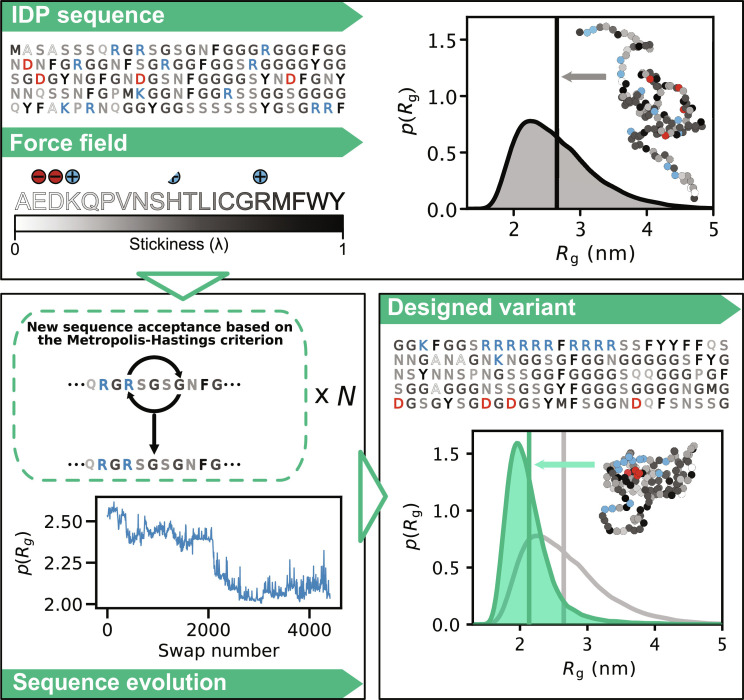
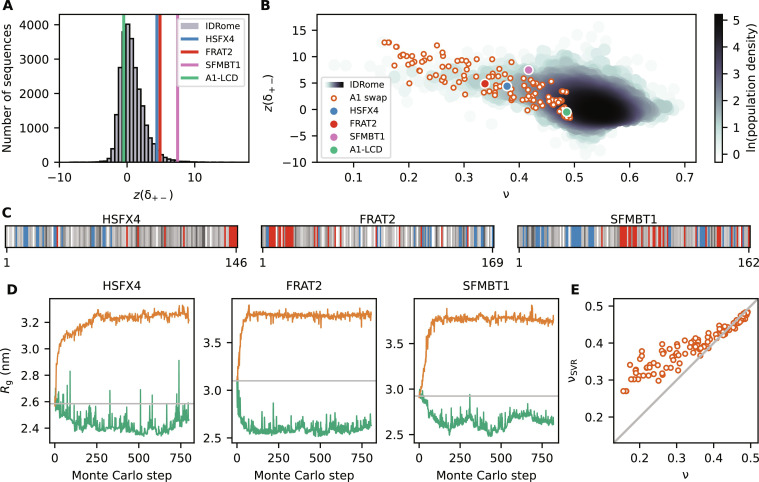
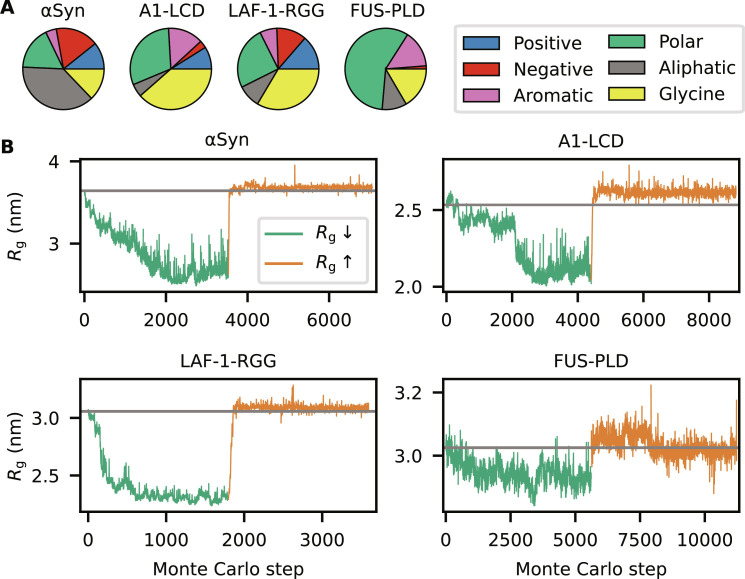
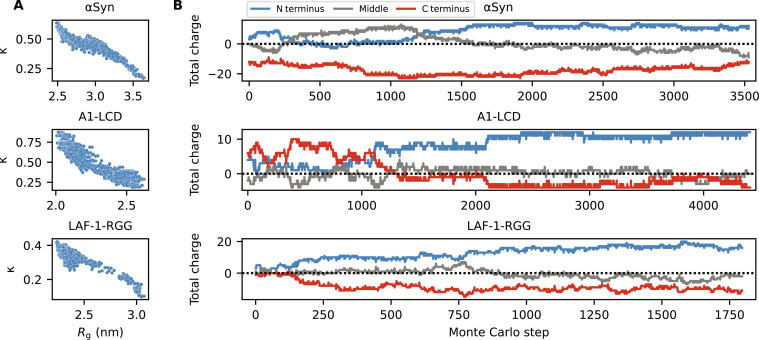
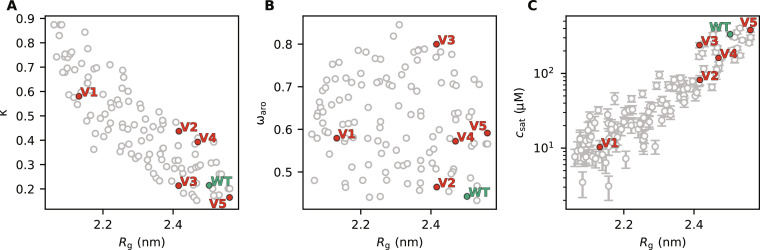
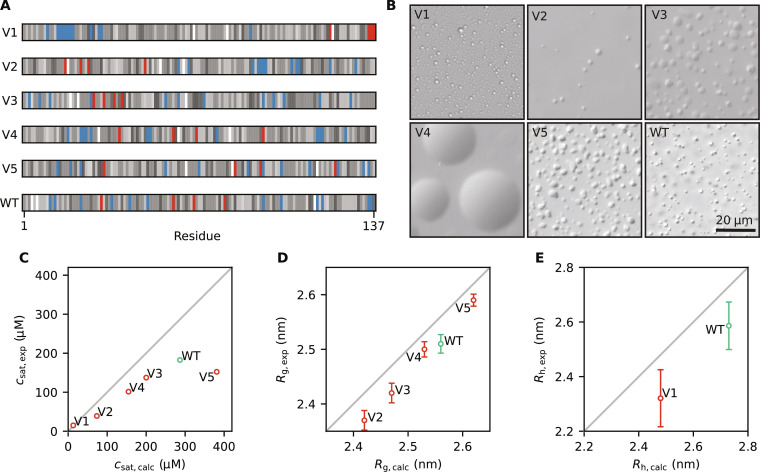
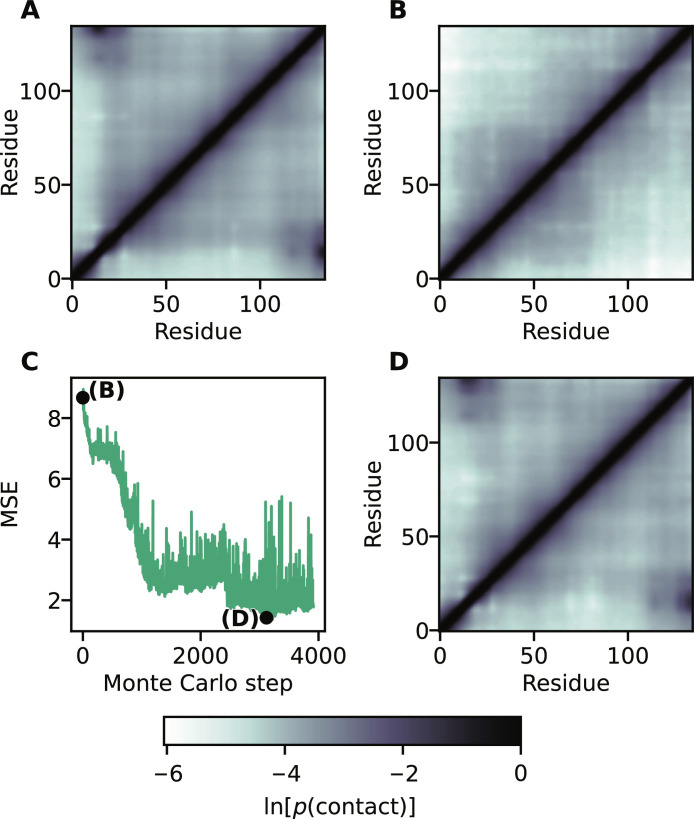
Intrinsically disordered proteins (IDPs) perform a broad range of functions in biology, suggesting that the ability to design IDPs could help expand the repertoire of proteins with novel functions. Computational design of IDPs with specific conformational properties has, however, been difficult because of their substantial dynamics and structural complexity. We describe a general algorithm for designing IDPs with specific structural properties. We demonstrate the power of the algorithm by generating variants of naturally occurring IDPs that differ in compaction, long-range contacts, and propensity to phase separate. We experimentally tested and validated our designs and analyzed the sequence features that determine conformations. We show how our results are captured by a machine learning model, enabling us to speed up the algorithm. Our work expands the toolbox for computational protein design and will facilitate the design of proteins whose functions exploit the many properties afforded by protein disorder.
无规卷曲蛋白质(IDPs)在生物学中执行广泛的功能,这表明设计 IDPs 的能力可以帮助扩展具有新功能的蛋白质的种类。然而,由于其大量的动力学和结构复杂性,具有特定构象特性的 IDPs 的计算设计一直很困难。我们描述了一种设计具有特定结构特性的 IDPs 的通用算法。我们通过生成在紧凑性、长程接触和相分离倾向方面存在差异的天然存在的 IDPs 变体来证明该算法的强大功能。我们对设计进行了实验测试和验证,并分析了决定构象的序列特征。我们展示了我们的结果如何被机器学习模型捕获,从而使我们能够加速算法。我们的工作扩展了计算蛋白质设计的工具包,并将促进设计利用蛋白质无序性提供的许多特性的蛋白质。