Tait Jamie L, Duckham Rachel L, Rantalainen Timo, Milte Catherine M, Main Luana C, Nowson Caryl A, Sanders Kerrie M, Taaffe Dennis R, Hill Keith D, Abbott Gavin, Daly Robin M
Institute for Physical Activity and Nutrition (IPAN), School of Exercise and Nutrition Sciences, Deakin University, Geelong, VIC, Australia.
Australian Institute for Musculoskeletal Science (AIMSS), Department of Medicine-Western Health, the University of Melbourne, Melbourne, VIC, Australia.
Geroscience. 2025 Feb;47(1):1251-1268. doi: 10.1007/s11357-024-01316-8. Epub 2024 Aug 28.
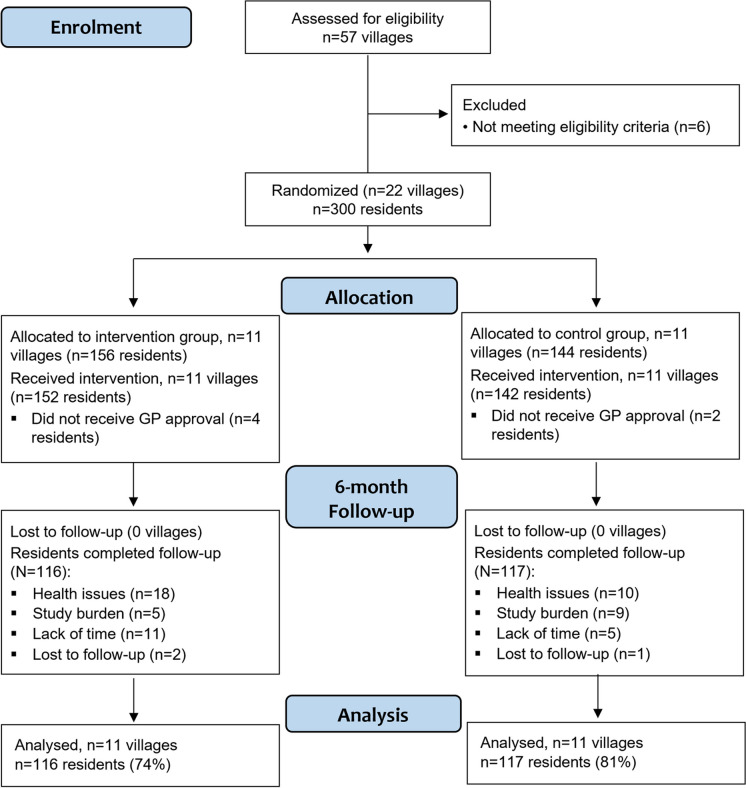
Functional power-based exercise training can improve physical performance in older adults and cognitive training can improve measures of cognition, but their combined effects on cognition and related risk factors (neurological and inflammatory markers) remains uncertain. This 6-month cluster randomised controlled trial evaluated the effectiveness of dual-task functional power training (DT-FPT) on cognition and circulating neurological and inflammatory markers in older adults at increased falls risk, and whether intervention responses varied by apolipoprotein-E (ApoE) and brain derived neurotrophic factor (BDNF) polymorphisms. Three hundred residents aged ≥ 65 years at increased falls risk residing in 22 independent-living retirement communities, were randomised by village, to DT-FPT (n = 156, 11 villages) involving a multi-component power-based training program performed simultaneously with cognitive and/or motor tasks (45-60 min, 2/week), or a usual care control (CON) group (n = 144, 11 villages). Cognition (computerized CogState battery), inflammatory cytokines, BDNF, insulin-like growth factor-1, vascular endothelial growth factor, amyloid β (1-40) and (1-42) were assessed at baseline and 6-months. Overall, 233 (78%) participants completed the intervention and adherence averaged 50.1%. DT-FPT led to a net 0.18-0.20 SD benefit versus CON in psychomotor ability/attention and reaction time/attention (both P < 0.05). There were no significant intervention effects on circulating markers, except for a net 10.5% benefit in amyloid β (1-40) in DT-FPT versus CON (P < 0.05). Responses were not influenced by APOE or BDNF genotype. In conclusion, DT-FPT in older adults at increased falls risk can provide some cognitive benefits, but these were not related to corresponding changes in inflammatory or neurological markers or influenced by genotype. Australian New Zealand Clinical Trials Registry (ACTRN12613001161718). http://www.anzctr.org.au/ This project was funded by a grant from the National Health and Medical Research Council (NHMRC) Project (APP1046267).
基于功能能力的运动训练可以改善老年人的身体机能,认知训练可以改善认知指标,但其对认知及相关风险因素(神经学和炎症标志物)的综合影响仍不确定。这项为期6个月的整群随机对照试验评估了双任务功能能力训练(DT-FPT)对跌倒风险增加的老年人的认知、循环神经学和炎症标志物的有效性,以及干预反应是否因载脂蛋白E(ApoE)和脑源性神经营养因子(BDNF)基因多态性而有所不同。居住在22个独立生活退休社区的300名年龄≥65岁、跌倒风险增加的居民,按村庄随机分为DT-FPT组(n = 156,11个村庄),该组参与一项基于能力的多组分训练计划,同时进行认知和/或运动任务(45 - 60分钟,每周2次),或常规护理对照组(CON)(n = 144,11个村庄)。在基线和6个月时评估认知(计算机化CogState测试组)、炎性细胞因子、BDNF、胰岛素样生长因子-1、血管内皮生长因子、淀粉样β蛋白(1 - 40)和(1 - 42)。总体而言,233名(78%)参与者完成了干预,依从性平均为50.1%。与CON组相比,DT-FPT组在心理运动能力/注意力和反应时间/注意力方面净获益0.18 - 0.20标准差(均P < 0.05)。除DT-FPT组的淀粉样β蛋白(1 - 40)比CON组净获益10.5%(P < 0.05)外,对循环标志物无显著干预效果。反应不受APOE或BDNF基因型的影响。总之,跌倒风险增加的老年人进行DT-FPT可带来一些认知益处,但这些益处与炎症或神经学标志物的相应变化无关,也不受基因型影响。澳大利亚新西兰临床试验注册中心(ACTRN12613001161718)。http://www.anzctr.org.au/ 本项目由国家卫生与医学研究委员会(NHMRC)项目基金(APP1046267)资助。