Suriya-Arunroj Lalitta, Chimngam Motee, Chamnongpakdee Chutikan, Sing-Ayudthaya Thipchompoo, Linchekhaw Chunapa, Kongsombat Nopparat, Suttisan Nutchanat
National Primate Research Center of Thailand, Chulalongkorn University, Saraburi 18110, Thailand.
Animals (Basel). 2024 Aug 15;14(16):2369. doi: 10.3390/ani14162369.
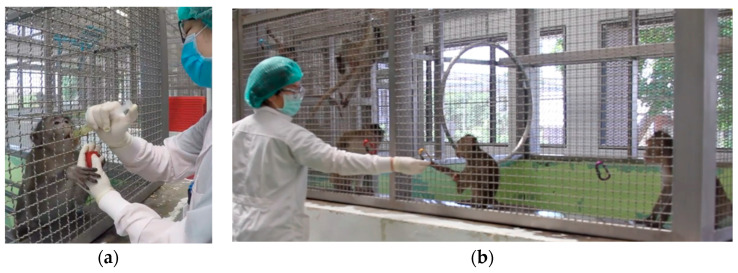
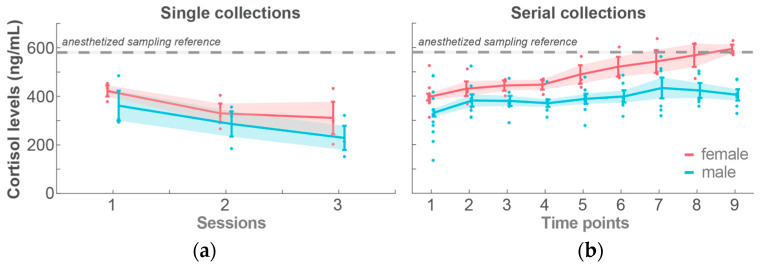
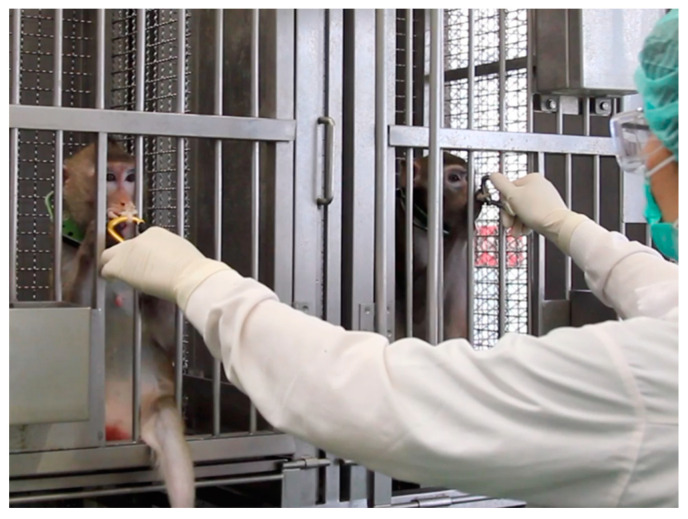
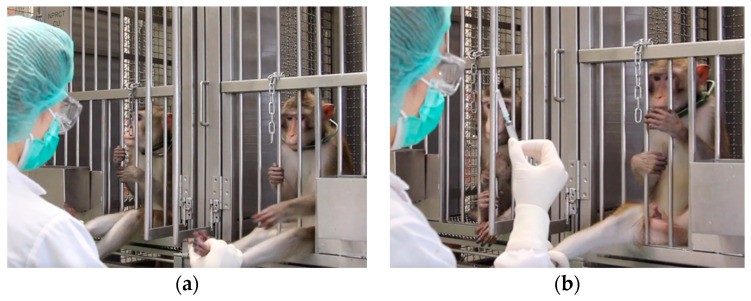
Owing to their similarities to humans in various aspects, non-human primates (NHPs) serve as valuable translational models that has greatly contributed to scientific advancements. However, working with untrained NHPs can cause stress and increase the risk of injuries to both animals and care staff, compromising both animal welfare and occupational safety. Behavioral training, that benefits from animals' learning abilities to gain their cooperation during husbandry and veterinary procedures, is a well-established method to mitigate these risks. Cynomolgus monkeys, in particular, are known for being despotic, fearful, and challenging to train. Moreover, our first-generation breeders were wild-sourced from human-macaque conflict areas in Thailand. These macaque populations are accustomed with human contact; hence, their prior experience can either work for or against behavioral shaping plans. Establishing a training program with realistic expectations would benefit both the animals and trainers. In this study, six cynomolgus monkeys were selected based on temperament, then underwent a pilot training program that included basic husbandry and veterinary procedures. Over 256 training sessions with gradual shaping plans, all six monkeys went through all training steps, with progress varying considerably among individuals. Cortisol levels were measured to monitor stress responses, revealing a notable sex difference: female monkeys generally complied more easily with the trainer but exhibited a stronger cortisol increase compared to males. This study proposed a behavioral training program grounded in three essential components: temperament assessment, behavioral shaping plans, and the cortisol-based criteria for evaluating training success.
由于非人灵长类动物(NHPs)在各个方面与人类相似,它们成为了有价值的转化模型,为科学进步做出了巨大贡献。然而,与未经训练的非人灵长类动物合作会造成压力,并增加动物和护理人员受伤的风险,从而损害动物福利和职业安全。行为训练利用动物的学习能力,使其在饲养和兽医程序中予以配合,是一种成熟的降低这些风险的方法。特别是食蟹猴,以专横、胆小且难以训练著称。此外,我们的第一代繁殖者是从泰国人与猕猴冲突地区野外捕获的。这些猕猴种群习惯了与人类接触;因此,它们之前的经历可能对行为塑造计划有利,也可能不利。制定一个符合实际预期的训练计划将对动物和训练者都有益。在本研究中,根据性情挑选了六只食蟹猴,然后让它们接受了一个试点训练计划,其中包括基本饲养和兽医程序。经过256次采用逐步塑造计划的训练课程,所有六只猴子都完成了所有训练步骤,个体之间的进展差异很大。测量了皮质醇水平以监测应激反应,结果显示出明显的性别差异:雌性猴子通常更容易听从训练者,但与雄性相比,其皮质醇升高幅度更大。本研究提出了一个基于三个基本要素的行为训练计划:性情评估、行为塑造计划以及基于皮质醇评估训练成功与否的标准。