Sävilammi Tiina, Alakangas Rinna-Riikka, Häyrynen Tuomas, Uusi-Heikkilä Silva
Department of Biological and Environmental Science, University of Jyväskylä, P.O. Box 35, 40014 Jyväskylä, Finland.
Department of Biology, University of Turku, 20014 Turku, Finland.
Animals (Basel). 2024 Aug 18;14(16):2396. doi: 10.3390/ani14162396.
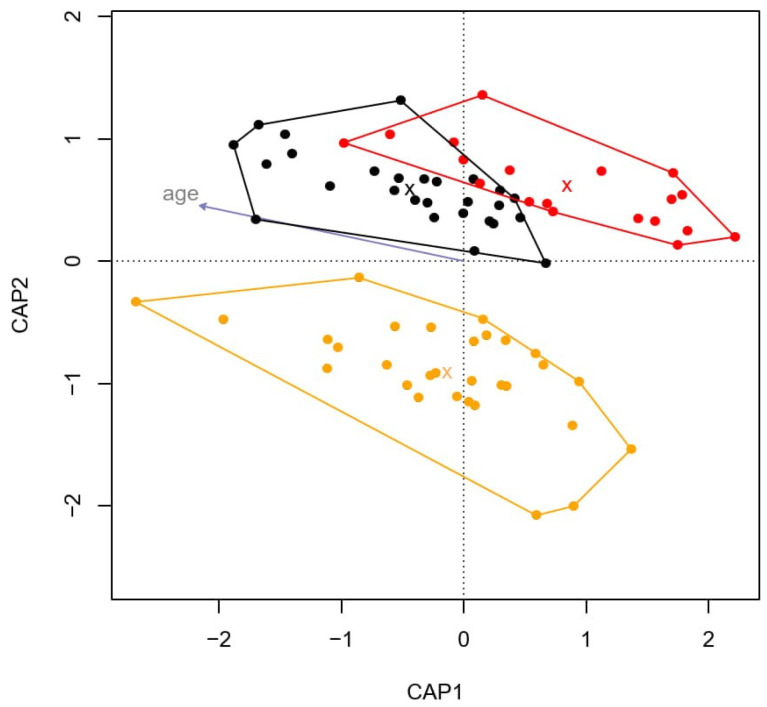
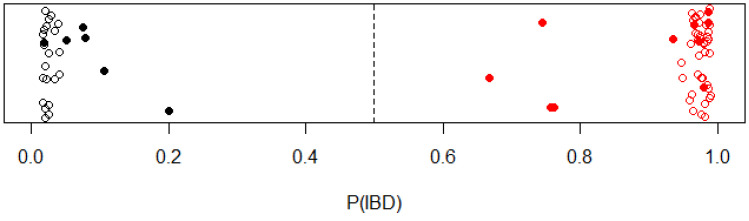
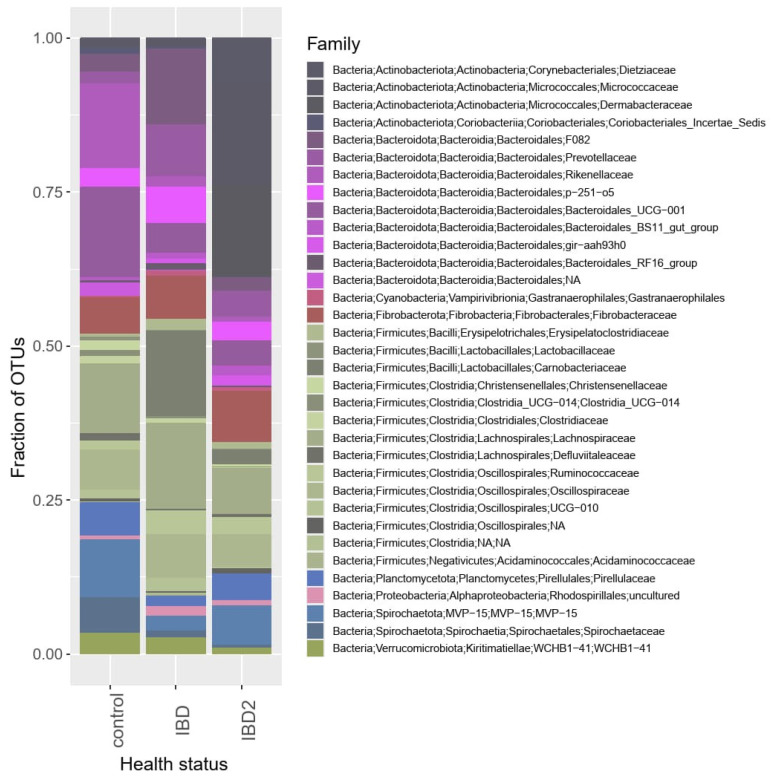
Gastrointestinal disorders are common and debilitating in horses, but their diagnosis is often difficult and invasive. Fecal samples offer a non-invasive alternative to assessing the gastrointestinal health of horses by providing information about the gut microbiota and inflammation. In this study, we used 16S sequencing to compare the fecal bacterial diversity and composition of 27 healthy horses and 49 horses diagnosed with inflammatory bowel disease (IBD). We also measured fecal calprotectin concentration, a marker of intestinal inflammation, in healthy horses and horses with IBD. We found that microbiota composition differed between healthy horses and horses with IBD, although less than five percent of the variation in microbiota composition was explained by individual health status and age. Several differentially abundant bacterial taxa associated with IBD, age, or body condition were depleted from the most dominant Firmicutes phylum and enriched with the Bacteroidota phylum. An artificial neural network model predicted the probability of IBD among the test samples with 100% accuracy. Our study is the first to demonstrate the association between gut microbiota composition and chronic forms of IBD in horses and highlights the potential of using fecal samples as a non-invasive source of biomarkers for equine IBD.
胃肠道疾病在马匹中很常见且会导致衰弱,但对其诊断往往困难且具有侵入性。粪便样本通过提供有关肠道微生物群和炎症的信息,为评估马匹的胃肠道健康提供了一种非侵入性的替代方法。在本研究中,我们使用16S测序比较了27匹健康马匹和49匹被诊断患有炎症性肠病(IBD)的马匹的粪便细菌多样性和组成。我们还测量了健康马匹和患有IBD的马匹粪便中钙卫蛋白的浓度,这是一种肠道炎症标志物。我们发现,健康马匹和患有IBD的马匹之间的微生物群组成存在差异,尽管微生物群组成中不到5%的变异可由个体健康状况和年龄来解释。几种与IBD、年龄或身体状况相关的差异丰富的细菌类群在最主要的厚壁菌门中减少,而在拟杆菌门中富集。一个人工神经网络模型以100%的准确率预测了测试样本中IBD的概率。我们的研究首次证明了马匹肠道微生物群组成与慢性IBD形式之间的关联,并突出了使用粪便样本作为马IBD非侵入性生物标志物来源的潜力。