Department of Cardiology, Affiliated Hospital of Jiangsu University, Zhenjiang, 212001, China.
Institue of Cardiovascular Diseases, Jiangsu University, Zhenjiang, 212001, China.
BMC Public Health. 2024 Aug 30;24(1):2363. doi: 10.1186/s12889-024-19883-y.
Although the Healthy Eating Index (HEI) is widely recommended to reduce the risk of cardiovascular disease and all-cause death, there are significant differences in physiological and nutritional factors between the sexes. The potential impact of sex on adult dietary health is still poorly understood. The study was designed to assess whether the health benefits of diet differed by sex.
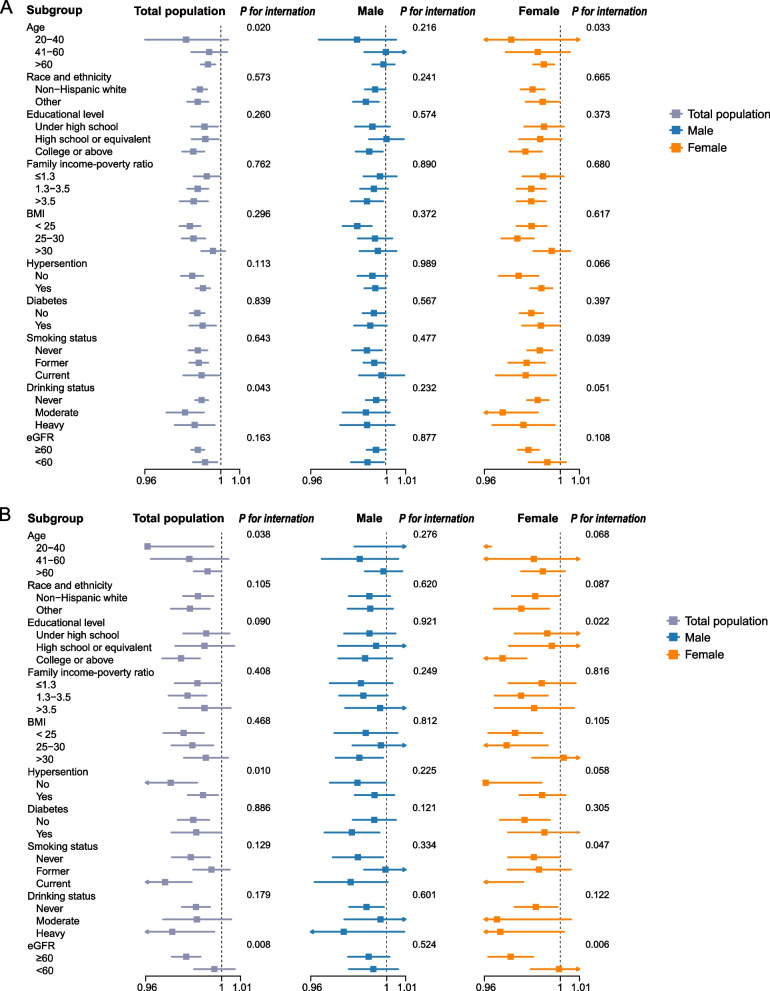
In a prospective study of 39,567 U.S. adults (51.2% female, age 46.8 ± 17.6 years), we examined sex-specific, multivariable-adjusted associations of HEI with all-cause mortality and cardiovascular disease mortality. Restricted cubic splines (RCS), subgroup analysis, propensity score matching (PSM), random forest feature importance, and sensitivity analysis were also used.
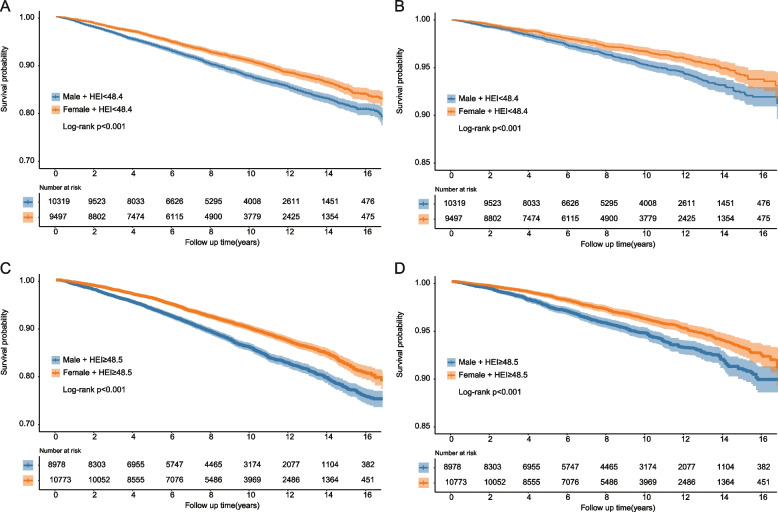
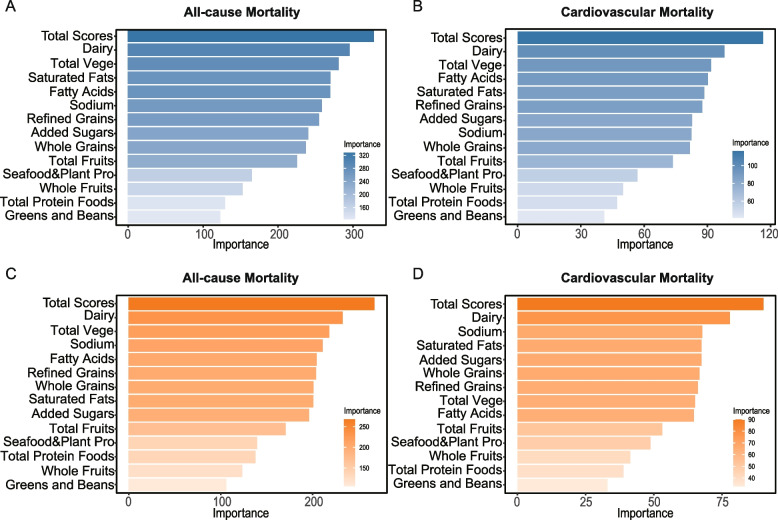
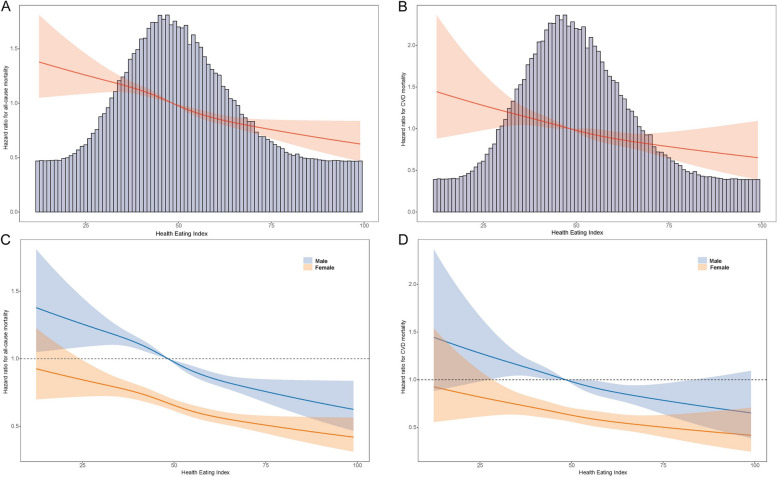
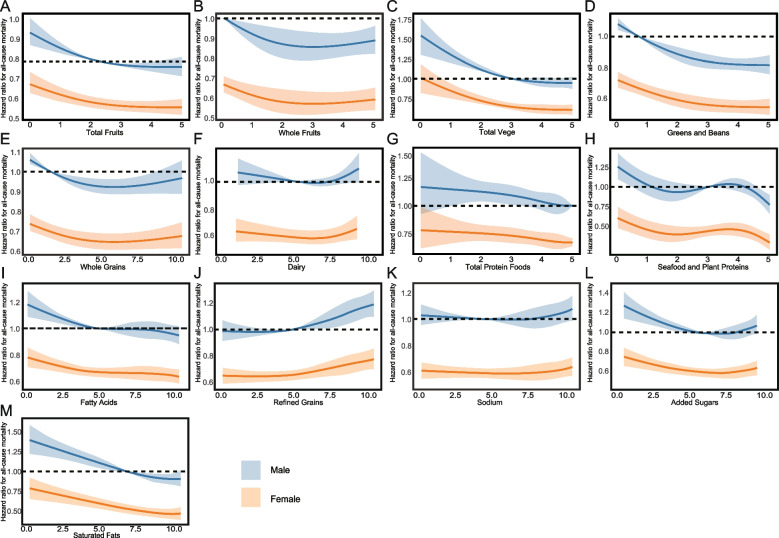
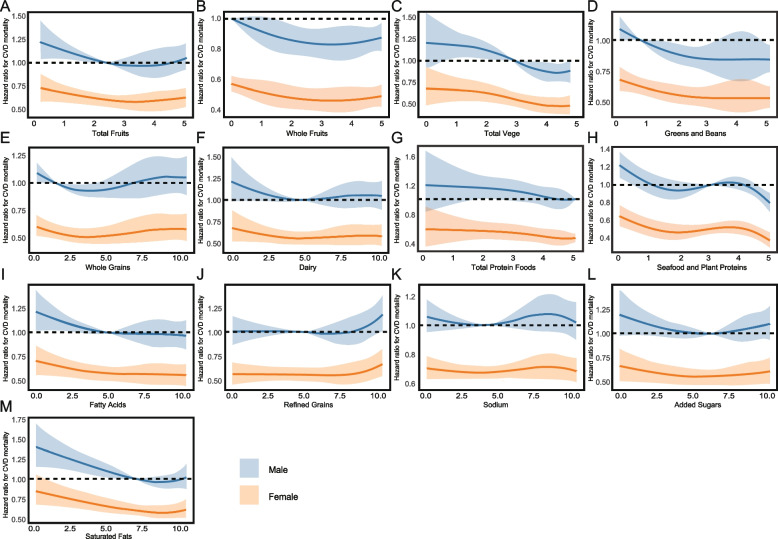
During 328,403 person-years of follow-up, a total of 4754 all-cause deaths were recorded, including 1481 cardiovascular deaths. Compared to the lowest quartile of HEI, the all-cause mortality rate of females and males in the highest quartile array decreased by 34% (HR 0.66 [95% CI 0.55-0.8]) and 15% (HR 0.85 [95% CI 0.73-0.99]), respectively. The restricted cubic spline showed a linear inverse association between baseline HEI and all-cause mortality and CVD mortality, with similar sex-specific results. Similarly, component scores were sex-specific for mortality risk, with females benefiting more from diet. The benefits of dairy products, vegetables, and sodium scores on the risk of all-cause death were higher in males and females. However, the benefits of vegetable, sodium, and fatty acid scores on the risk of cardiovascular death were different.
In the adult population of the U.S., there are more opportunities for females to reduce the risk of all-cause mortality and cardiovascular mortality from the same dose of healthy dietary intake than males. These findings could reduce the risk of death by motivating the population, especially females, to consume healthy dietary components, especially vegetables and dairy products.
尽管健康饮食指数(HEI)被广泛推荐用于降低心血管疾病和全因死亡的风险,但男女之间的生理和营养因素存在显著差异。性别的因素对成人饮食健康的潜在影响仍知之甚少。本研究旨在评估饮食的健康益处是否因性别而异。
在一项对 39567 名美国成年人(51.2%为女性,年龄 46.8±17.6 岁)的前瞻性研究中,我们检查了 HEI 与全因死亡率和心血管疾病死亡率的性别特异性、多变量调整关联。还使用了受限立方样条(RCS)、亚组分析、倾向评分匹配(PSM)、随机森林特征重要性和敏感性分析。
在 328403 人年的随访期间,共记录了 4754 例全因死亡,其中 1481 例死于心血管疾病。与 HEI 最低四分位相比,女性和男性最高四分位数组的全因死亡率分别降低了 34%(HR 0.66 [95%CI 0.55-0.8])和 15%(HR 0.85 [95%CI 0.73-0.99])。受限立方样条显示基线 HEI 与全因死亡率和 CVD 死亡率之间呈线性反比关系,具有类似的性别特异性结果。同样,成分评分对死亡率风险具有性别特异性,女性从饮食中获益更多。乳制品、蔬菜和钠评分对全因死亡风险的益处,在男性和女性中更高。然而,蔬菜、钠和脂肪酸评分对心血管死亡风险的益处则不同。
在美国成年人中,女性从相同剂量的健康饮食摄入中降低全因死亡率和心血管死亡率的机会比男性更多。这些发现可以通过激励人群,特别是女性,食用健康的饮食成分,特别是蔬菜和乳制品,来降低死亡风险。