Jost Ricarda, Berkowitz Oliver, Pegg Amelia, Hurgobin Bhavna, Tamiru-Oli Muluneh, Welling Matthew T, Deseo Myrna A, Noorda Hannah, Brugliera Filippa, Lewsey Mathew G, Doblin Monika S, Bacic Antony, Whelan James
Australian Research Council Research Hub for Medicinal Agriculture, Department of Animal, Plant and Soil Sciences, School of Agriculture, Biomedicine and Environment, La Trobe University, Bundoora, VIC 3086, Australia.
La Trobe Institute for Sustainable Agriculture and Food, La Trobe University, Bundoora, VIC 3086, Australia.
J Exp Bot. 2025 Jan 1;76(1):152-174. doi: 10.1093/jxb/erae367.
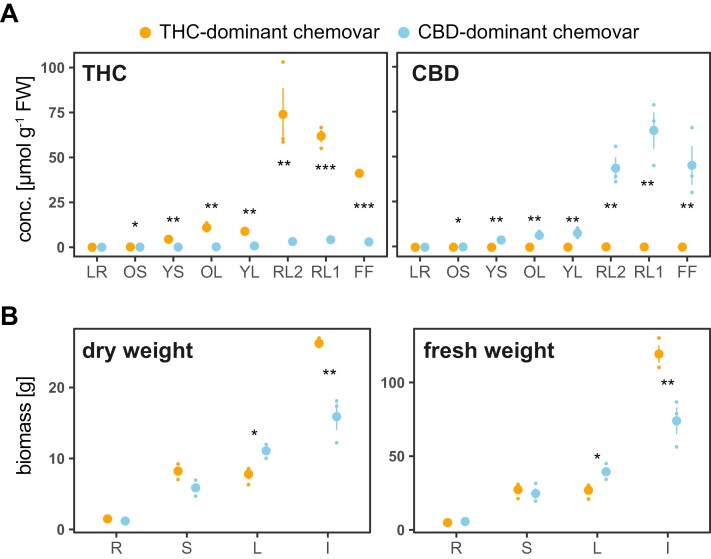
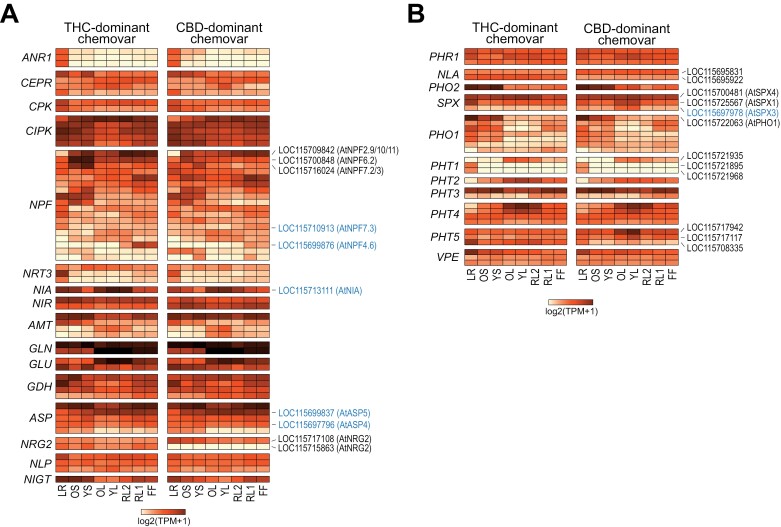
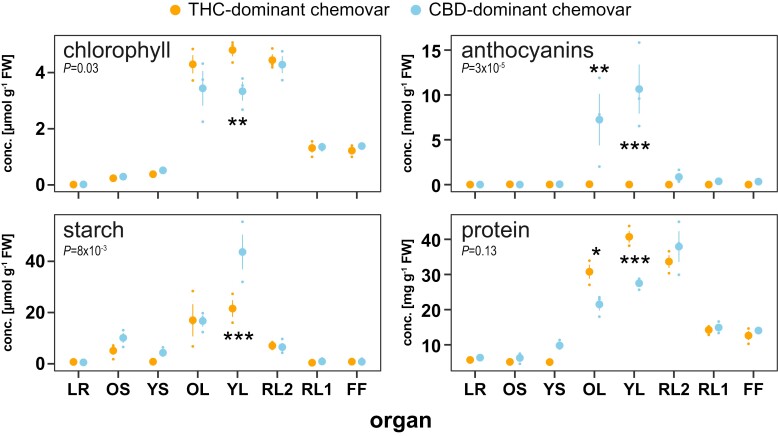
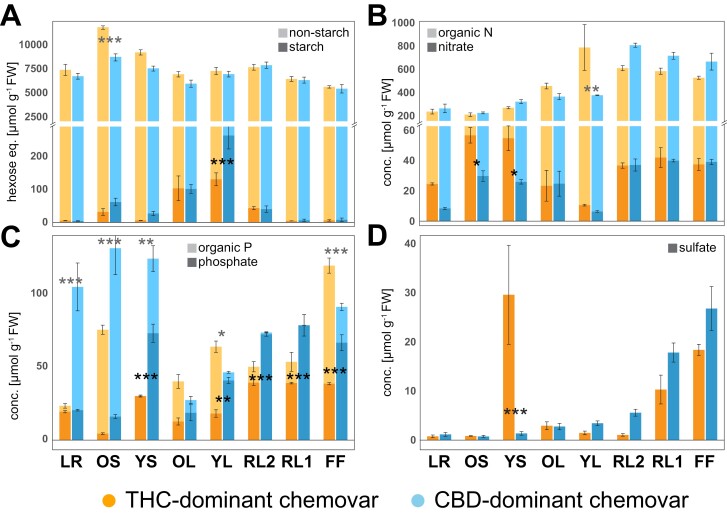
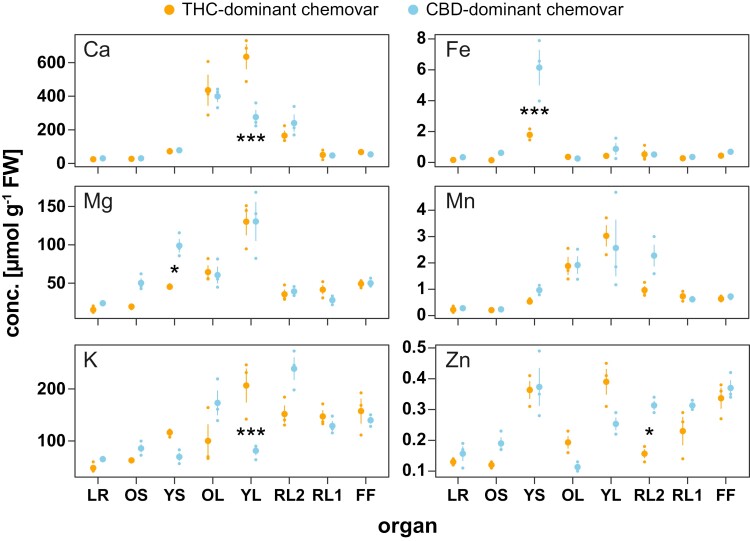
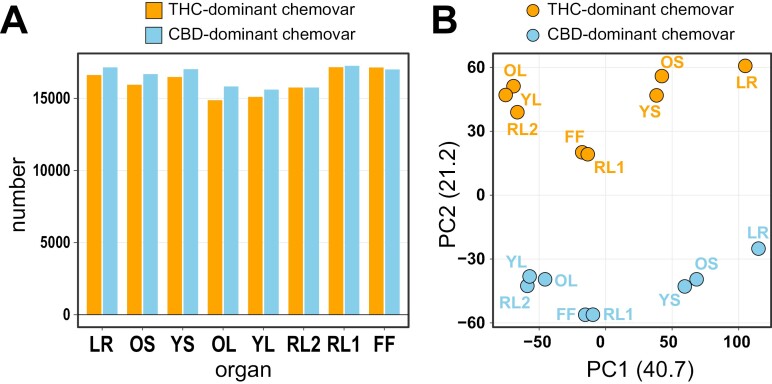
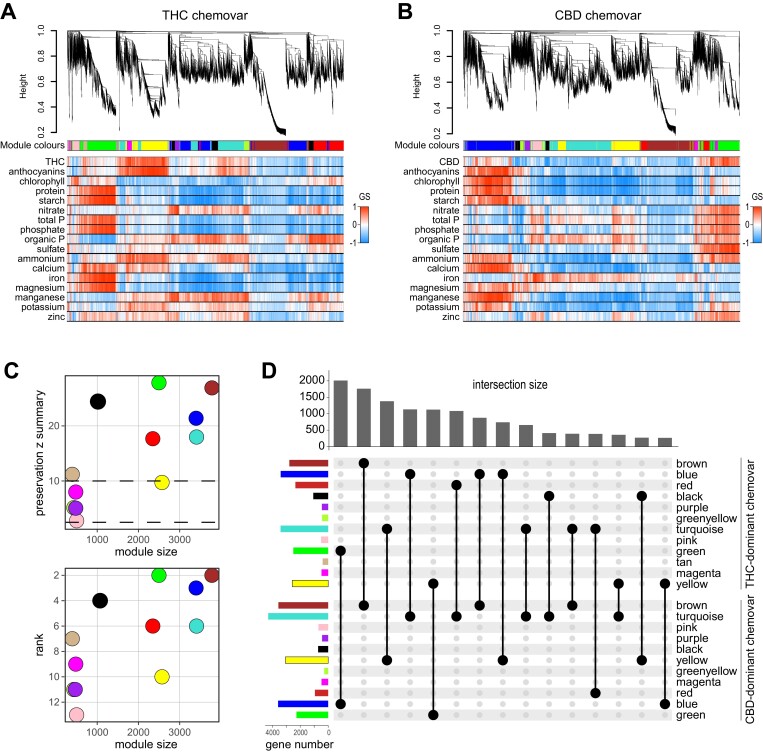
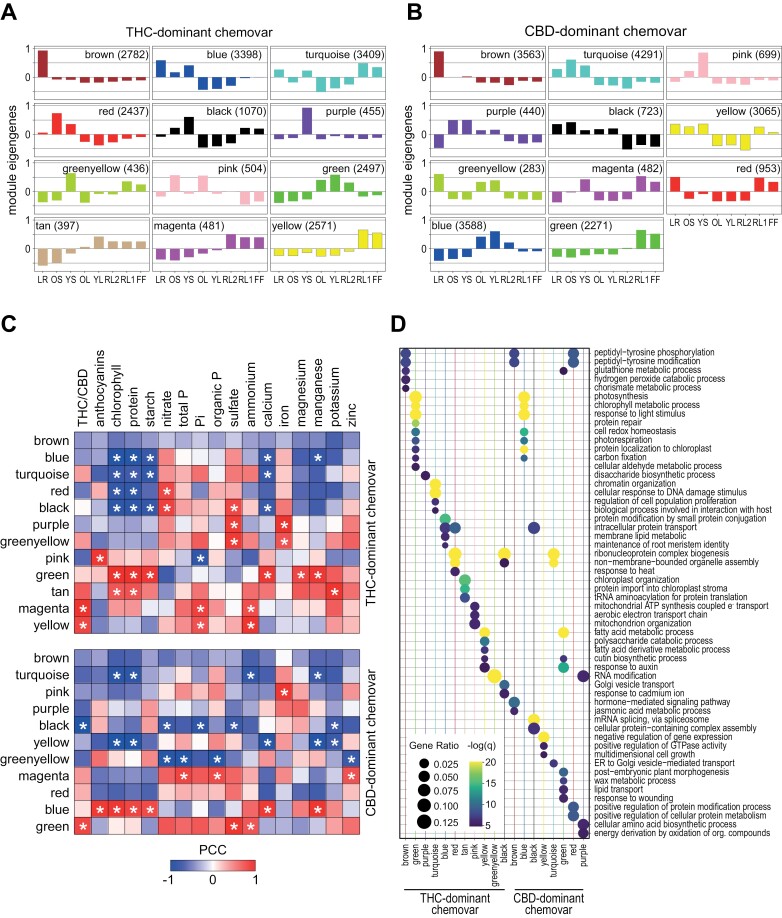
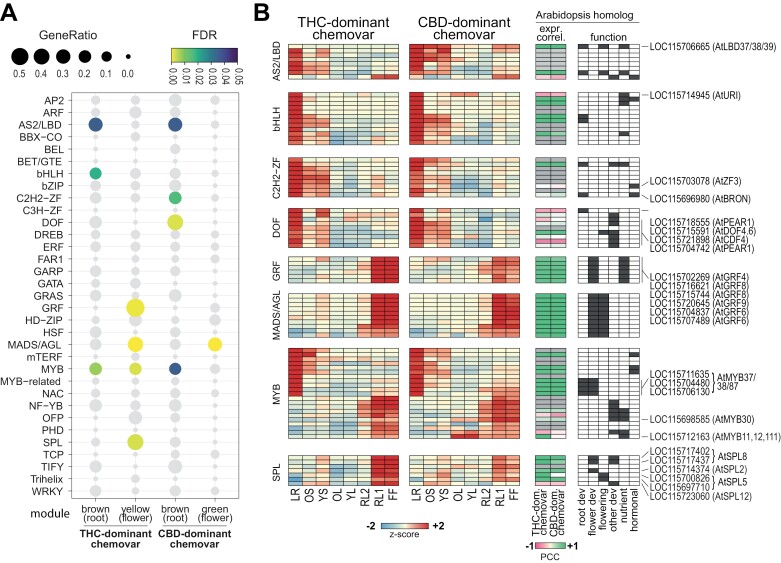
Cannabis sativa L. is one of the oldest domesticated crops. Hemp-type cultivars, which predominantly produce non-intoxicating cannabidiol (CBD), have been selected for their fast growth, seed, and fibre production, while drug-type chemovars were bred for high accumulation of tetrahydrocannabinol (THC). We investigated how the generation of CBD-dominant chemovars by introgression of hemp- into drug-type Cannabis impacted plant performance. The THC-dominant chemovar showed superior sink strength, higher flower biomass, and demand-driven control of nutrient uptake. By contrast, the CBD-dominant chemovar hyperaccumulated phosphate in sink organs leading to reduced carbon and nitrogen assimilation in leaves, which limited flower biomass and cannabinoid yield. RNA-seq analyses determined organ- and chemovar-specific differences in expression of genes associated with nitrate and phosphate homeostasis as well as growth-regulating transcription factors that were correlated with measured traits. Among these were genes positively selected for during Cannabis domestication encoding an inhibitor of the phosphate starvation response, SPX DOMAIN GENE3, nitrate reductase, and two nitrate transporters. Altered nutrient sensing, acquisition, or distribution are likely a consequence of adaption to growth on marginal, low-nutrient-input lands in hemp. Our data provide evidence that such ancestral traits may become detrimental for female flower development and consequently overall CBD yield in protected cropping environments.
大麻(Cannabis sativa L.)是最古老的驯化作物之一。以主要产生无致幻作用的大麻二酚(CBD)为特征的工业大麻品种,因其生长迅速、种子产量高和纤维产量高而被选育,而药用大麻品种则是为了高积累四氢大麻酚(THC)而培育的。我们研究了通过将工业大麻基因渗入药用大麻来培育以CBD为主的化学变种如何影响植物性能。以THC为主的化学变种表现出更强的库强、更高的花生物量以及需求驱动的养分吸收控制。相比之下,以CBD为主的化学变种在库器官中超积累磷酸盐,导致叶片中碳和氮的同化减少,从而限制了花生物量和大麻素产量。RNA测序分析确定了与硝酸盐和磷酸盐稳态相关的基因以及与测量性状相关的生长调节转录因子在器官和化学变种中的特异性差异。其中包括在大麻驯化过程中被正向选择的基因,这些基因编码磷酸盐饥饿反应抑制剂SPX结构域基因3、硝酸还原酶和两种硝酸盐转运蛋白。养分感知、获取或分配的改变可能是工业大麻适应在边缘、低养分投入土地上生长的结果。我们的数据表明,这些祖先性状可能对雌花发育有害,从而对保护种植环境中的总体CBD产量产生不利影响。