Department of Psychology and Neuroscience, University of Colorado Boulder, Boulder, Colorado, USA.
Department of Psychology, Colorado State University, Fort Collins, Colorado, USA.
Addict Biol. 2022 Jan;27(1):e13092. doi: 10.1111/adb.13092. Epub 2021 Aug 31.
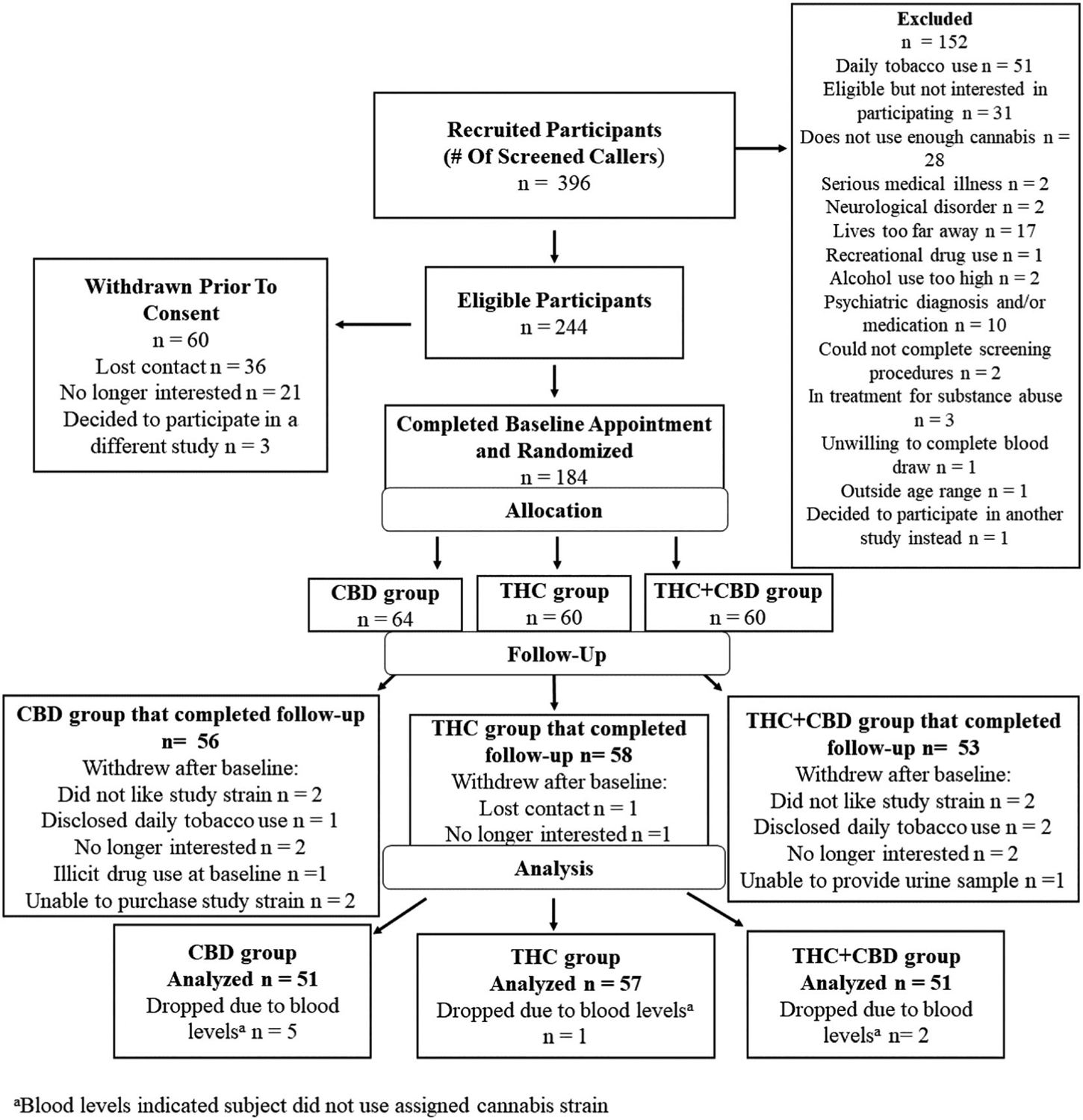
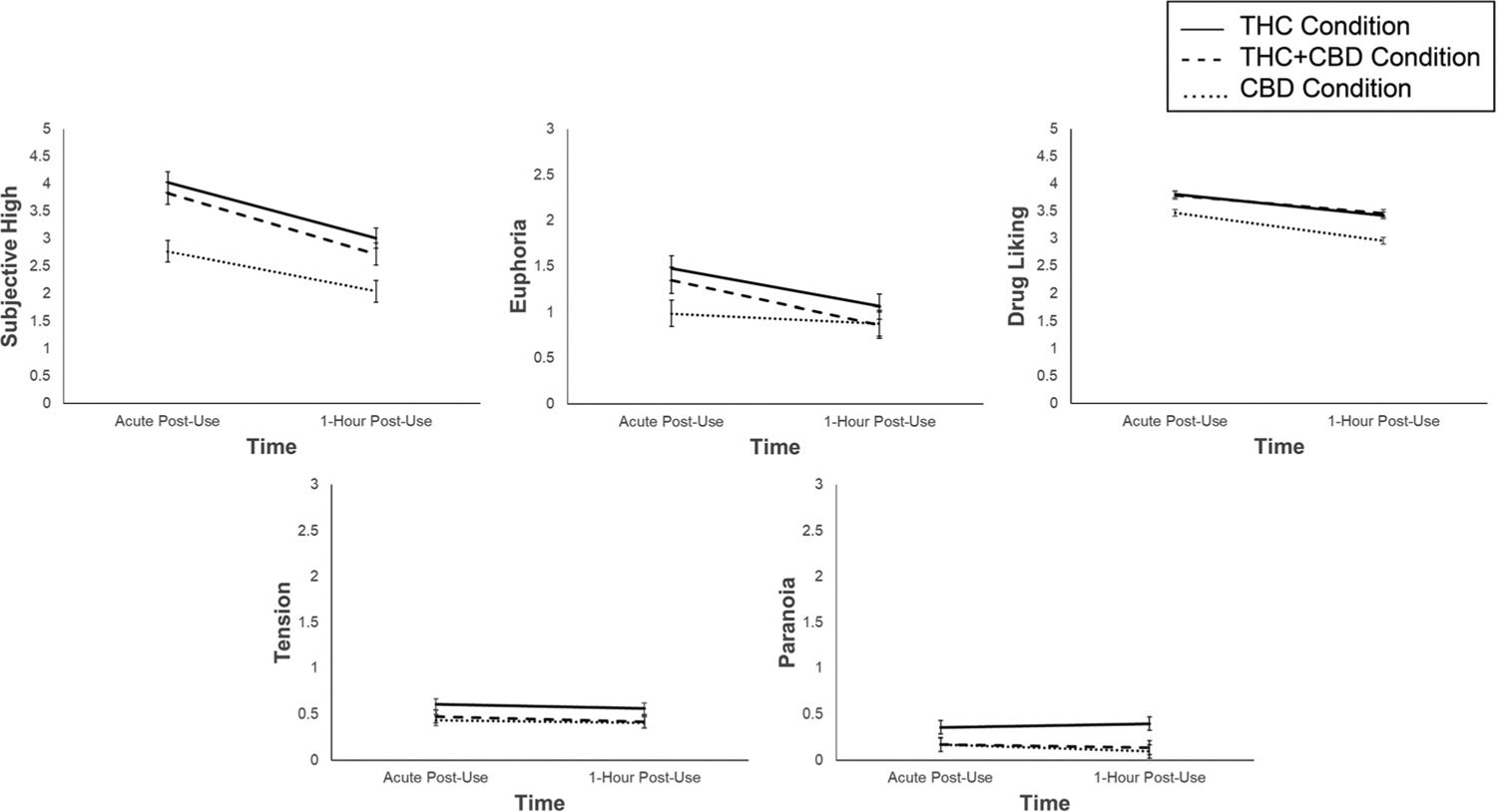
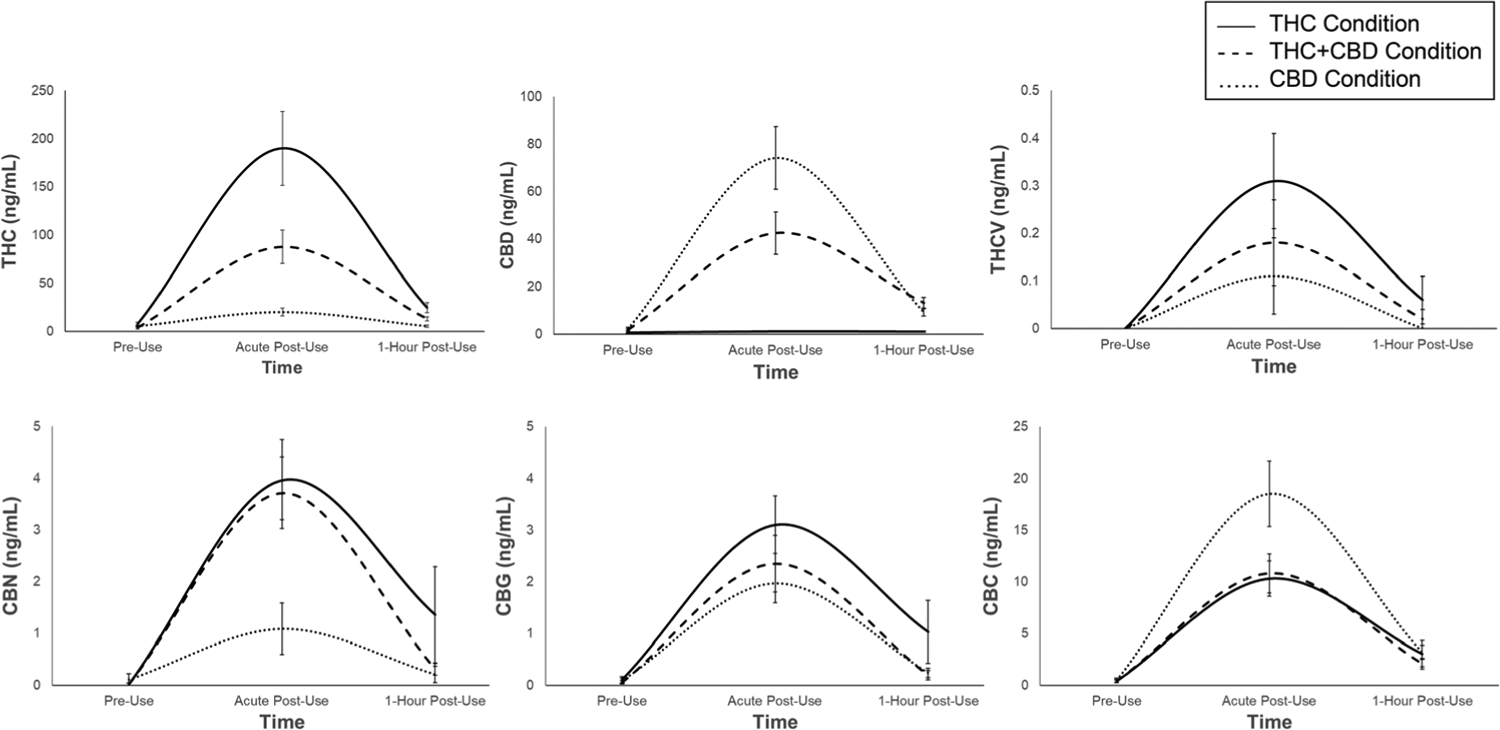
Using a federally compatible, naturalistic at-home administration procedure, the present study examined the acute effects of three cannabis flower chemovars with different tetrahydrocannabinol (THC) to cannabidiol (CBD) ratios, in order to test whether chemovars with a higher CBD content produce different effects. Participants were randomly assigned to ad libitum administration of one of three chemovars (THC-dominant: 24% THC, 1% CBD; THC+CBD: 9% THC, 10% CBD; CBD-dominant: 1% THC, 23% CBD); 159 regular cannabis users (male = 94, female = 65) were assessed in a mobile pharmacology lab before, immediately after, and 1 h after ad libitum administration of their assigned chemovar. Plasma cannabinoids as well as positive (e.g., high, elation) and negative (e.g., paranoia and anxiety) subjective effects were assessed at each time points. Participants who used the CBD-dominant and THC + CBD chemovars had significantly less THC and more CBD in plasma samples compared to participants who used the THC-dominant chemovar. Further, the THC + CBD chemovar was associated with similar levels of positive subjective effects, but significantly less paranoia and anxiety, as compared to the THC-dominant chemovar. This is one of the first studies to examine the differential effects of various THC to CBD ratios using chemovars that are widely available in state-regulated markets. Individuals using a THC + CBD chemovar had significantly lower plasma THC concentrations and reported less paranoia and anxiety while also reporting similar positive mood effects as compared to individuals using THC only, which is intriguing from a harm reduction perspective. Further research is needed to clarify the harm reduction potential of CBD in cannabis products.
本研究采用一种联邦兼容的、自然主义的家庭管理程序,检验了三种大麻花化学品种的急性效应,这些品种具有不同的四氢大麻酚(THC)与大麻二酚(CBD)比例,以检验 CBD 含量较高的品种是否会产生不同的效应。参与者被随机分配至三种化学品种(THC 优势:24% THC,1% CBD;THC+CBD:9% THC,10% CBD;CBD 优势:1% THC,23% CBD)的自由使用组;159 名经常使用大麻的参与者(男性=94,女性=65)在移动药理学实验室中接受评估,在自由使用他们所分配的化学品种之前、之后立即和 1 小时后评估他们的血浆大麻素以及阳性(例如,高、兴奋)和阴性(例如,偏执和焦虑)主观效应。与使用 THC 优势化学品种的参与者相比,使用 CBD 优势和 THC+CBD 化学品种的参与者的血浆样本中 THC 显著减少,CBD 显著增加。此外,与 THC 优势化学品种相比,THC+CBD 化学品种与类似水平的阳性主观效应相关,但偏执和焦虑显著减少。这是首次使用在州监管市场广泛供应的化学品种检验各种 THC 与 CBD 比例的差异效应的研究之一。与仅使用 THC 的个体相比,使用 THC+CBD 化学品种的个体的血浆 THC 浓度显著降低,报告的偏执和焦虑减少,同时报告的积极情绪效应相似,这从减少伤害的角度来看很有趣。需要进一步研究以澄清 CBD 在大麻产品中的减少伤害潜力。