School of Health Sciences and Social Work, Griffith University, Gold Coast, Australia.
Academy for Medical Education, Medical School, The University of Queensland, Herston, Australia.
BMC Med Educ. 2024 Sep 5;24(1):972. doi: 10.1186/s12909-024-05968-0.
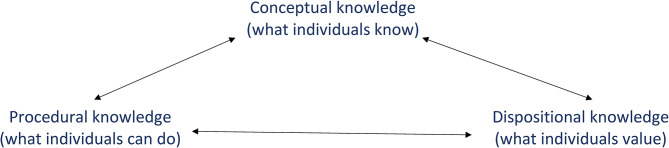
To embed the Sustainable Development Goals in health profession education, educators must contextualise them to their profession and geographical region. This study used the nominal group technique to contextualise the SDGs for Australian nutrition and dietetics tertiary education programs by determining the specific knowledge, skills, and values required for graduating dietitians to practise sustainably.
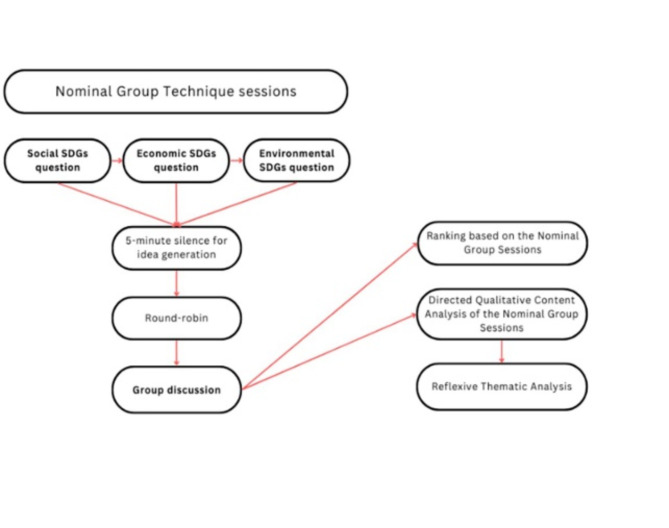
In 2022, 23 experts in food and sustainability attended a group session that employed the nominal group technique to discuss the Sustainable Development Goals knowledge, skills, and values Australian dietetic students should develop. After the group session, participants ranked the Sustainable Development Goals according to their perceived level of importance for student dietitians. These data were analysed using multi-methods, including a summation of the rankings, directed qualitative content analysis and reflexive thematic analysis.
The three highest-priority Sustainable Development Goals identified were (1) Zero Hunger, (2) Good Health and Well-Being, and (3) Responsible Consumption and Production, which were then considered with the qualitative findings. The main categories that were generated from the content analysis reflected the broad knowledge, skills, and values student dietitians should develop. The preliminary codes provided specific details for each of the main categories. The thematic analysis generated two additional themes: the importance of Indigenous ways of knowing, being and doing, and authentic experiential learning activities.
The method employed for this study provides a useful framework for health professions to contextualise the Sustainable Development Goals to their profession and geographical region. For this study, the ranking process and the qualitative data analysis enabled the Sustainable Development Goals to be reframed in a way that would be meaningful for dietetic educators and students and demonstrate the interrelatedness of the goals. The direct qualitative content analysis and reflexive thematic analysis identified the knowledge, skills, and values student dietitians should develop.
为了将可持续发展目标嵌入到健康职业教育中,教育工作者必须将其与自己的专业和地理位置联系起来。本研究使用名义群体技术,通过确定毕业营养师可持续实践所需的具体知识、技能和价值观,使澳大利亚营养和饮食学高等教育课程与可持续发展目标相关联。
2022 年,23 名食品和可持续发展方面的专家参加了一次小组会议,该会议采用名义群体技术讨论澳大利亚营养学生应发展的可持续发展目标知识、技能和价值观。在小组会议之后,参与者根据学生营养师感知的重要程度对可持续发展目标进行了排名。使用多种方法对这些数据进行了分析,包括排名总和、有针对性的定性内容分析和反思性主题分析。
确定的三个优先级最高的可持续发展目标是(1)零饥饿,(2)良好健康与福祉,(3)负责任的消费和生产,然后结合定性结果进行了考虑。内容分析产生的主要类别反映了学生营养师应发展的广泛知识、技能和价值观。初步编码为每个主要类别提供了具体细节。主题分析产生了另外两个主题:了解、存在和行动的本土方式的重要性,以及真实的体验式学习活动。
本研究采用的方法为健康专业人员将可持续发展目标与自己的专业和地理位置联系起来提供了一个有用的框架。对于本研究,排名过程和定性数据分析使可持续发展目标能够以一种对营养教育者和学生有意义的方式重新构建,并展示目标的相互关联性。直接的定性内容分析和反思性主题分析确定了学生营养师应发展的知识、技能和价值观。