Figueiredo Inês, Teixeira Tiago, Nunes Sofia, Figueiredo Cristóvão, Fragoso Joana, Azevedo Carlos, Moreira Diana, Malheiro Luís
Medicine Department, Faculty of Medicine of University of Porto, Porto, PRT.
Travel Clinic, Unidade Local de Saúde de Gaia/Espinho, Vila Nova de Gaia, PRT.
Cureus. 2024 Aug 5;16(8):e66247. doi: 10.7759/cureus.66247. eCollection 2024 Aug.
The emergence of the coronavirus disease 2019 (COVID-19) pandemic severely compromised international travel and the practice of travel medicine. This study aimed to investigate the evolution of traveler behaviors and prophylactic prescriptions across the pandemic and post-pandemic periods.
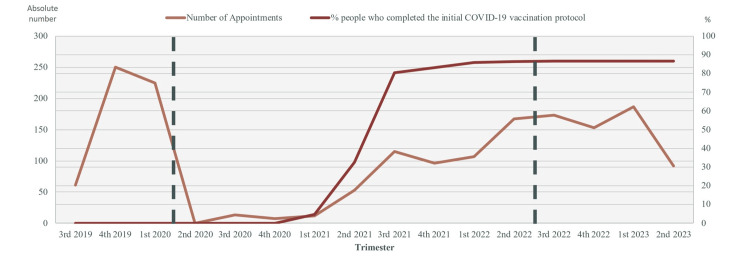
A retrospective study was conducted on travelers attending the International Vaccination Center in Vila Nova de Gaia, Portugal, from August 2019 to May 2023, where data were collected on travelers' demographics, destination, duration, reasons for traveling, and data regarding travel-related vaccines and malaria prophylaxis. Travelers' characteristics were compared between Period A (pre-pandemic), Period B (pandemic), and Period C (post-pandemic).
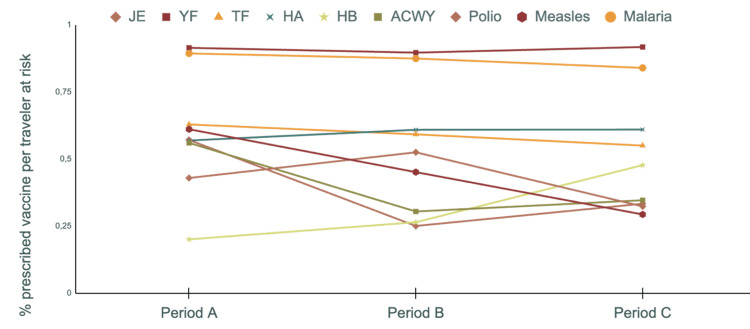
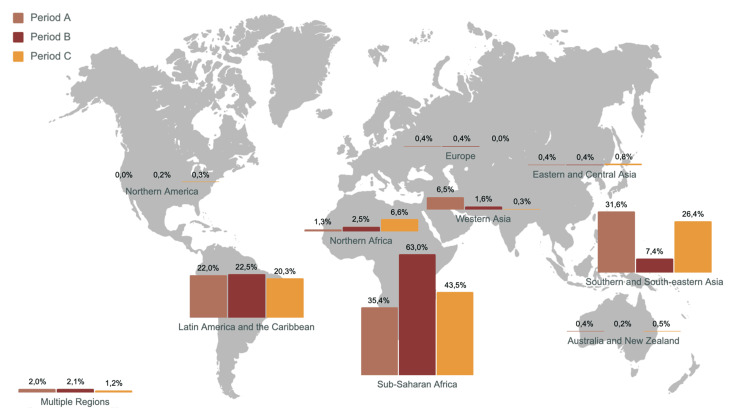
The study included 1,711 travelers in the analysis. During the pandemic period, there were fewer travelers for tourism (5% decrease) and an increase in travelers for emigration and work (4.8% increase). There was also an increase in trips lasting less than two weeks among tourists, as well as trips lasting more than one month, primarily among travelers for work or emigration. During the pandemic, there was a significant decrease in Asia as a destination, with a shift toward African countries, which partially reverted in the post-pandemic period. Significant decreases in the prescriptions of vaccines were found during the pandemic and continued in the post-pandemic period.
There was a change in travelers' characteristics due to the pandemic, with a shift to shorter trips for tourism, an avoidance of Asia, and a preference for sub-Saharan African countries as a main hub of destination. Some vaccine prescription practices remained low and even decreased during or after the pandemic.
2019年冠状病毒病(COVID-19)大流行的出现严重影响了国际旅行和旅行医学实践。本研究旨在调查大流行期间及大流行后旅行者行为和预防性处方的演变情况。
对2019年8月至2023年5月期间前往葡萄牙新盖亚市国际疫苗接种中心的旅行者进行了一项回顾性研究,收集了旅行者的人口统计学信息、目的地、持续时间、旅行原因以及与旅行相关的疫苗和疟疾预防的数据。比较了A期(大流行前)、B期(大流行期间)和C期(大流行后)旅行者的特征。
该研究纳入分析的旅行者有1711人。在大流行期间,旅游旅行者减少(减少5%),移民和工作旅行者增加(增加4.8%)。游客中持续时间少于两周的旅行以及持续时间超过一个月的旅行也有所增加,主要是工作或移民旅行者。在大流行期间,前往亚洲的目的地显著减少,转向非洲国家,在大流行后部分情况有所恢复。在大流行期间发现疫苗处方显著减少,在大流行后仍持续减少。
由于大流行,旅行者特征发生了变化,转向更短的旅游行程,避开亚洲,偏好撒哈拉以南非洲国家作为主要目的地。一些疫苗处方做法在大流行期间或之后仍然较低,甚至有所下降。