Department of Applied Biological Chemistry, Graduate School of Agricultural and Life Sciences, The University of Tokyo.
Collaborative Research Institute for Innovative Microbiology, The University of Tokyo.
Microbes Environ. 2024;39(3). doi: 10.1264/jsme2.ME24028.
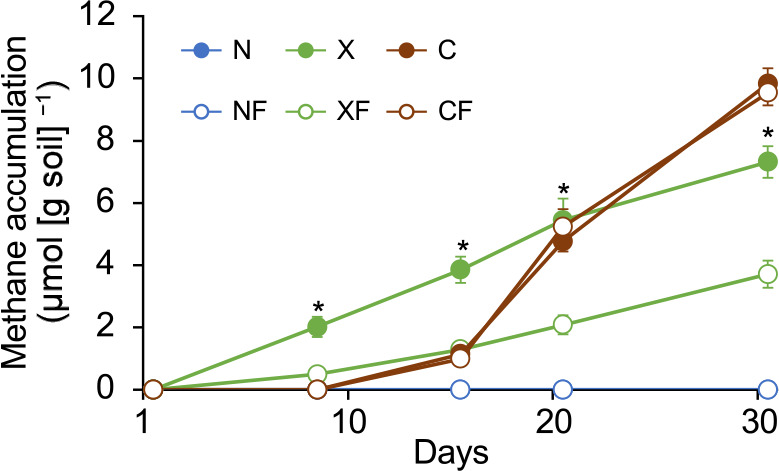
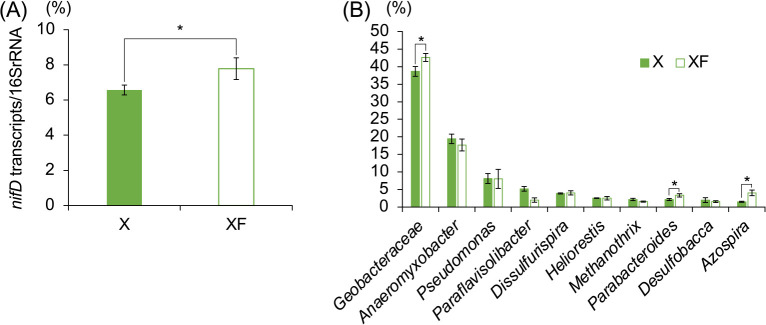
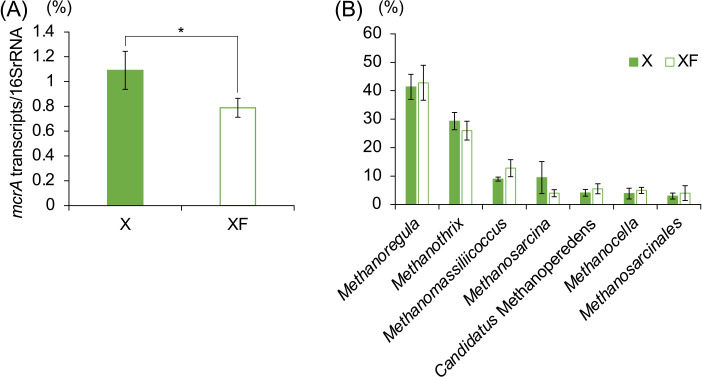
Paddy fields are a major emission source of the greenhouse gas methane. In the present study, the addition of ferrihydrite to xylan-amended paddy soil microcosms suppressed methane emissions. PCR-based and metatranscriptomic ana-lyses revealed that the addition of ferrihydrite suppressed methanogenesis by heterogeneous methanogens and simultaneously activated Geobacteraceae, the most abundant iron-reducing diazotrophs. Geobacteraceae may preferentially metabolize xylan and/or xylan-derived carbon compounds that are utilized by methanogens. Geomonas terrae R111 utilized xylan as a growth substrate under liquid culture conditions. This may constitute a novel mechanism for the mitigation of methane emissions previously observed in ferric iron oxide-applied paddy field soils.
稻田是温室气体甲烷的主要排放源。在本研究中,向添加木聚糖的稻田土壤微宇宙中添加水铁矿抑制了甲烷排放。基于 PCR 的和宏转录组学分析表明,添加水铁矿通过异养产甲烷菌抑制甲烷生成,同时激活了丰度最高的铁还原固氮菌 Geobacteraceae。Geobacteraceae 可能优先代谢木聚糖和/或木聚糖衍生的碳化合物,这些化合物被产甲烷菌利用。在液体培养条件下,Geomonas terrae R111 可将木聚糖用作生长基质。这可能构成了以前在施用氧化铁的稻田土壤中观察到的甲烷减排的新机制。