Medical Research Council Brain Network Dynamics Unit, Nuffield Department of Clinical Neurosciences, University of Oxford, Oxford OX1 3TH, UK.
Medical Research Council Brain Network Dynamics Unit, Nuffield Department of Clinical Neurosciences, University of Oxford, Oxford OX1 3TH, UK.
Neuron. 2024 Nov 20;112(22):3768-3781.e8. doi: 10.1016/j.neuron.2024.08.022. Epub 2024 Sep 24.
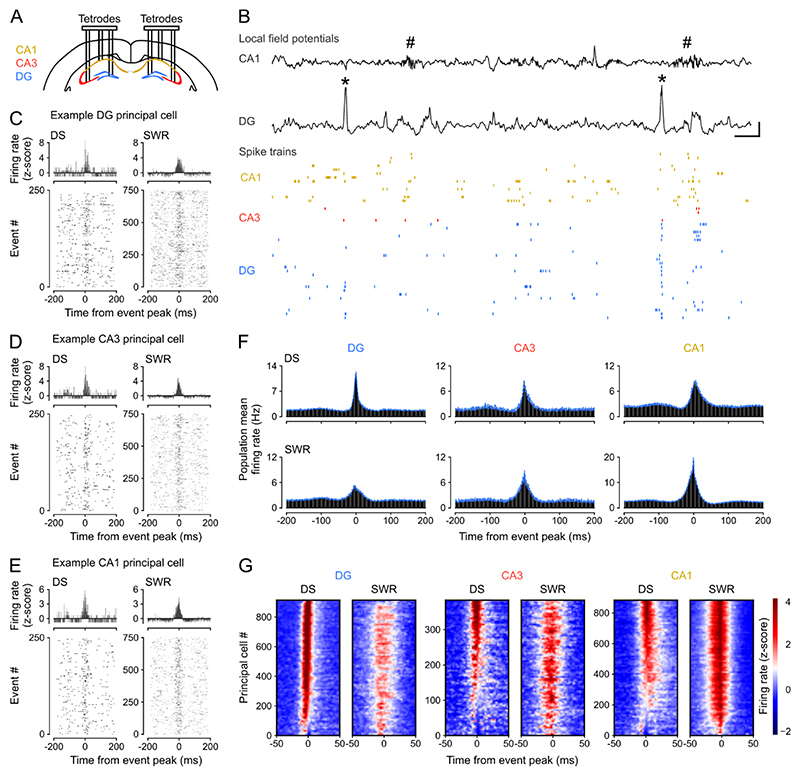
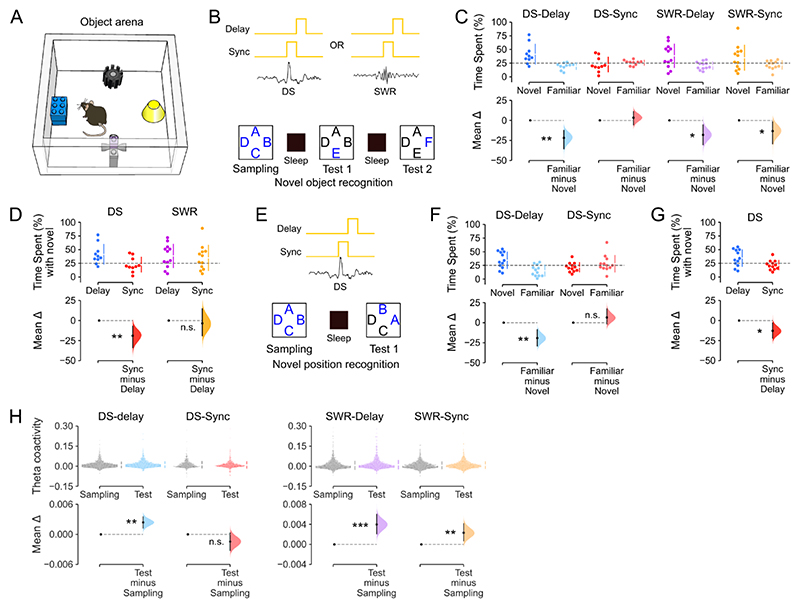
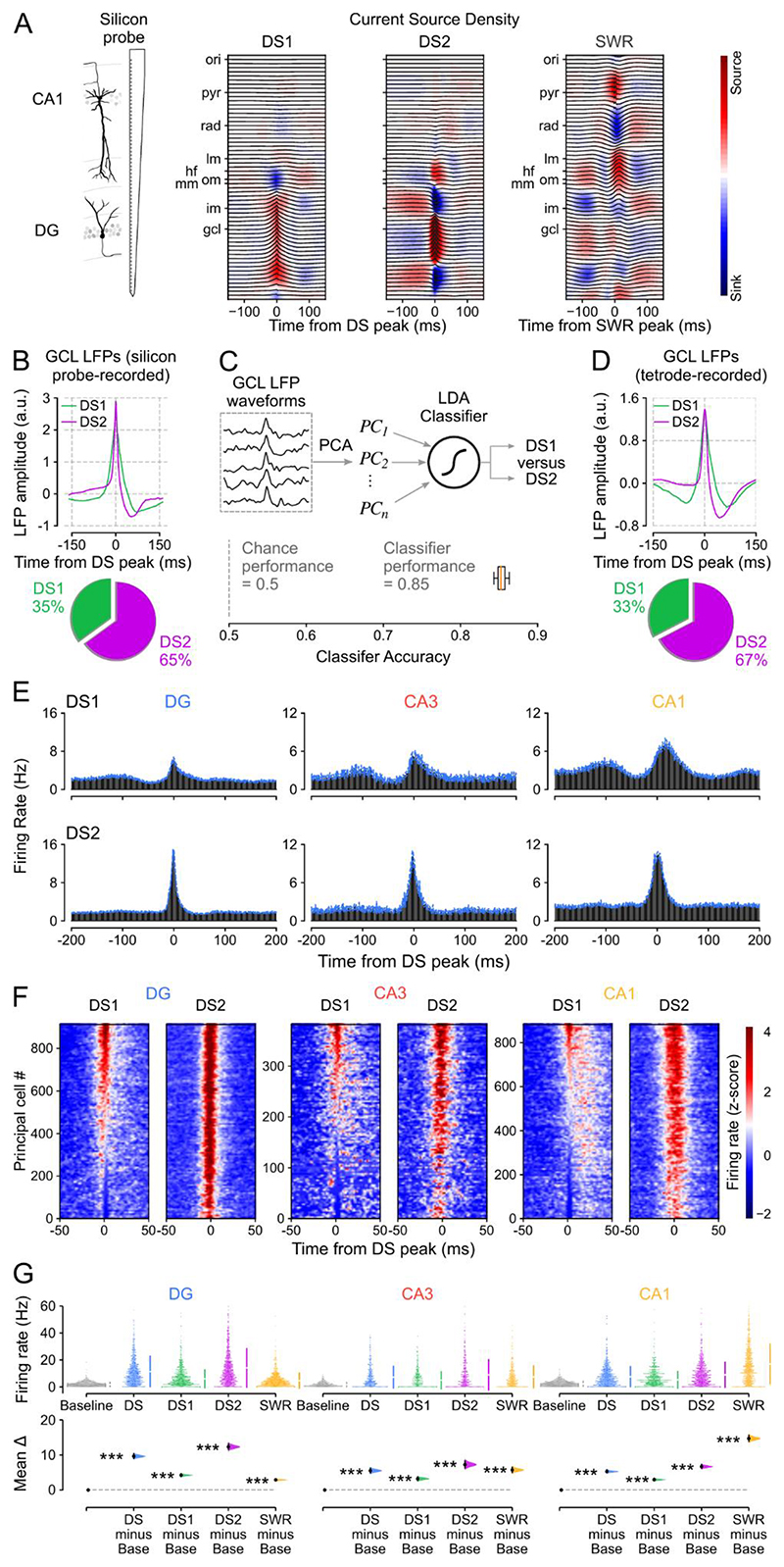
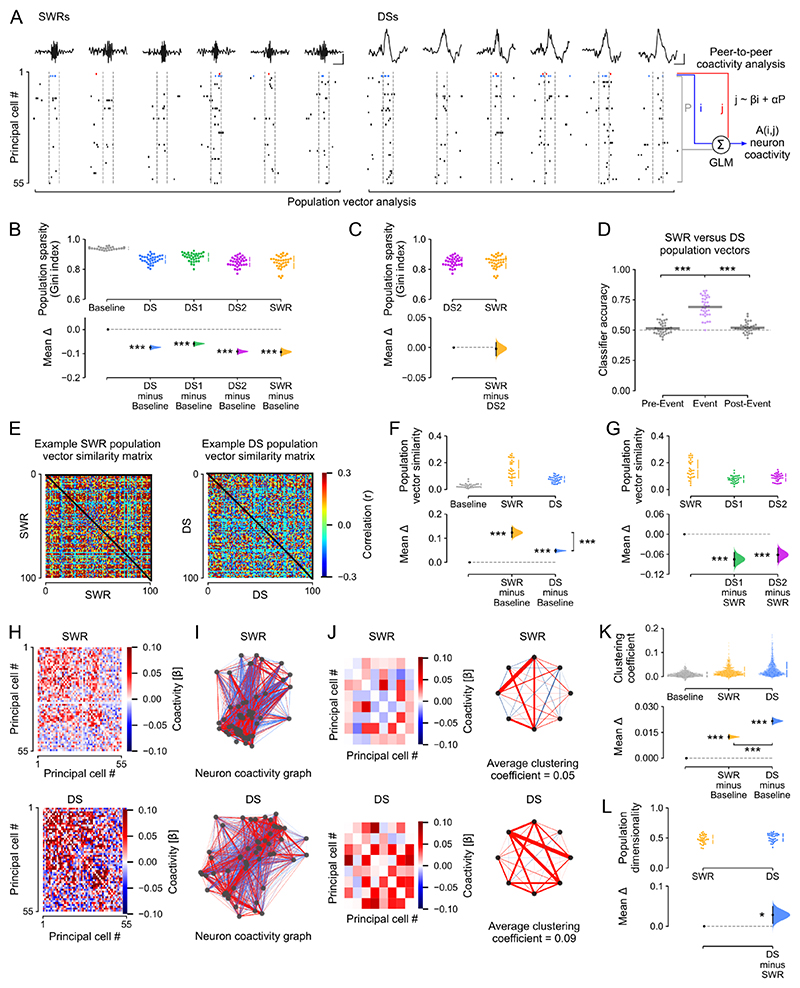
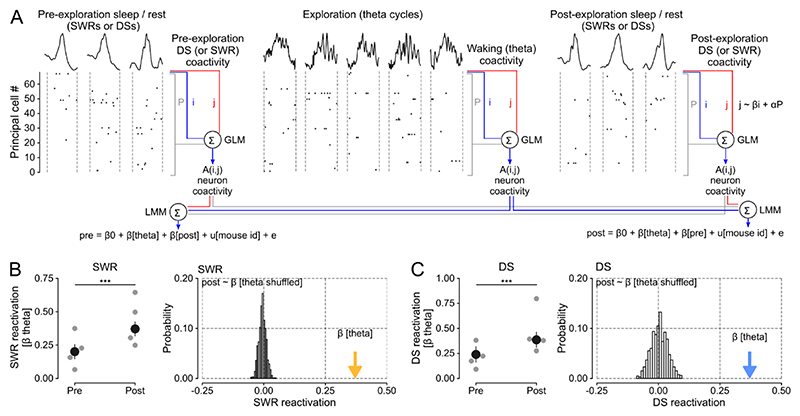
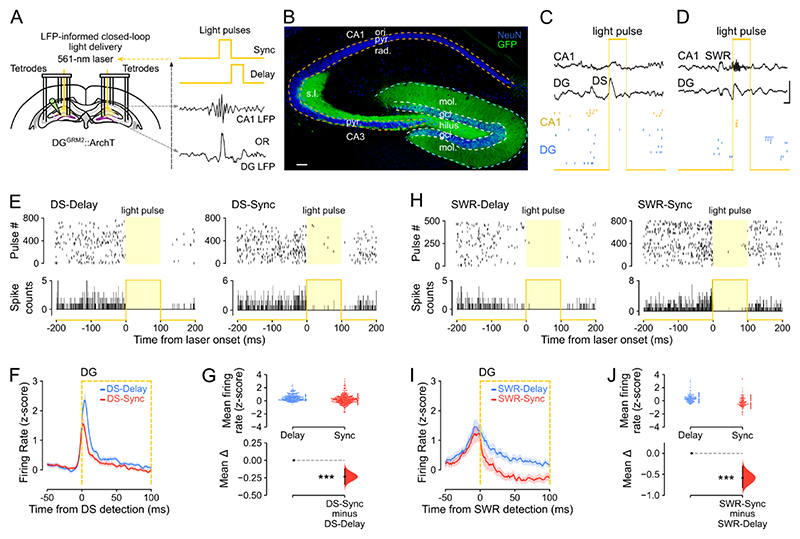
Stabilizing new memories requires coordinated neuronal spiking activity during sleep. Hippocampal sharp-wave ripples (SWRs) in the cornu ammonis (CA) region and dentate spikes (DSs) in the dentate gyrus (DG) are prime candidate network events for supporting this offline process. SWRs have been studied extensively, but the contribution of DSs remains unclear. By combining triple-ensemble (DG-CA3-CA1) recordings and closed-loop optogenetics in mice, we show that, like SWRs, DSs synchronize spiking across DG and CA principal cells to reactivate population-level patterns of neuronal coactivity expressed during prior waking experience. Notably, the population coactivity structure in DSs is more diverse and higher dimensional than that seen during SWRs. Importantly, suppressing DG granule cell spiking selectively during DSs impairs subsequent flexible memory performance during multi-object recognition tasks and associated hippocampal patterns of neuronal coactivity. We conclude that DSs constitute a second offline network event central to hippocampal population dynamics serving memory-guided behavior.
稳定新记忆需要睡眠期间神经元放电活动的协调。在Cornu ammonis (CA) 区域的海马尖波涟漪 (SWR) 和齿状回 (DG) 的齿状尖波 (DS) 是支持此离线过程的主要候选网络事件。SWR 已经得到了广泛的研究,但 DS 的贡献仍然不清楚。通过在小鼠中结合三重集合 (DG-CA3-CA1) 记录和闭环光遗传学,我们表明,与 SWR 一样,DS 会在 DG 和 CA 主细胞之间同步放电,以重新激活在之前清醒体验中表达的群体水平神经元共激活模式。值得注意的是,DS 中的群体共激活结构比 SWR 中看到的更加多样化和高维。重要的是,在 DS 期间选择性地抑制 DG 颗粒细胞的放电会损害随后在多物体识别任务中的灵活记忆表现和相关的海马神经元共激活模式。我们得出结论,DS 构成了第二个离线网络事件,对于海马体群体动力学和记忆引导行为至关重要。