Department of Neurosurgery, Stanford University, Stanford, CA, USA.
F.M. Kirby Neurobiology Center and Rosamund Stone Zander Translational Neuroscience Center, Boston Children's Hospital, Boston, MA, USA.
Nature. 2024 Apr;628(8008):590-595. doi: 10.1038/s41586-024-07192-8. Epub 2024 Mar 13.
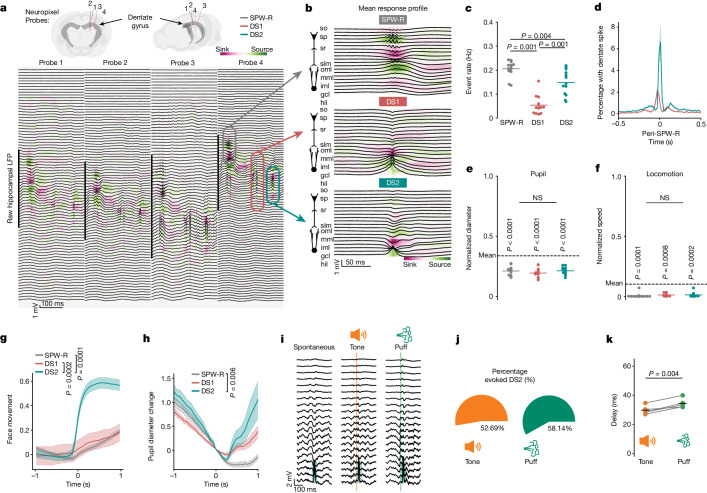
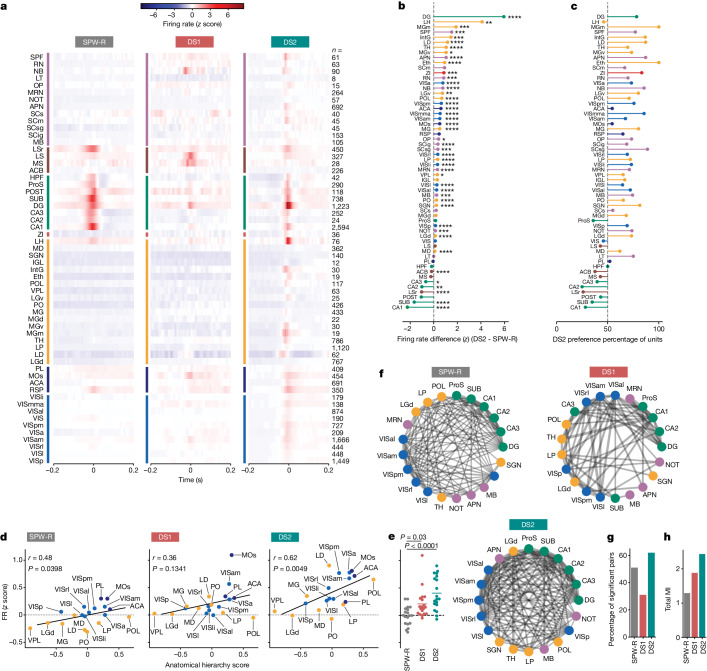
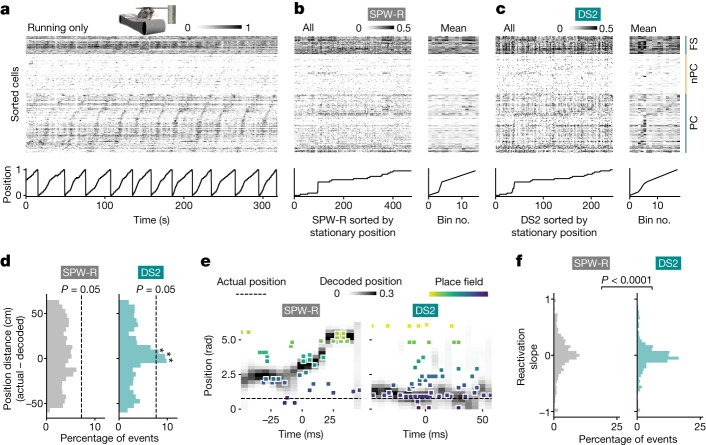
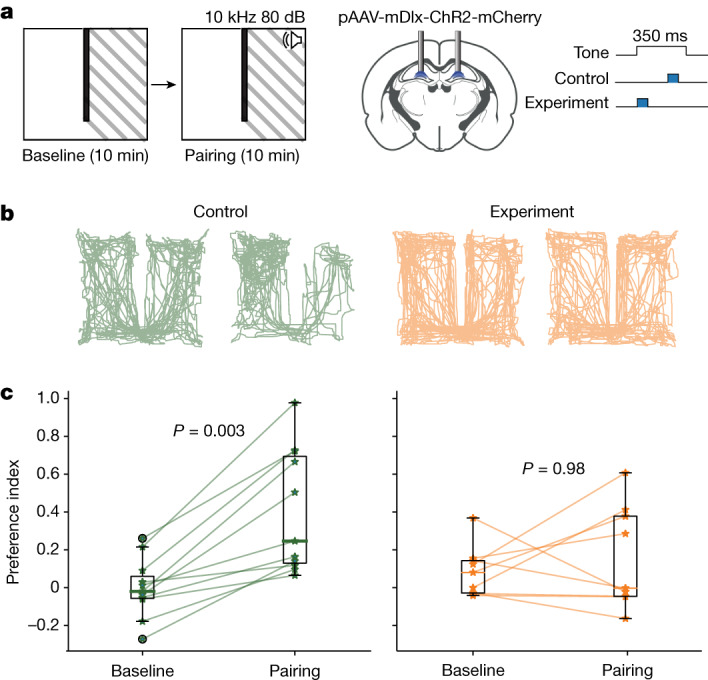
Distinct brain and behavioural states are associated with organized neural population dynamics that are thought to serve specific cognitive functions. Memory replay events, for example, occur during synchronous population events called sharp-wave ripples in the hippocampus while mice are in an 'offline' behavioural state, enabling cognitive mechanisms such as memory consolidation and planning. But how does the brain re-engage with the external world during this behavioural state and permit access to current sensory information or promote new memory formation? Here we found that the hippocampal dentate spike, an understudied population event that frequently occurs between sharp-wave ripples, may underlie such a mechanism. We show that dentate spikes are associated with distinctly elevated brain-wide firing rates, primarily observed in higher order networks, and couple to brief periods of arousal. Hippocampal place coding during dentate spikes aligns to the mouse's current spatial location, unlike the memory replay accompanying sharp-wave ripples. Furthermore, inhibiting neural activity during dentate spikes disrupts associative memory formation. Thus, dentate spikes represent a distinct brain state and support memory during non-locomotor behaviour, extending the repertoire of cognitive processes beyond the classical offline functions.
不同的大脑和行为状态与有组织的神经群体动力学相关联,这些群体动力学被认为服务于特定的认知功能。例如,记忆重放事件发生在海马体中称为尖波涟漪的同步群体事件期间,而老鼠处于“离线”行为状态,从而使记忆巩固和计划等认知机制能够发挥作用。但是,在这种行为状态下,大脑如何重新与外部世界接触,并允许访问当前的感官信息或促进新的记忆形成?在这里,我们发现海马齿状突峰(一种研究较少的群体事件,经常发生在尖波涟漪之间)可能是这种机制的基础。我们表明,齿状突峰与明显升高的全脑发射率相关联,主要在高级网络中观察到,并且与短暂的觉醒期相关联。齿状突峰期间的海马体位置编码与老鼠的当前空间位置对齐,与伴随尖波涟漪的记忆重放不同。此外,在齿状突峰期间抑制神经活动会破坏联想记忆的形成。因此,齿状突峰代表了一种独特的大脑状态,并在非运动行为期间支持记忆,将认知过程的范围扩展到经典的离线功能之外。