
用于预测胃癌预后和免疫浸润的失巢凋亡相关长链非编码RNA特征
Anoikis-Related Long Non-Coding RNA Signatures to Predict Prognosis and Immune Infiltration of Gastric Cancer.
作者信息
Meng Wen-Jun, Guo Jia-Min, Huang Li, Zhang Yao-Yu, Zhu Yue-Ting, Tang Lian-Sha, Wang Jia-Ling, Li Hong-Shuai, Liu Ji-Yan
机构信息
Department of Biotherapy, Cancer Center, West China Hospital, Sichuan University, Chengdu 610041, China.
Division of Abdominal Tumor Multimodality Treatment, Cancer Center, West China Hospital, Sichuan University, Chengdu 610041, China.
出版信息
Bioengineering (Basel). 2024 Sep 5;11(9):893. doi: 10.3390/bioengineering11090893.
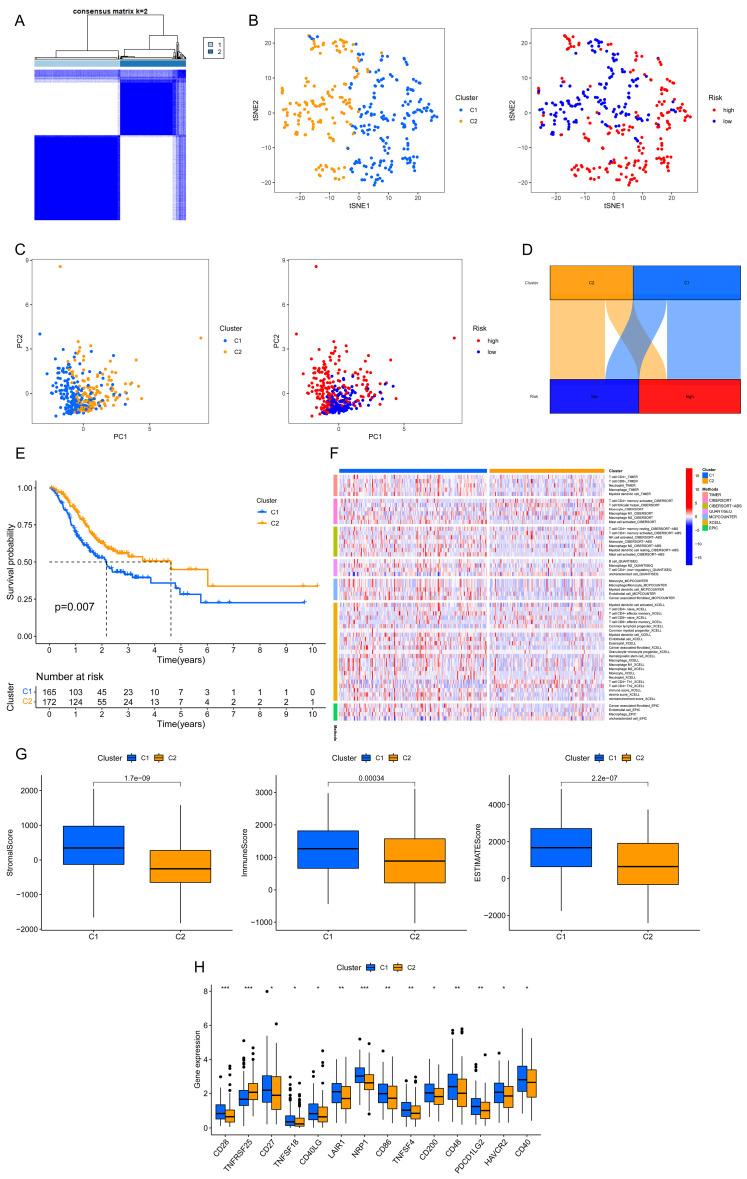
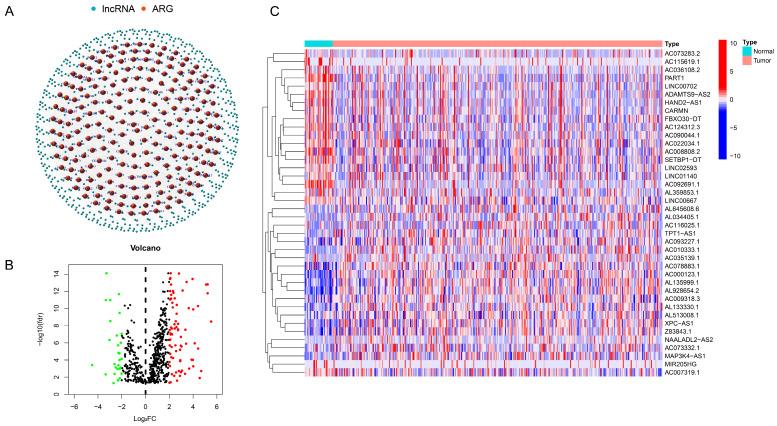
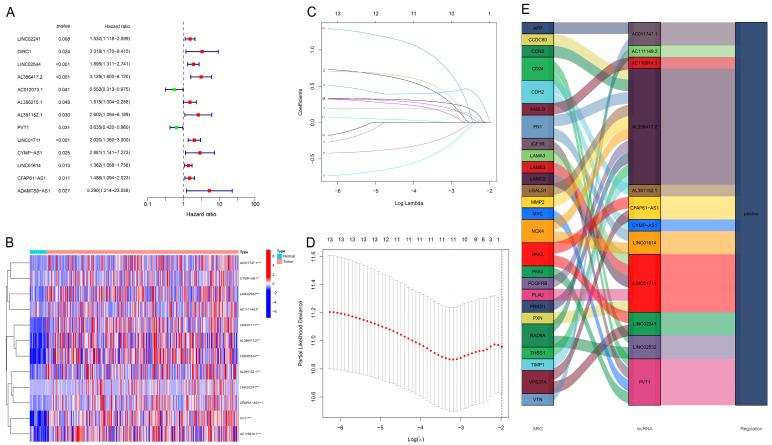
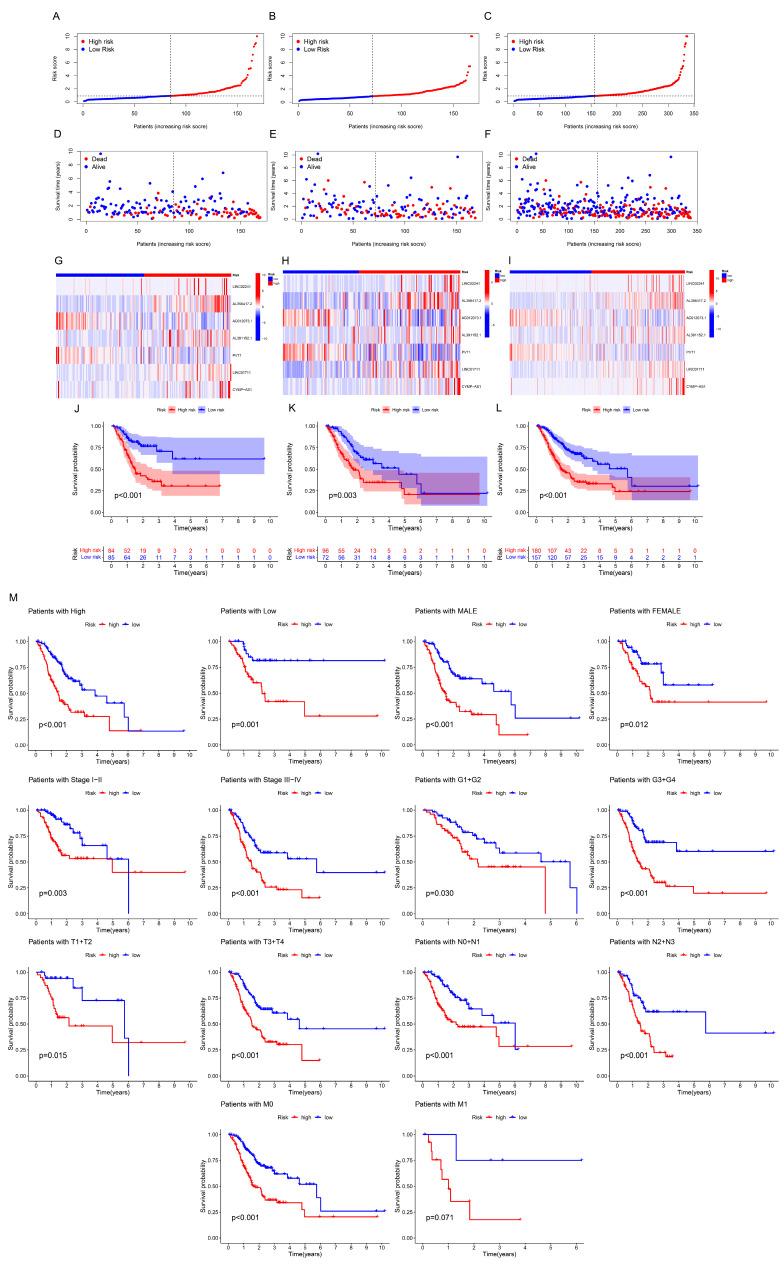
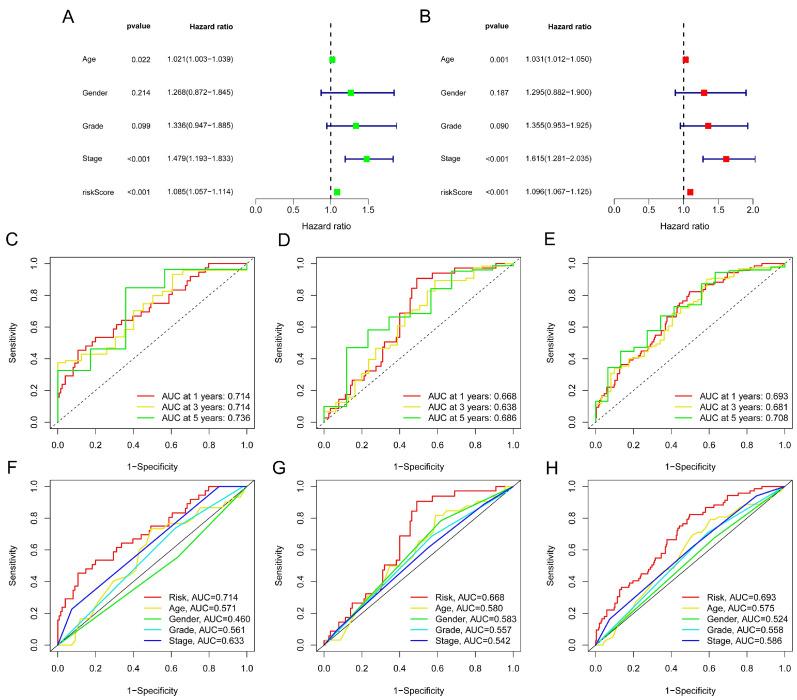
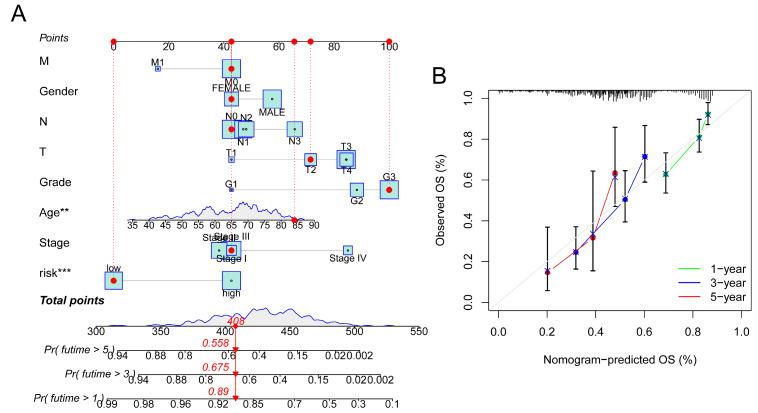
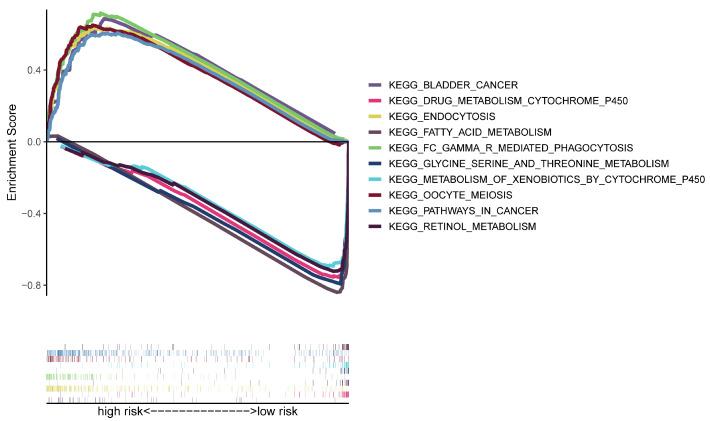
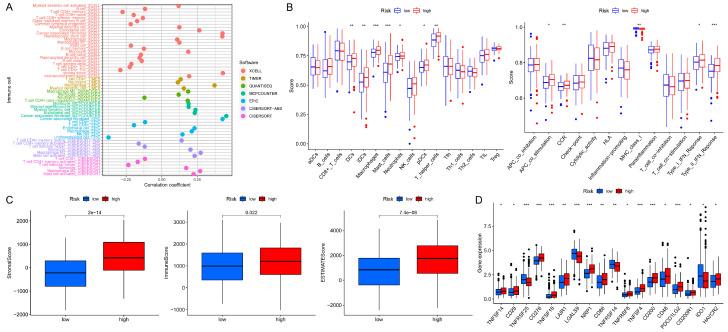
Anoikis is a distinct type of programmed cell death and a unique mechanism for tumor progress. However, its exact function in gastric cancer (GC) remains unknown. This study aims to investigate the function of anoikis-related lncRNA (ar-lncRNA) in the prognosis of GC and its immunological infiltration. The ar-lncRNAs were derived from RNA sequencing data and associated clinical information obtained from The Cancer Genome Atlas. Pearson correlation analysis, differential screening, LASSO and Cox regression were utilized to identify the typical ar-lncRNAs with prognostic significance, and the corresponding risk model was constructed, respectively. Comprehensive methods were employed to assess the clinical characteristics of the prediction model, ensuring the accuracy of the prediction results. Further analysis was conducted on the relationship between immune microenvironment and risk features, and sensitivity predictions were made about anticancer medicines. A risk model was built according to seven selected ar-lncRNAs. The model was validated and the calibration plots were highly consistent in validating nomogram predictions. Further analyses revealed the great accuracy of the model and its ability to serve as a stand-alone GC prognostic factor. We subsequently disclosed that high-risk groups display significant enrichment in pathways related to tumors and the immune system. Additionally, in tumor immunoassays, notable variations in immune infiltrates and checkpoints were noted between different risk groups. This study proposes, for the first time, that prognostic signatures of ar-lncRNA can be established in GC. These signatures accurately predict the prognosis of GC and offer potential biomarkers, suggesting new avenues for basic research, prognosis prediction and personalized diagnosis and treatment of GC.
失巢凋亡是一种独特的程序性细胞死亡类型,也是肿瘤进展的一种独特机制。然而,其在胃癌(GC)中的确切功能仍不清楚。本研究旨在探讨失巢凋亡相关长链非编码RNA(ar-lncRNA)在GC预后及其免疫浸润中的作用。ar-lncRNAs来源于RNA测序数据和从癌症基因组图谱获得的相关临床信息。利用Pearson相关分析、差异筛选、LASSO和Cox回归分别鉴定具有预后意义的典型ar-lncRNAs,并构建相应的风险模型。采用综合方法评估预测模型的临床特征,确保预测结果的准确性。进一步分析免疫微环境与风险特征之间的关系,并对抗癌药物进行敏感性预测。根据七个选定的ar-lncRNAs建立了一个风险模型。该模型经过验证,校准图在验证列线图预测时高度一致。进一步分析揭示了该模型的高度准确性及其作为独立的GC预后因素的能力。随后我们发现,高风险组在与肿瘤和免疫系统相关的通路中表现出显著富集。此外,在肿瘤免疫分析中,不同风险组之间的免疫浸润和检查点存在显著差异。本研究首次提出,可以在GC中建立ar-lncRNA的预后特征。这些特征准确预测GC的预后并提供潜在的生物标志物,为GC的基础研究、预后预测以及个性化诊断和治疗提供了新途径。
 Zotero 插件