• 文献检索
  • 文档翻译
  • 深度研究
  • 学术资讯
  • Suppr Zotero 插件Zotero 插件
  • 邀请有礼
  • 套餐&价格
  • 历史记录
应用&插件
Suppr Zotero 插件Zotero 插件浏览器插件Mac 客户端Windows 客户端微信小程序
定价
高级版会员购买积分包购买API积分包
服务
文献检索文档翻译深度研究API 文档MCP 服务
关于我们
关于 Suppr公司介绍联系我们用户协议隐私条款
关注我们

Suppr 超能文献

核心技术专利:CN118964589B侵权必究
粤ICP备2023148730 号-1Suppr @ 2026

文献检索

告别复杂PubMed语法,用中文像聊天一样搜索,搜遍4000万医学文献。AI智能推荐,让科研检索更轻松。

立即免费搜索

文件翻译

保留排版,准确专业,支持PDF/Word/PPT等文件格式,支持 12+语言互译。

免费翻译文档

深度研究

AI帮你快速写综述,25分钟生成高质量综述,智能提取关键信息,辅助科研写作。

立即免费体验

通过机器学习区分词汇语法选择,创建自闭症谱系障碍的诊断评估模型。

Creating a diagnostic assessment model for autism spectrum disorder by differentiating lexicogrammatical choices through machine learning.

机构信息

Department of Neuropsychiatry, Graduate School of Medicine, Hirosaki University, Hirosaki, Japan.

Faculty of Management and Law, Aomori Chuo Gakuin University, Aomori, Japan.

出版信息

PLoS One. 2024 Sep 27;19(9):e0311209. doi: 10.1371/journal.pone.0311209. eCollection 2024.

DOI:10.1371/journal.pone.0311209
PMID:39331681
原文链接:https://pmc.ncbi.nlm.nih.gov/articles/PMC11432897/
Abstract

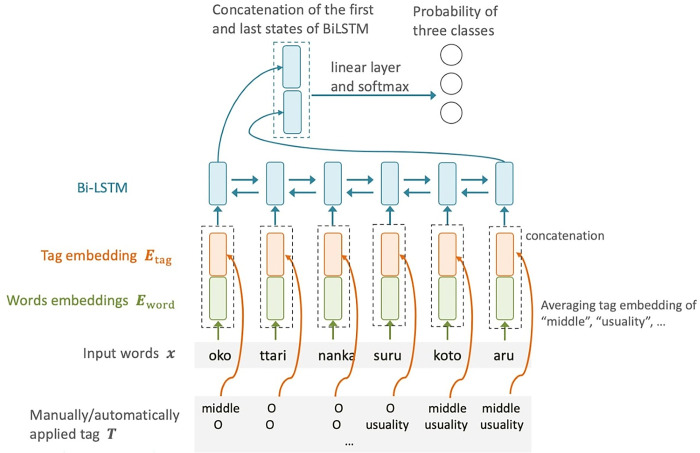
This study explores the challenge of differentiating autism spectrum (AS) from non-AS conditions in adolescents and adults, particularly considering the heterogeneity of AS and the limitations ofssss diagnostic tools like the ADOS-2. In response, we advocate a multidimensional approach and highlight lexicogrammatical analysis as a key component to improve diagnostic accuracy. From a corpus of spoken language we developed, interviews and story-recounting texts were extracted for 64 individuals diagnosed with AS and 71 non-AS individuals, all aged 14 and above. Utilizing machine learning techniques, we analyzed the lexicogrammatical choices in both interviews and story-recounting tasks. Our approach led to the formulation of two diagnostic models: the first based on annotated linguistic tags, and the second combining these tags with textual analysis. The combined model demonstrated high diagnostic effectiveness, achieving an accuracy of 80%, precision of 82%, sensitivity of 73%, and specificity of 87%. Notably, our analysis revealed that interview-based texts were more diagnostically effective than story-recounting texts. This underscores the altered social language use in individuals with AS, a csrucial aspect in distinguishing AS from non-AS conditions. Our findings demonstrate that lexicogrammatical analysis is a promising addition to traditional AS diagnostic methods. This approach suggests the possibility of using natural language processing to detect distinctive linguistic patterns in AS, aiming to enhance diagnostic accuracy for differentiating AS from non-AS in adolescents and adults.

摘要

本研究探讨了在青少年和成年人中区分自闭症谱系(AS)和非 AS 条件的挑战,特别是考虑到 AS 的异质性和 ADOS-2 等诊断工具的局限性。为此,我们提倡采用多维方法,并强调词汇语法分析是提高诊断准确性的关键组成部分。我们从一个口语语料库中开发了,对 64 名被诊断为 AS 的个体和 71 名非 AS 个体的访谈和故事叙述文本进行了提取,所有个体年龄均在 14 岁及以上。我们利用机器学习技术分析了访谈和故事叙述任务中的词汇语法选择。我们的方法形成了两个诊断模型:第一个基于注释的语言标签,第二个将这些标签与文本分析相结合。组合模型表现出很高的诊断效果,准确率为 80%,精度为 82%,灵敏度为 73%,特异性为 87%。值得注意的是,我们的分析表明,基于访谈的文本比故事叙述文本更具诊断效果。这突显了 AS 个体中社交语言使用的改变,这是区分 AS 和非 AS 条件的关键方面。我们的研究结果表明,词汇语法分析是传统 AS 诊断方法的一个有前途的补充。这种方法表明有可能使用自然语言处理来检测 AS 中的独特语言模式,旨在提高青少年和成年人中区分 AS 和非 AS 的诊断准确性。

https://cdn.ncbi.nlm.nih.gov/pmc/blobs/2e2a/11432897/53f93912e08a/pone.0311209.g006.jpg
https://cdn.ncbi.nlm.nih.gov/pmc/blobs/2e2a/11432897/e6264219ae0a/pone.0311209.g001.jpg
https://cdn.ncbi.nlm.nih.gov/pmc/blobs/2e2a/11432897/3382d55e29b3/pone.0311209.g002.jpg
https://cdn.ncbi.nlm.nih.gov/pmc/blobs/2e2a/11432897/fe3968b45d7d/pone.0311209.g003.jpg
https://cdn.ncbi.nlm.nih.gov/pmc/blobs/2e2a/11432897/4521ee6b4f16/pone.0311209.g004.jpg
https://cdn.ncbi.nlm.nih.gov/pmc/blobs/2e2a/11432897/2cb1dcef0b68/pone.0311209.g005.jpg
https://cdn.ncbi.nlm.nih.gov/pmc/blobs/2e2a/11432897/53f93912e08a/pone.0311209.g006.jpg
https://cdn.ncbi.nlm.nih.gov/pmc/blobs/2e2a/11432897/e6264219ae0a/pone.0311209.g001.jpg
https://cdn.ncbi.nlm.nih.gov/pmc/blobs/2e2a/11432897/3382d55e29b3/pone.0311209.g002.jpg
https://cdn.ncbi.nlm.nih.gov/pmc/blobs/2e2a/11432897/fe3968b45d7d/pone.0311209.g003.jpg
https://cdn.ncbi.nlm.nih.gov/pmc/blobs/2e2a/11432897/4521ee6b4f16/pone.0311209.g004.jpg
https://cdn.ncbi.nlm.nih.gov/pmc/blobs/2e2a/11432897/2cb1dcef0b68/pone.0311209.g005.jpg
https://cdn.ncbi.nlm.nih.gov/pmc/blobs/2e2a/11432897/53f93912e08a/pone.0311209.g006.jpg

相似文献

1
Creating a diagnostic assessment model for autism spectrum disorder by differentiating lexicogrammatical choices through machine learning.通过机器学习区分词汇语法选择,创建自闭症谱系障碍的诊断评估模型。
PLoS One. 2024 Sep 27;19(9):e0311209. doi: 10.1371/journal.pone.0311209. eCollection 2024.
2
Toward mapping pragmatic impairment of autism spectrum disorder individuals through the development of a corpus of spoken Japanese.通过开发日语口语语料库,探索自闭症谱系障碍个体语用障碍的映射。
PLoS One. 2022 Feb 25;17(2):e0264204. doi: 10.1371/journal.pone.0264204. eCollection 2022.
3
Identifying predictive features of autism spectrum disorders in a clinical sample of adolescents and adults using machine learning.使用机器学习在青少年和成人临床样本中识别自闭症谱系障碍的预测特征。
Sci Rep. 2020 Mar 18;10(1):4805. doi: 10.1038/s41598-020-61607-w.
4
[ADI-R and ADOS and the differential diagnosis of autism spectrum disorders: Interests, limits and openings].[《孤独症诊断访谈修订版(ADI-R)与孤独症诊断观察量表(ADOS)及孤独症谱系障碍的鉴别诊断:意义、局限与展望》]
Encephale. 2019 Nov;45(5):441-448. doi: 10.1016/j.encep.2019.07.002. Epub 2019 Sep 5.
5
Correction: Creating a diagnostic assessment model for autism spectrum disorder by differentiating lexicogrammatical choices through machine learning.更正:通过机器学习区分词汇语法选择来创建自闭症谱系障碍的诊断评估模型。
PLoS One. 2025 Apr 2;20(4):e0320613. doi: 10.1371/journal.pone.0320613. eCollection 2025.
6
Detecting autism from picture book narratives using deep neural utterance embeddings.使用深度神经网络话语嵌入来从绘本故事中检测自闭症。
Int J Lang Commun Disord. 2022 Sep;57(5):948-962. doi: 10.1111/1460-6984.12731. Epub 2022 May 12.
7
Use of machine learning to improve autism screening and diagnostic instruments: effectiveness, efficiency, and multi-instrument fusion.利用机器学习改进自闭症筛查和诊断工具:有效性、效率及多工具融合
J Child Psychol Psychiatry. 2016 Aug;57(8):927-37. doi: 10.1111/jcpp.12559. Epub 2016 Apr 19.
8
Using machine learning to identify patterns of lifetime health problems in decedents with autism spectrum disorder.利用机器学习识别自闭症谱系障碍死者一生中健康问题的模式。
Autism Res. 2018 Aug;11(8):1120-1128. doi: 10.1002/aur.1960. Epub 2018 May 7.
9
Detecting Autism Spectrum Disorder and Attention Deficit Hyperactivity Disorder Using Multimodal Time-Frequency Analysis with Machine Learning Using the Electroretinogram from Two Flash Strengths.利用两种闪光强度的视网膜电图,通过机器学习的多模态时频分析检测自闭症谱系障碍和注意力缺陷多动障碍。
J Autism Dev Disord. 2025 Apr;55(4):1365-1378. doi: 10.1007/s10803-024-06290-w. Epub 2024 Feb 23.
10
A new machine learning model based on induction of rules for autism detection.一种基于规则归纳的用于自闭症检测的新型机器学习模型。
Health Informatics J. 2020 Mar;26(1):264-286. doi: 10.1177/1460458218824711. Epub 2019 Jan 29.

引用本文的文献

1
Cognitive constraints and lexicogrammatical variability in ASD: from diagnostic discriminators to intervention strategies.自闭症谱系障碍中的认知限制与词汇语法变异性:从诊断鉴别因素到干预策略
Front Hum Neurosci. 2025 Aug 1;19:1606701. doi: 10.3389/fnhum.2025.1606701. eCollection 2025.
2
Using explainable machine learning and eye-tracking for diagnosing autism spectrum and developmental language disorders in social attention tasks.在社交注意力任务中使用可解释的机器学习和眼动追踪技术来诊断自闭症谱系障碍和发育性语言障碍。
Front Neurosci. 2025 Jun 24;19:1558621. doi: 10.3389/fnins.2025.1558621. eCollection 2025.
3
Correction: Creating a diagnostic assessment model for autism spectrum disorder by differentiating lexicogrammatical choices through machine learning.

本文引用的文献

1
Examining the Diagnostic Validity of Autism Measures Among Adults in an Outpatient Clinic Sample.在门诊样本中检验成人自闭症测量方法的诊断效度。
Autism Adulthood. 2019 Mar 1;1(1):60-68. doi: 10.1089/aut.2018.0023. Epub 2019 Mar 11.
2
Using machine learning to improve diagnostic assessment of ASD in the light of specific differential and co-occurring diagnoses.利用机器学习,根据特定的鉴别诊断和共病诊断来改进自闭症谱系障碍的诊断评估。
J Child Psychol Psychiatry. 2023 Jan;64(1):16-26. doi: 10.1111/jcpp.13650. Epub 2022 Jul 1.
3
Toward mapping pragmatic impairment of autism spectrum disorder individuals through the development of a corpus of spoken Japanese.
更正:通过机器学习区分词汇语法选择来创建自闭症谱系障碍的诊断评估模型。
PLoS One. 2025 Apr 2;20(4):e0320613. doi: 10.1371/journal.pone.0320613. eCollection 2025.
通过开发日语口语语料库,探索自闭症谱系障碍个体语用障碍的映射。
PLoS One. 2022 Feb 25;17(2):e0264204. doi: 10.1371/journal.pone.0264204. eCollection 2022.
4
Predicting diagnostic outcome in adult autism spectrum disorder using the autism diagnostic observation schedule, second edition.使用孤独症诊断观察量表第二版预测成人孤独症谱系障碍的诊断结果。
BMC Psychiatry. 2021 Jan 10;21(1):24. doi: 10.1186/s12888-020-03028-7.
5
Disentangling syntactic, semantic and pragmatic impairments in ASD: Elicited production of passives.自闭症患者句法、语义和语用障碍的剖析:被动语态的诱发产出。
J Child Lang. 2021 Jan;48(1):184-201. doi: 10.1017/S0305000920000215. Epub 2020 May 14.
6
Rethinking the critical period for language: New insights into an old question from American Sign Language.重新思考语言的关键期:从美国手语对一个老问题的新见解。
Biling (Camb Engl). 2018 Nov;21(5):938-944. doi: 10.1017/S1366728918000585. Epub 2018 Jun 13.
7
Autistic Symptoms in Schizophrenia Spectrum Disorders: A Systematic Review and Meta-Analysis.精神分裂症谱系障碍中的自闭症症状:一项系统评价与荟萃分析。
Front Psychiatry. 2019 Feb 21;10:78. doi: 10.3389/fpsyt.2019.00078. eCollection 2019.
8
Revisiting the bilingual lexical deficit: The impact of age of acquisition.重新审视双语词汇缺陷:习得年龄的影响。
Cognition. 2019 Jan;182:45-49. doi: 10.1016/j.cognition.2018.08.020. Epub 2018 Sep 11.
9
Building Language Resources for Exploring Autism Spectrum Disorders.构建用于探索自闭症谱系障碍的语言资源。
LREC Int Conf Lang Resour Eval. 2016 May;2016:2100-2107.
10
Machine learning approach for early detection of autism by combining questionnaire and home video screening.基于问卷和家庭录像筛查的机器学习方法,用于早期自闭症检测。
J Am Med Inform Assoc. 2018 Aug 1;25(8):1000-1007. doi: 10.1093/jamia/ocy039.