Faculty of Medical Sciences of Minas Gerais, Alameda Ezequiel Dias, 275, Belo Horizonte 30130-110, MG, Brazil.
Observatory of Epidemiology, Nutrition and Health Research (OPENS), Alameda Ezequiel Dias, 275, Belo Horizonte 30130-110, MG, Brazil.
Int J Environ Res Public Health. 2024 Sep 10;21(9):1199. doi: 10.3390/ijerph21091199.
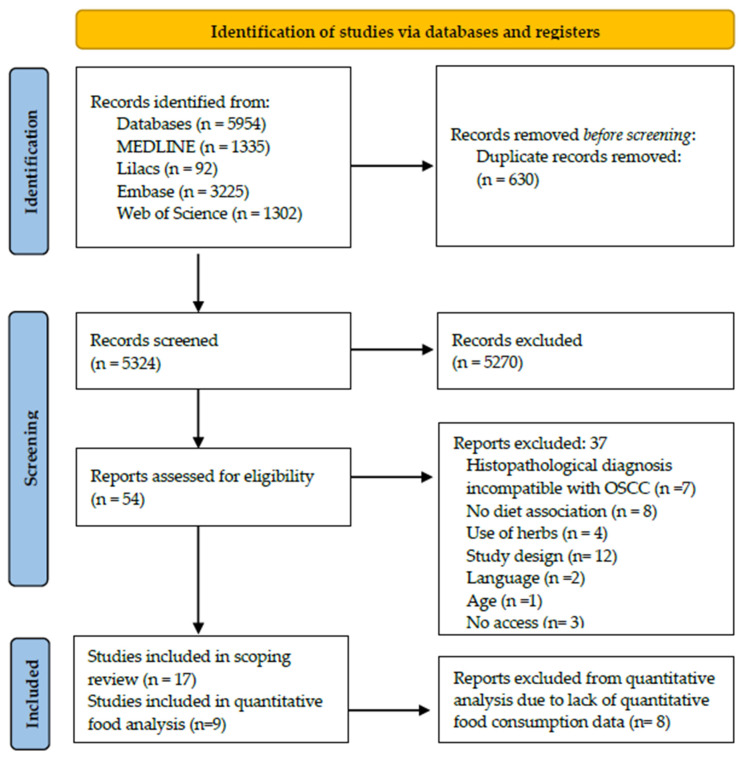
Oral squamous cell carcinoma (OSCC) is the sixth most common type of cancer globally. While smoking is a key risk factor, rising cases in non-smokers highlight the need to explore other factors like diet. This scoping review aims to deepen the evidence on the relationship between OSCC and diet, following PRISMA-ScR guidelines, and was registered on Open Science Framework. Searches were performed in four electronic databases: MEDLINE, Embase, Web of Science, and Lilacs, without date or language restrictions. Studies were evaluated, extracted, and compiled in a narrative table. Seventeen studies with 10,954 patients were analyzed. Most patients were male (74.63%), aged 18-89 (average 50.62). Studies were mainly from high (82%) and medium (17%) Human Development Index (HDI) countries. Dietary surveys included a Food Frequency Questionnaire (FFQ) (58.8%), interviews/questionnaires (17.6%), and an FFQ with a photographic atlas (5.9%). Certain foods in excess like fruits, vegetables, and tea were inversely associated with OSCC, while salty meats, dairy, coffee, sausages, and fried and spicy foods were positively associated. Due to the heterogeneity of the tools used to obtain food frequency data, the results should be interpreted cautiously. New standardized studies and randomized trials are essential to advance understanding and control confounding factors in this field.
口腔鳞状细胞癌(OSCC)是全球第六大常见癌症类型。虽然吸烟是一个关键的风险因素,但在不吸烟者中发病率上升的情况突出表明需要探索其他因素,如饮食。本范围综述旨在根据 PRISMA-ScR 指南深入研究 OSCC 与饮食之间的关系证据,并在开放科学框架上进行了注册。在四个电子数据库中进行了搜索:MEDLINE、Embase、Web of Science 和 Lilacs,没有日期或语言限制。研究在叙述性表格中进行评估、提取和编制。分析了 17 项研究,涉及 10954 名患者。大多数患者为男性(74.63%),年龄在 18-89 岁之间(平均年龄 50.62 岁)。研究主要来自高(82%)和中(17%)人类发展指数(HDI)国家。膳食调查包括食物频率问卷(FFQ)(58.8%)、访谈/问卷(17.6%)和带照片图谱的 FFQ(5.9%)。过量的某些食物,如水果、蔬菜和茶,与 OSCC 呈负相关,而咸肉、乳制品、咖啡、香肠、油炸和辛辣食物则与 OSCC 呈正相关。由于用于获取食物频率数据的工具存在异质性,因此应谨慎解释结果。在该领域,需要新的标准化研究和随机试验来推进理解和控制混杂因素。