Sun Xiao-Wei, Li Hong-Rui, Jin Xiao-Lei, Tang Xiao, Wang Da-Wen, Zhang Xiao, Zhang Jian-Gang
Pathology Institute, School of Basic Medical Sciences, Lanzhou University, Lanzhou 730000, China.
Microorganisms. 2024 Aug 25;12(9):1764. doi: 10.3390/microorganisms12091764.
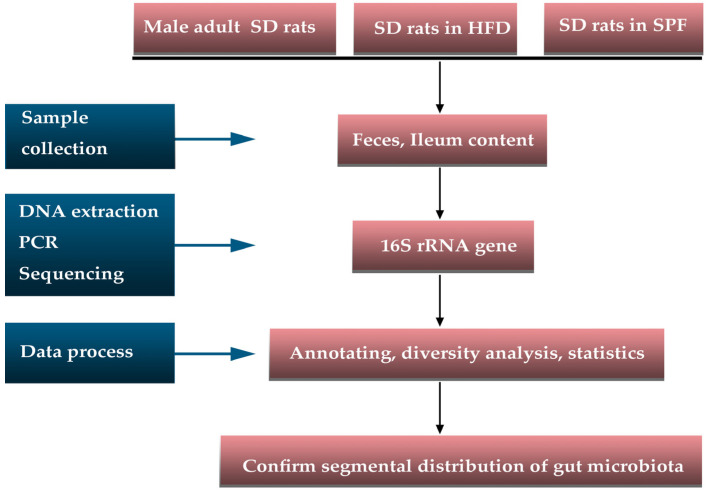
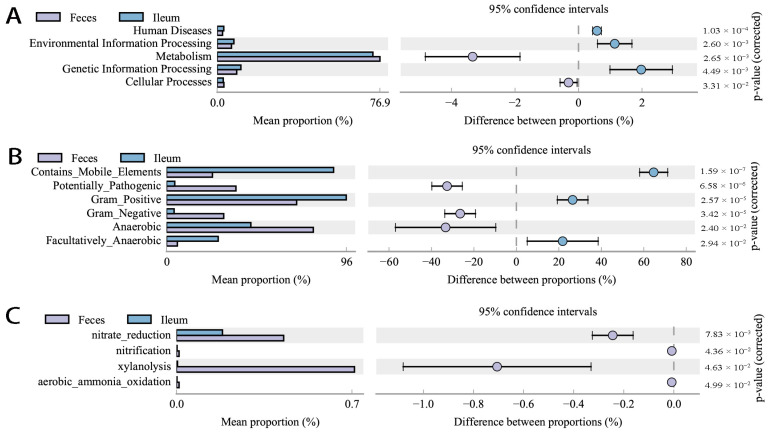
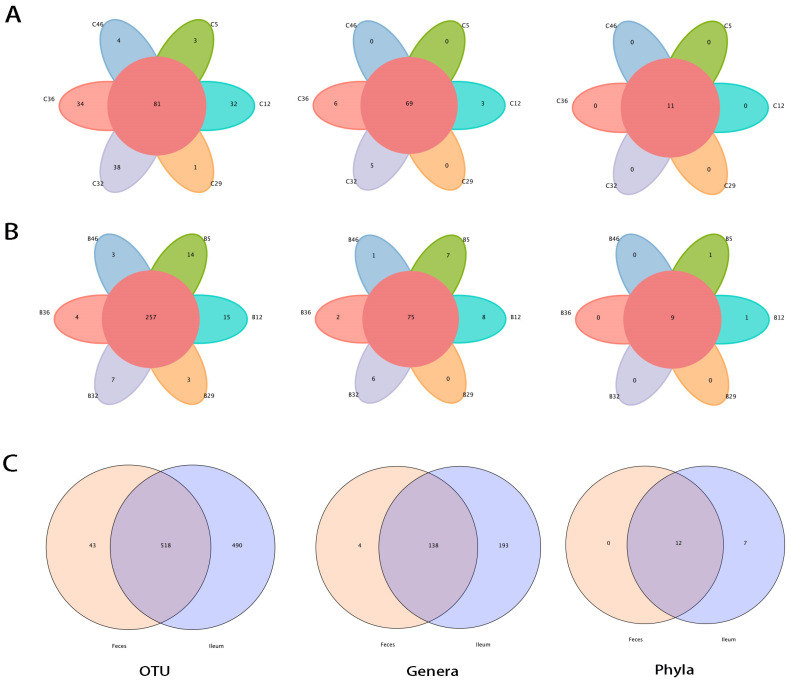
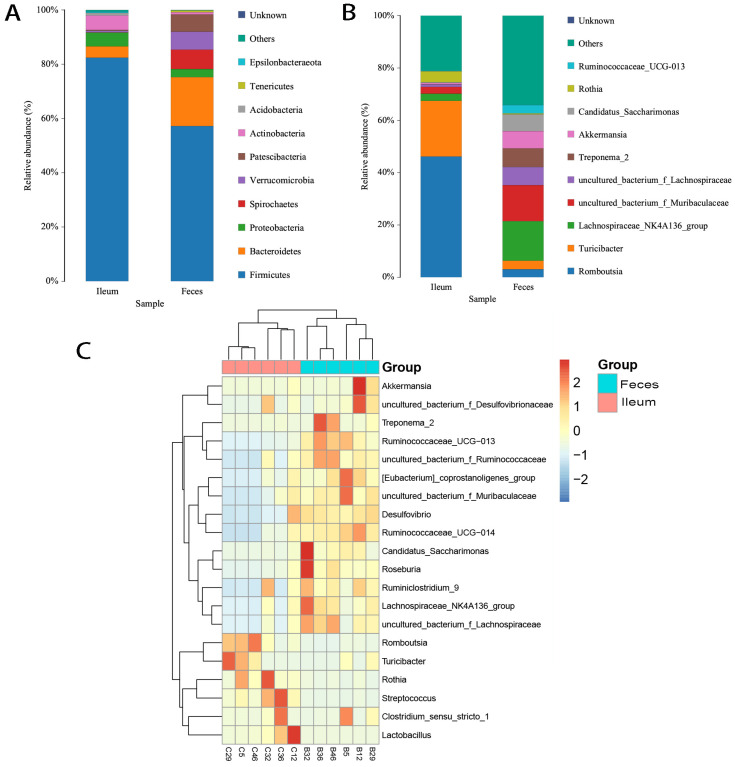
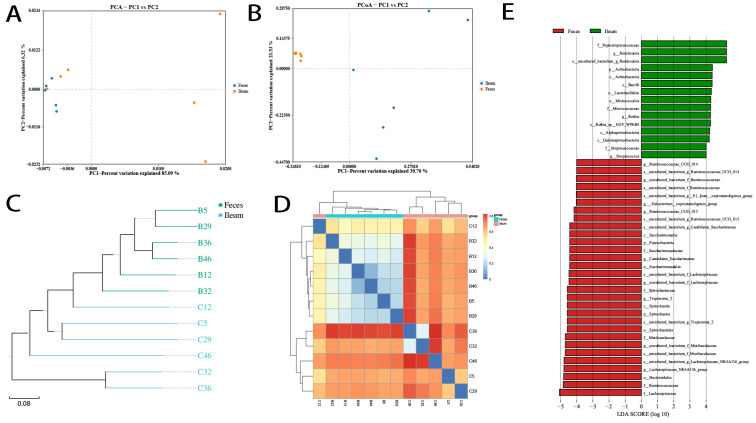
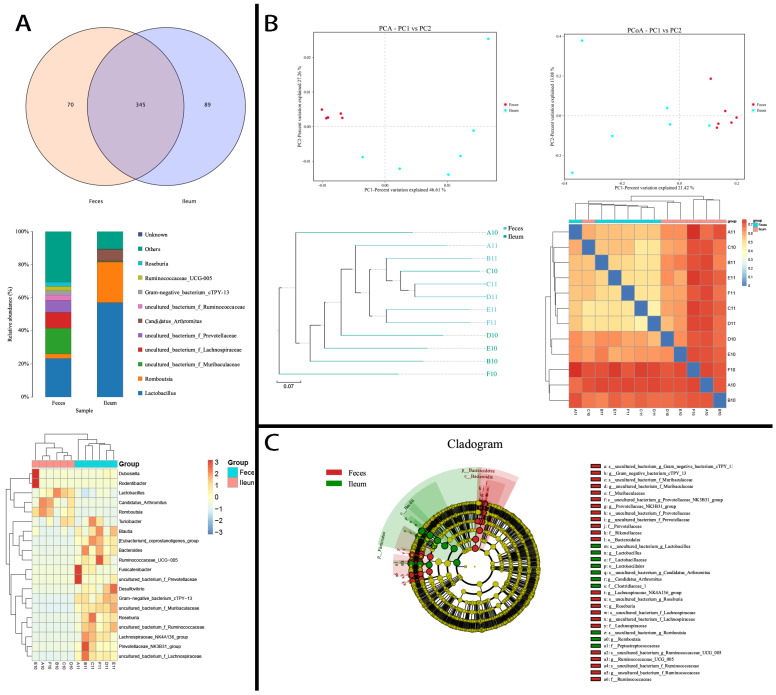
To compare the differences in floral composition and functions between the two types of microbiota, ileal contents and feces were collected from Sprague Dawley (SD) rats fed in a conventional or specific-pathogen free (SPF) environment and rats fed a high-fat diet (HFD), and the V3-V4 region of the 16S ribosomal ribonucleic acid (rRNA) gene in these rats was then amplified and sequenced. Compared with feces, about 60% of the bacterial genera in the ileum were exclusive, with low abundance (operational taxonomic units (OTUs) < 1000). Of bacteria shared between the ileum and feces, a few genera were highly abundant (dominant), whereas most had low abundance (less dominant). The dominant bacteria differed between the ileum and feces. Ileal bacteria showed greater β-diversity, and the distance between in-group samples was nearer than that between paired ileum-feces samples. Moreover, the ileum shared various biomarkers and functions with feces ( < 0.05). The HFD and SPF conditions had a profound influence on α-diversity and abundance but not on the exclusive/shared features or β-diversity of samples. The present findings suggested that, under conventional circumstances, fecal bacteria can represent approximately 40% of the low abundant ileal bacterial genera and that dominant fecal bacteria failed to represent the ileal dominant flora. Moreover, fecal flora diversity does not reflect β-diversity in the ileum.
为比较两种微生物群在菌群组成和功能上的差异,从饲养于常规环境或无特定病原体(SPF)环境的Sprague Dawley(SD)大鼠以及高脂饮食(HFD)喂养的大鼠中收集回肠内容物和粪便,然后对这些大鼠16S核糖体核糖核酸(rRNA)基因的V3 - V4区域进行扩增和测序。与粪便相比,回肠中约60%的细菌属是独有的,丰度较低(可操作分类单元(OTU)<1000)。在回肠和粪便共有的细菌中,少数属丰度高(占主导),而大多数丰度低(不太占主导)。回肠和粪便中的优势细菌不同。回肠细菌表现出更大的β多样性,组内样本间的距离比配对的回肠 - 粪便样本间的距离更近。此外,回肠与粪便共享多种生物标志物和功能(<0.05)。高脂饮食和SPF条件对α多样性和丰度有深远影响,但对样本的独有/共享特征或β多样性没有影响。目前的研究结果表明,在常规情况下,粪便细菌可代表约40%的低丰度回肠细菌属,而粪便中的优势细菌不能代表回肠优势菌群。此外,粪便菌群多样性不能反映回肠中的β多样性。