Department of Biomedical Engineering, I-Shou University, Kaohsiung 82445, Taiwan.
Department of Computer Science and Information Engineering, Chaoyang University of Technology, Taichung 413310, Taiwan.
Sensors (Basel). 2024 Sep 12;24(18):5922. doi: 10.3390/s24185922.
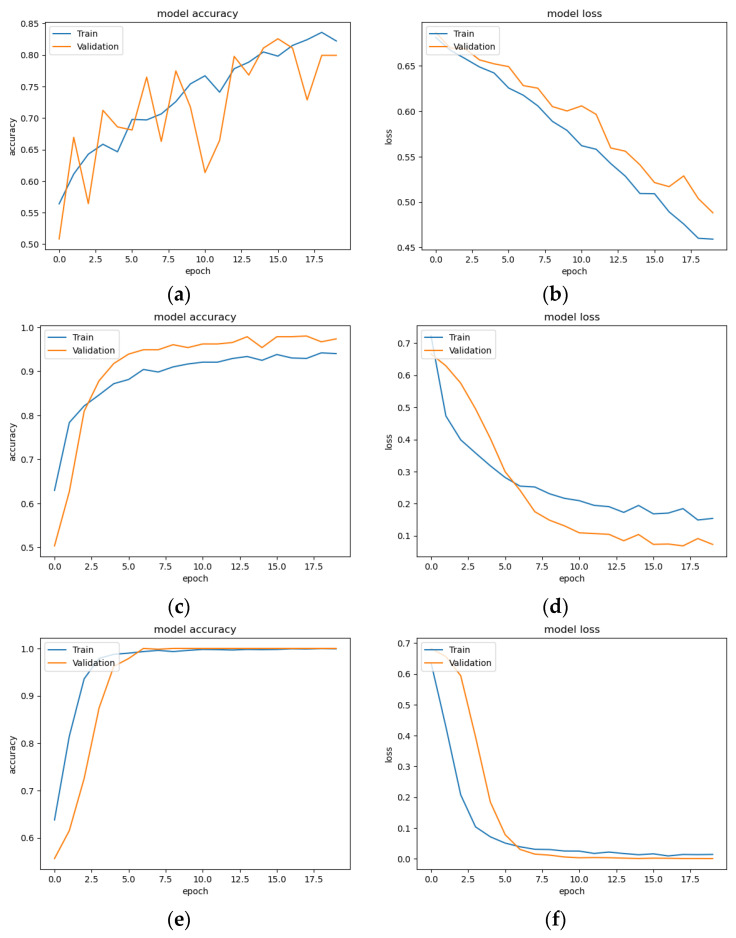
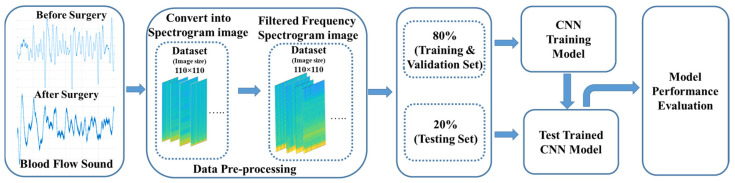
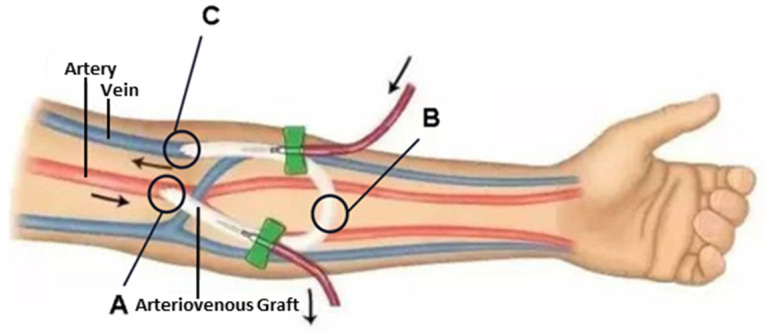
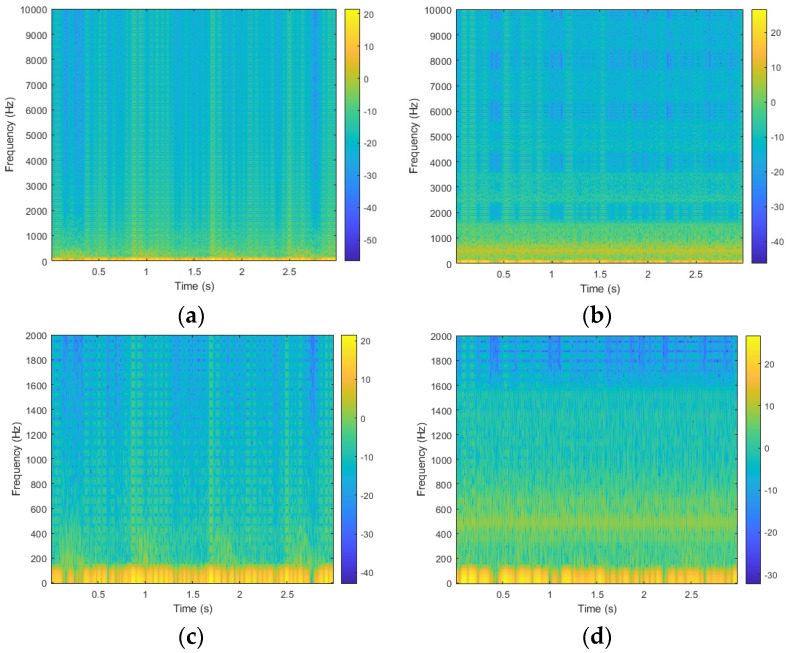
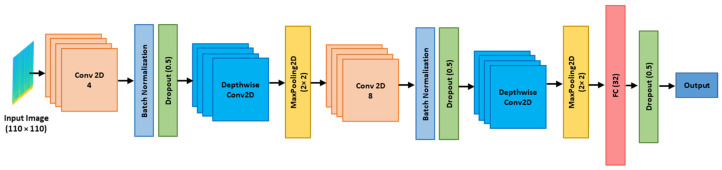
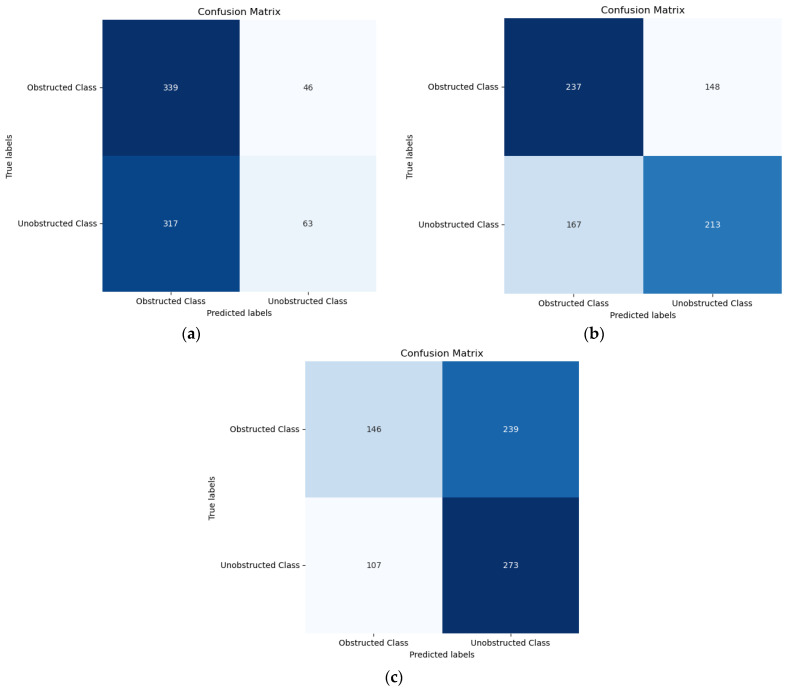
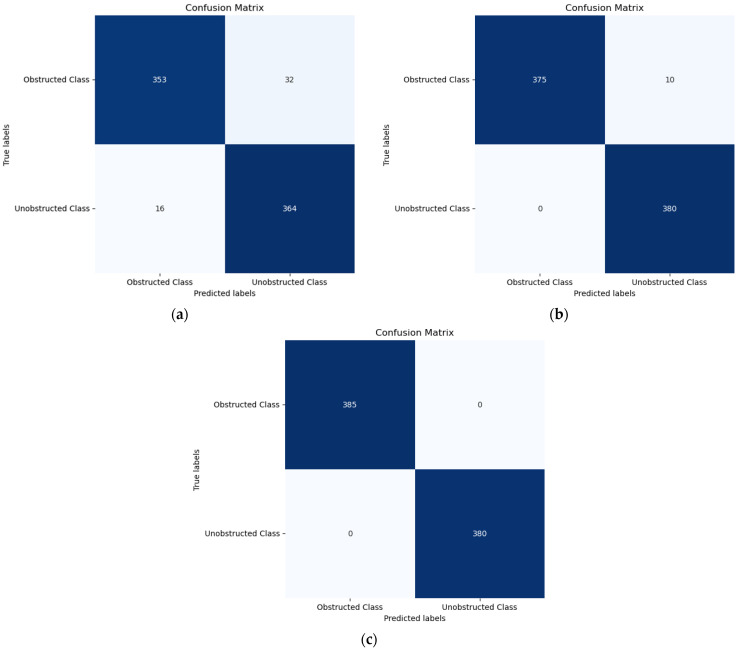
This research examines the application of non-invasive acoustic analysis for detecting obstructions in vascular access (fistulas) used by kidney dialysis patients. Obstructions in these fistulas can interrupt essential dialysis treatment. In this study, we utilized a condenser microphone to capture the blood flow sounds before and after angioplasty surgery, analyzing 3819 sound samples from 119 dialysis patients. These sound signals were transformed into spectrogram images to classify obstructed and unobstructed vascular accesses, that is fistula conditions before and after the angioplasty procedure. A novel lightweight two-dimension convolutional neural network (CNN) was developed and benchmarked against pretrained CNN models such as ResNet50 and VGG16. The proposed model achieved a prediction accuracy of 100%, surpassing the ResNet50 and VGG16 models, which recorded 99% and 95% accuracy, respectively. Additionally, the study highlighted the significantly smaller memory size of the proposed model (2.37 MB) compared to ResNet50 (91.3 MB) and VGG16 (57.9 MB), suggesting its suitability for edge computing environments. This study underscores the efficacy of diverse deep-learning approaches in the obstructed detection of dialysis fistulas, presenting a scalable solution that combines high accuracy with reduced computational demands.
本研究探讨了非侵入性声学分析在检测肾病透析患者血管通路(瘘管)阻塞中的应用。这些瘘管中的阻塞会中断必要的透析治疗。在这项研究中,我们使用电容式麦克风在血管成形术前后捕捉血流声音,分析了 119 名透析患者的 3819 个声音样本。这些声音信号被转化为声谱图图像,以对阻塞和非阻塞血管通路进行分类,即血管成形术前后的瘘管状况。开发了一种新颖的轻量级二维卷积神经网络(CNN),并与预训练的 CNN 模型(如 ResNet50 和 VGG16)进行了基准测试。所提出的模型实现了 100%的预测精度,超过了 ResNet50(99%)和 VGG16(95%)模型的精度。此外,该研究还强调了与 ResNet50(91.3MB)和 VGG16(57.9MB)相比,所提出模型的内存大小显著更小(2.37MB),表明其适用于边缘计算环境。这项研究强调了不同深度学习方法在透析瘘管阻塞检测中的有效性,提出了一种可扩展的解决方案,该方案结合了高精度和低计算需求。