Institute of Health Policy, Management and Evaluation, Dalla Lana School of Public Health, University of Toronto, Toronto, Ontario, Canada.
Program for Health System and Technology Evaluation, Toronto General Research Institute, Toronto, Ontario, Canada.
BMJ Open. 2024 Sep 30;14(9):e088631. doi: 10.1136/bmjopen-2024-088631.
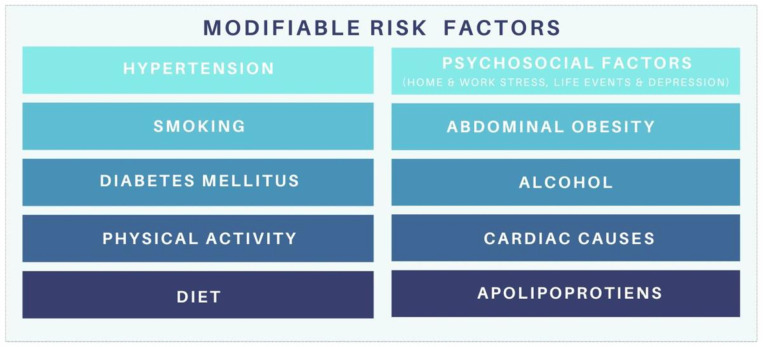
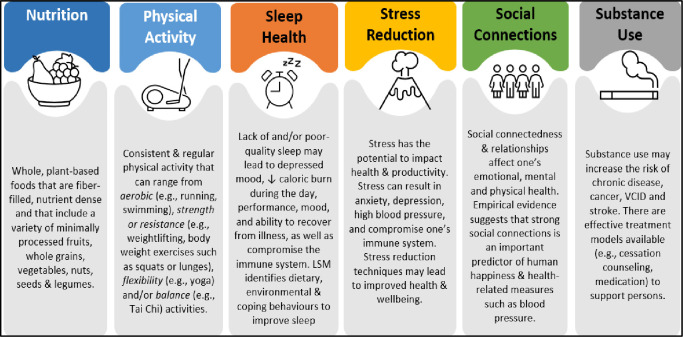
Stroke and vascular cognitive impairment (VCI) are major global public health pandemics. The increased incidence of stroke and VCI is in part due to modifiable risk factors (MRFs), with hypertension (HTN) being the strongest single MRF. Even though the underlying causes of HTN are multifactorial, lifestyle choices (eg, poor diet, physical inactivity, alcohol consumption) are chief contributors. Lifestyle medicine (LSM) is a medical and evidence-based discipline that is a promising approach for preventing stroke and cognitive impairment, including VCI. The empirical evidence from systematic reviews, meta-analyses and large population-based studies has reported on the effectiveness of LSM interventions. However, the evaluation of such complex, social and behavioural interventions warrants more information to allow its successful implementation into innovative clinical care models. More importantly, we need to understand how such interventions work, who it works for and under what circumstances to successfully manage HTN and other MRFs (eg, hyperlipidaemia, smoking, alcohol use and diet).
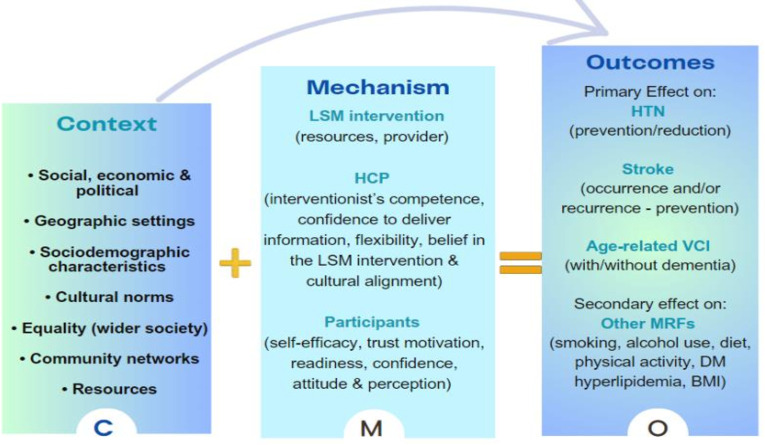
This realist review will follow the Realist and Meta-narrative Evidence Synthesis: Evolving Standards. The review will comprise four stages: (1) clarify the scope, (2) search for the evidence, (3) critically appraise primary studies and extract data focusing on the context, mechanism and outcome configuration and (4) synthesise evidence and draw conclusions.
Research ethics board approval is not required for this review. The primary output of this review will be an evidence-based programme theory for LSM interventions for the management of HTN and other MRFs to reduce the risk of stroke and VCI. Findings from this review will be disseminated at three levels: micro (eg, patients, caregivers, clinicians, non-research partners), meso (eg, public, national not-for-profit organisations, professional associations and centres) and macro (eg, policymakers and government partners).
CRD42024511566.
中风和血管性认知障碍(VCI)是全球主要的公共卫生流行病。中风和 VCI 发病率的上升部分归因于可改变的危险因素(MRF),高血压(HTN)是最强的单一 MRF。尽管 HTN 的根本原因是多因素的,但生活方式选择(例如不良饮食、缺乏身体活动、饮酒)是主要原因。生活方式医学(LSM)是一门医学和循证学科,是预防中风和认知障碍(包括 VCI)的有前途的方法。系统评价、荟萃分析和大型人群研究的实证证据报告了 LSM 干预的有效性。然而,评估这种复杂的、社会和行为干预措施需要更多的信息,以便将其成功地纳入创新的临床护理模式。更重要的是,我们需要了解这些干预措施是如何发挥作用的,对谁有效,以及在什么情况下才能成功地管理 HTN 和其他 MRF(例如,高脂血症、吸烟、饮酒和饮食)。
本真实主义综述将遵循真实主义和元叙述证据综合:不断发展的标准。综述将包括四个阶段:(1)澄清范围,(2)搜索证据,(3)批判性评估初级研究并提取数据,重点关注背景、机制和结果配置,(4)综合证据并得出结论。
本综述不需要研究伦理委员会的批准。本综述的主要产出将是针对 LSM 干预措施管理 HTN 和其他 MRF 以降低中风和 VCI 风险的循证方案理论。本综述的结果将在三个层面上传播:微观层面(例如,患者、护理人员、临床医生、非研究伙伴)、中观层面(例如,公众、国家非营利组织、专业协会和中心)和宏观层面(例如,政策制定者和政府合作伙伴)。
CRD42024511566。