Spinazzola G, Spadaro S, Ferrone G, Grasso S, Maggiore S M, Cinnella G, Cabrini L, Cammarota G, Maugeri J G, Simonte R, Patroniti N, Ball L, Conti G, De Luca D, Cortegiani A, Giarratano A, Gregoretti C
Department of Anesthesia and Intensive Care, Fondazione Policlinico Universitario A. Gemelli IRCCS, Rome, Italy.
Department of Translational Medicine and for Romagna, University of Ferrara, Ferrara, Italy.
J Anesth Analg Crit Care. 2024 Sep 30;4(1):68. doi: 10.1186/s44158-024-00203-0.
Discomfort can be the cause of noninvasive respiratory support (NRS) failure in up to 50% of treated patients. Several studies have shown how analgosedation during NRS can reduce the rate of delirium, endotracheal intubation, and hospital length of stay in patients with acute respiratory failure. The purpose of this project was to explore consensus on which medications are currently available as analgosedatives during NRS, which types of patients may benefit from analgosedation while on NRS, and which clinical settings might be appropriate for the implementation of analgosedation during NRS.
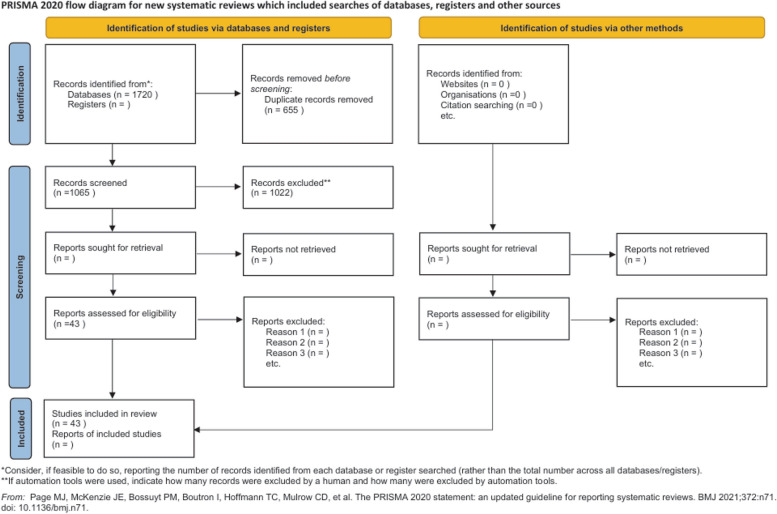
The Italian Society of Anesthesia, Analgesia, Resuscitation and Intensive Care (SIAARTI) selected a panel of experts and asked them to define key aspects of the use of analgesics and sedatives during NRS treatment. The methodology applied is in line with the principles of the modified Delphi and RAND-UCLA methods. The experts developed statements and supportive rationales which were then subjected to blind votes for consensus.
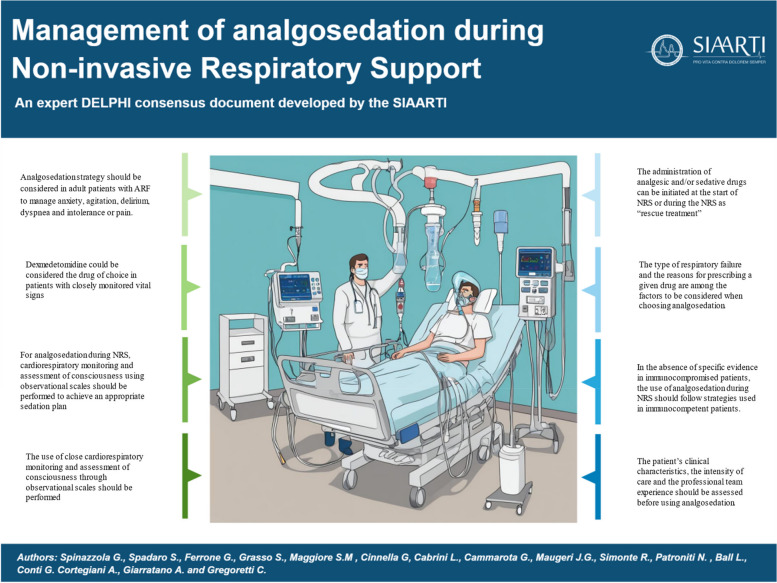
The use of an analgosedation strategy in adult patients with acute respiratory failure of different origins may be useful where there is a need to manage discomfort. This strategy should be considered after careful assessment of other potential factors associated with respiratory failure or inappropriate noninvasive respiratory support settings, which may, in turn, be responsible for NRS failure. Several drugs can be used, each of them specifically targeted to the main component of discomfort to treat. In addition, analgosedation during NRS treatment should always be combined with close cardiorespiratory monitoring in an appropriate clinical setting.
The use of analgosedation during NRS has been studied in several clinical trials. However, its successful application relies on a thorough understanding of the pharmacological aspects of the sedative drugs used, the clinical conditions for which NRS is applied, and a careful selection of the appropriate clinical setting.
在接受治疗的患者中,高达50%的无创呼吸支持(NRS)失败可能是由不适引起的。多项研究表明,NRS期间的镇痛镇静可降低急性呼吸衰竭患者的谵妄发生率、气管插管率和住院时间。本项目的目的是探讨关于目前哪些药物可作为NRS期间的镇痛镇静剂、哪些类型的患者在接受NRS时可能从镇痛镇静中获益以及哪些临床环境适合在NRS期间实施镇痛镇静的共识。
意大利麻醉、镇痛、复苏和重症监护学会(SIAARTI)挑选了一组专家,并要求他们确定NRS治疗期间使用镇痛药和镇静剂的关键方面。所应用的方法符合改良德尔菲法和兰德-加州大学洛杉矶分校方法的原则。专家们制定了声明和支持理由,然后进行无记名投票以达成共识。
在需要处理不适的情况下,对不同病因的成年急性呼吸衰竭患者采用镇痛镇静策略可能是有用的。在仔细评估与呼吸衰竭或不适当的无创呼吸支持设置相关的其他潜在因素后应考虑这一策略,而这些因素反过来可能是NRS失败的原因。有几种药物可供使用,每种药物都专门针对要治疗的不适的主要成分。此外,NRS治疗期间的镇痛镇静应始终在适当的临床环境中与密切的心肺监测相结合。
NRS期间使用镇痛镇静已在多项临床试验中得到研究。然而,其成功应用依赖于对所用镇静药物的药理学方面、应用NRS的临床情况的透彻理解以及对适当临床环境的仔细选择。