Majumdar Sreemita, Liu Song-Tao
Department of Biological Sciences, University of Toledo, Toledo, OH, United States.
Front Cell Dev Biol. 2024 Sep 16;12:1406940. doi: 10.3389/fcell.2024.1406940. eCollection 2024.
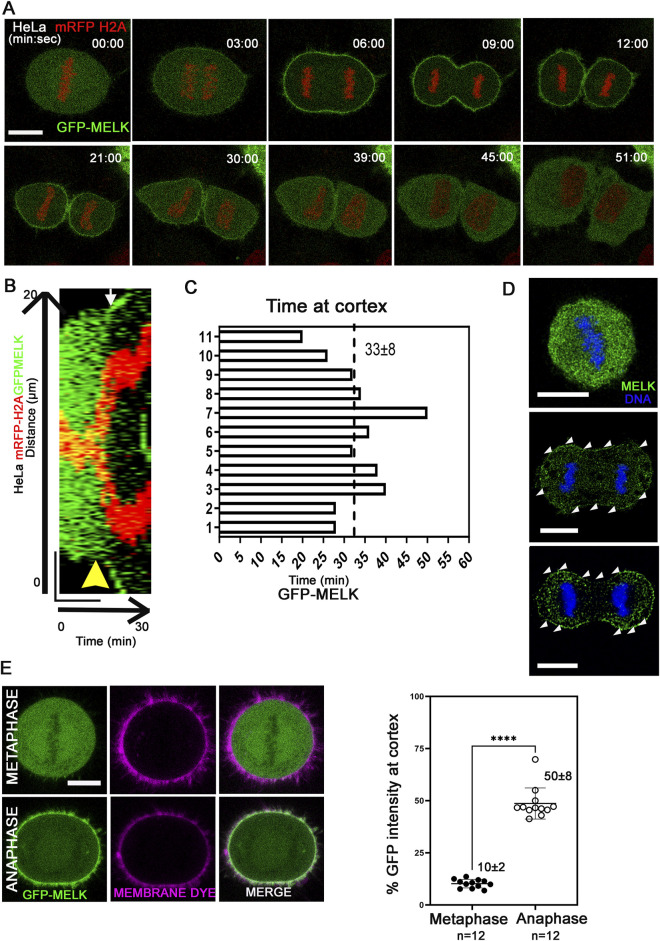
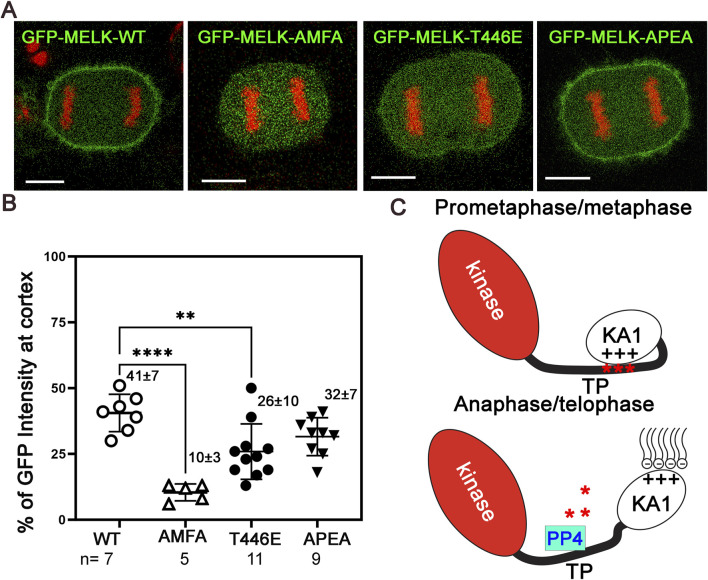
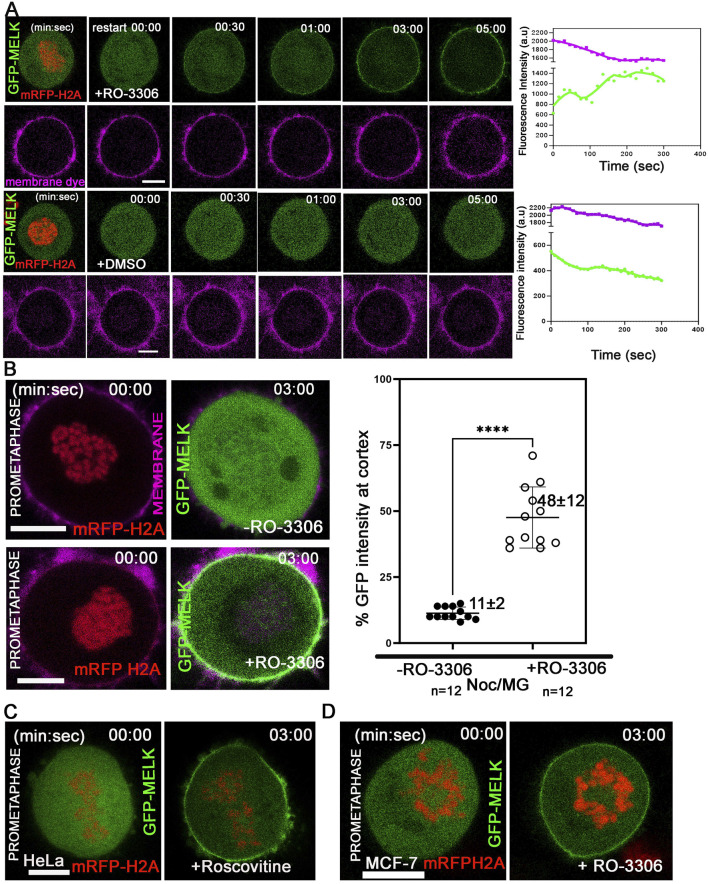
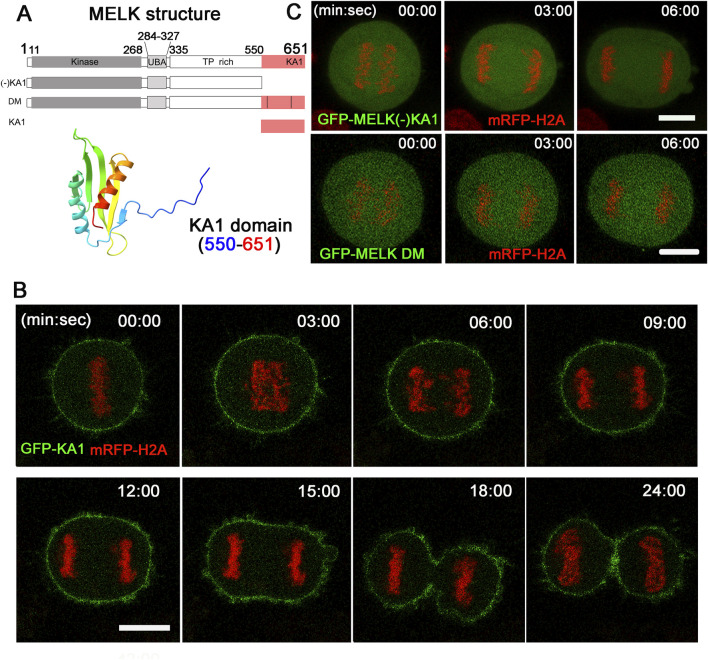
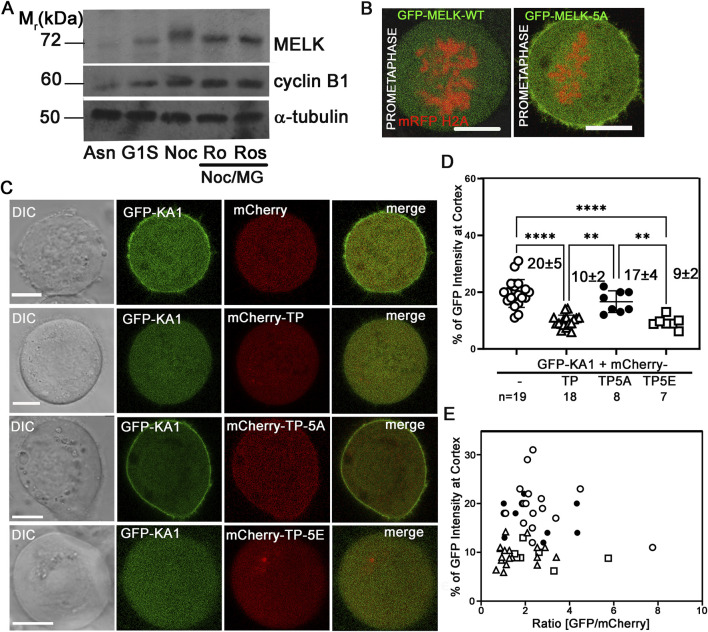
Maternal Embryonic Leucine Zipper Kinase (MELK) has been studied intensively in recent years due to its overexpression in multiple cancers. However, the cell biology of MELK remains less characterized despite its well-documented association with mitosis. Here we report a distinctive pattern of human MELK that translocates from the cytoplasm to cell cortex within 3 min of anaphase onset. The cortex association lasts about 30 min till telophase. The spatiotemporal specific localization of MELK depends on the interaction between its Threonine-Proline (TP) rich domain and kinase associated 1 (KA1) domain, which is regulated by CDK1 kinase and PP4 protein phosphatase. KA1 domains are known to regulate kinase activities through various intramolecular interactions. Our results revealed a new role for KA1 domain to control subcellular localization of a protein kinase.
近年来,母源胚胎亮氨酸拉链激酶(MELK)因其在多种癌症中的过表达而受到广泛研究。然而,尽管有充分的文献记载MELK与有丝分裂相关,但其细胞生物学特性仍不太清楚。在此,我们报道了人类MELK的一种独特模式,即在后期开始后3分钟内从细胞质转移到细胞皮层。皮层结合持续约30分钟直至末期。MELK的时空特异性定位取决于其富含苏氨酸-脯氨酸(TP)的结构域与激酶相关1(KA1)结构域之间的相互作用,这一相互作用受CDK1激酶和PP4蛋白磷酸酶的调节。已知KA1结构域通过各种分子内相互作用调节激酶活性。我们的结果揭示了KA1结构域在控制蛋白激酶亚细胞定位方面的新作用。