Institute for Molecular Medicine Finland (FIMM), HiLIFE, University of Helsinki, Helsinki, Finland.
Biotech Research and Innovation Centre (BRIC), University of Copenhagen, Copenhagen, Denmark.
Nat Commun. 2024 Oct 3;15(1):8579. doi: 10.1038/s41467-024-52980-5.
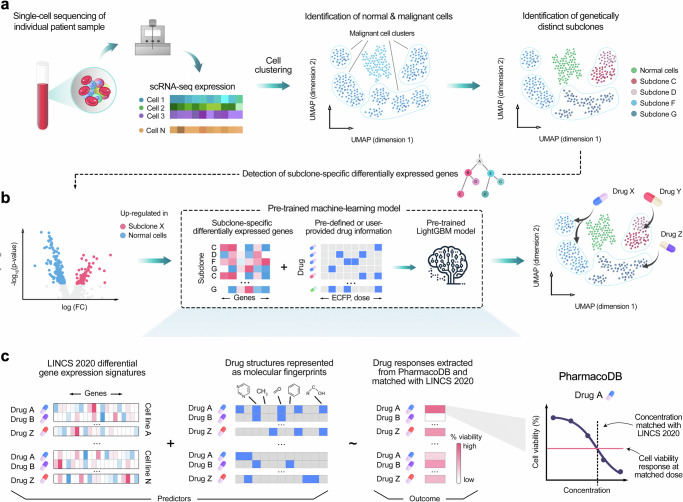
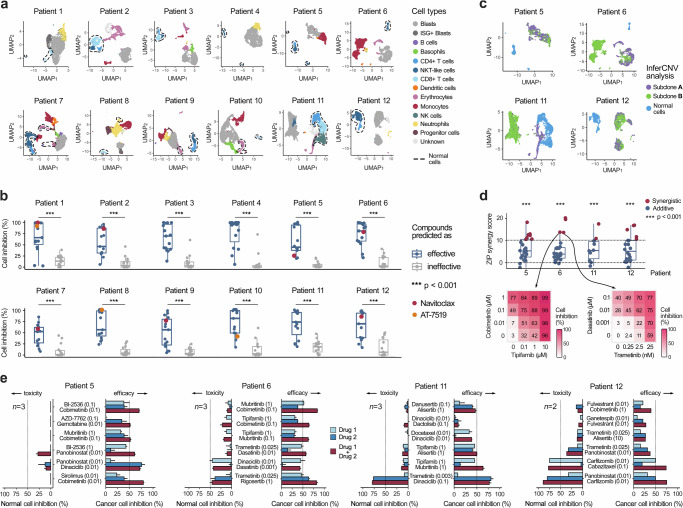
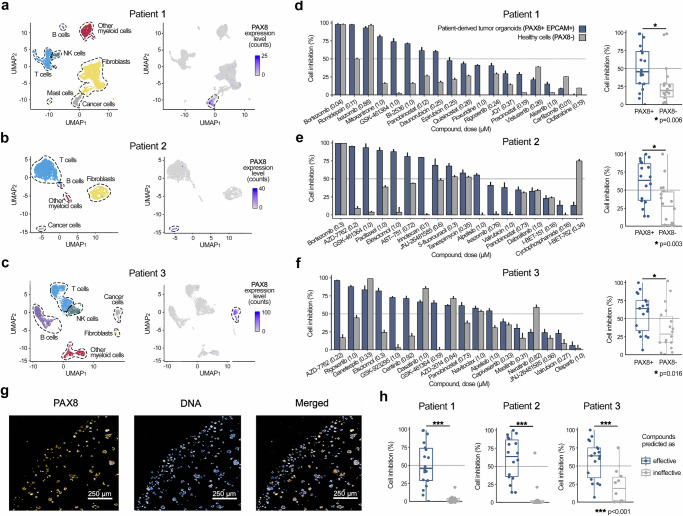
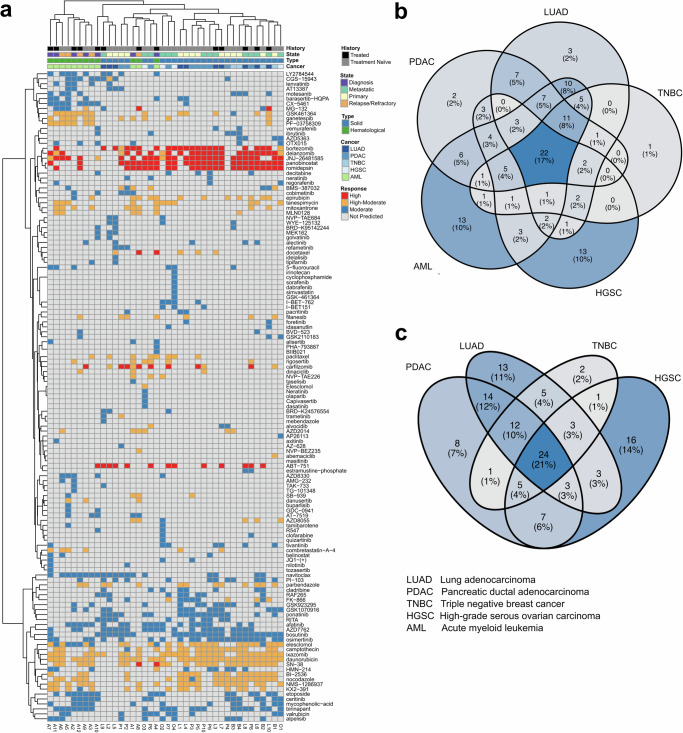
Intratumoral cellular heterogeneity necessitates multi-targeting therapies for improved clinical benefits in advanced malignancies. However, systematic identification of patient-specific treatments that selectively co-inhibit cancerous cell populations poses a combinatorial challenge, since the number of possible drug-dose combinations vastly exceeds what could be tested in patient cells. Here, we describe a machine learning approach, scTherapy, which leverages single-cell transcriptomic profiles to prioritize multi-targeting treatment options for individual patients with hematological cancers or solid tumors. Patient-specific treatments reveal a wide spectrum of co-inhibitors of multiple biological pathways predicted for primary cells from heterogenous cohorts of patients with acute myeloid leukemia and high-grade serous ovarian carcinoma, each with unique resistance patterns and synergy mechanisms. Experimental validations confirm that 96% of the multi-targeting treatments exhibit selective efficacy or synergy, and 83% demonstrate low toxicity to normal cells, highlighting their potential for therapeutic efficacy and safety. In a pan-cancer analysis across five cancer types, 25% of the predicted treatments are shared among the patients of the same tumor type, while 19% of the treatments are patient-specific. Our approach provides a widely-applicable strategy to identify personalized treatment regimens that selectively co-inhibit malignant cells and avoid inhibition of non-cancerous cells, thereby increasing their likelihood for clinical success.
肿瘤内细胞异质性需要多靶点治疗,以提高晚期恶性肿瘤的临床获益。然而,系统地确定针对特定患者的治疗方法,选择性地共同抑制癌细胞群体,这是一个组合挑战,因为可能的药物剂量组合数量远远超过可以在患者细胞中测试的数量。在这里,我们描述了一种机器学习方法 scTherapy,它利用单细胞转录组谱来为血液系统癌症或实体瘤患者的个体优先考虑多靶点治疗方案。针对来自不同急性髓性白血病和高级别浆液性卵巢癌患者异质队列的原代细胞的多种生物学途径的共同抑制剂的患者特异性治疗方案揭示了广泛的共同抑制作用,每种治疗方案都具有独特的耐药模式和协同作用机制。实验验证证实,96%的多靶点治疗方案具有选择性疗效或协同作用,83%对正常细胞的毒性较低,突出了它们在治疗效果和安全性方面的潜力。在五个癌症类型的泛癌症分析中,25%的预测治疗方案在同一肿瘤类型的患者中共享,而 19%的治疗方案是针对特定患者的。我们的方法提供了一种广泛适用的策略,可以识别出个性化的治疗方案,这些方案可以选择性地共同抑制恶性细胞,并避免抑制非癌细胞,从而提高其临床成功的可能性。