Physiology, Biophysics and Systems Biology Graduate Program, Weill Cornell Medicine, New York, NY, USA.
Tri-Institutional PhD Program in Chemical Biology, Memorial Sloan Kettering Cancer Center, New York, NY, USA.
J Biomed Sci. 2024 Oct 9;31(1):94. doi: 10.1186/s12929-024-01082-x.
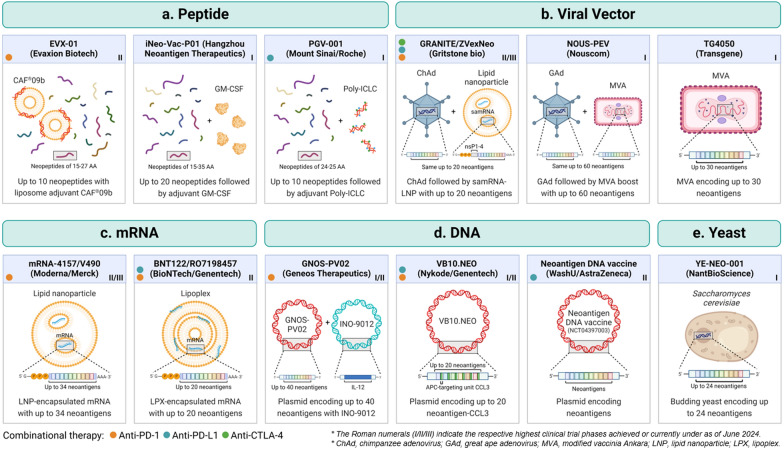
Recent breakthroughs in cancer immunotherapies have emphasized the importance of harnessing the immune system for treating cancer. Vaccines, which have traditionally been used to promote protective immunity against pathogens, are now being explored as a method to target cancer neoantigens. Over the past few years, extensive preclinical research and more than a hundred clinical trials have been dedicated to investigating various approaches to neoantigen discovery and vaccine formulations, encouraging development of personalized medicine. Nucleic acids (DNA and mRNA) have become particularly promising platform for the development of these cancer immunotherapies. This shift towards nucleic acid-based personalized vaccines has been facilitated by advancements in molecular techniques for identifying neoantigens, antigen prediction methodologies, and the development of new vaccine platforms. Generating these personalized vaccines involves a comprehensive pipeline that includes sequencing of patient tumor samples, data analysis for antigen prediction, and tailored vaccine manufacturing. In this review, we will discuss the various shared and personalized antigens used for cancer vaccine development and introduce strategies for identifying neoantigens through the characterization of gene mutation, transcription, translation and post translational modifications associated with oncogenesis. In addition, we will focus on the most up-to-date nucleic acid vaccine platforms, discuss the limitations of cancer vaccines as well as provide potential solutions, and raise key clinical and technical considerations in vaccine development.
近年来,癌症免疫疗法的突破强调了利用免疫系统治疗癌症的重要性。疫苗传统上用于促进针对病原体的保护性免疫,现在正被探索作为针对癌症新抗原的方法。在过去的几年中,广泛的临床前研究和一百多项临床试验致力于研究各种新抗原发现和疫苗制剂的方法,鼓励开发个性化药物。核酸(DNA 和 mRNA)已成为开发这些癌症免疫疗法的极具前景的平台。这种向基于核酸的个体化疫苗的转变得益于鉴定新抗原的分子技术、抗原预测方法学以及新疫苗平台的发展方面的进展。生成这些个体化疫苗涉及一个综合的流水线,包括对患者肿瘤样本进行测序、针对抗原预测进行数据分析以及定制疫苗制造。在这篇综述中,我们将讨论用于癌症疫苗开发的各种共享和个体化抗原,并介绍通过与肿瘤发生相关的基因突变、转录、翻译和翻译后修饰的特征来鉴定新抗原的策略。此外,我们将重点介绍最新的核酸疫苗平台,讨论癌症疫苗的局限性并提供潜在的解决方案,并提出疫苗开发中的关键临床和技术考虑因素。