Victorson David, Morone Natalia E, Pilkonis Paul A, Schalet Benjamin, Yu Lan, Jackson Kathryn L, Dodds Nathan, Horowitz Bruriah, Johnston Kelly, McFarland Christine, Klem Mary Lou, Sauer Christina, Choi Seung, Moskowitz Judith T, Ong Jason C, Addington Elizabeth L, Satyshur Maureen D, Suss Stephen J, Daehler Sarah, Greco Carol M
Northwestern University Feinberg School of Medicine, Chicago, IL, USA.
Boston University Chobanian & Avedisian School of Medicine, Boston, MA, USA.
Glob Adv Integr Med Health. 2024 Oct 3;13:27536130241290771. doi: 10.1177/27536130241290771. eCollection 2024 Jan-Dec.
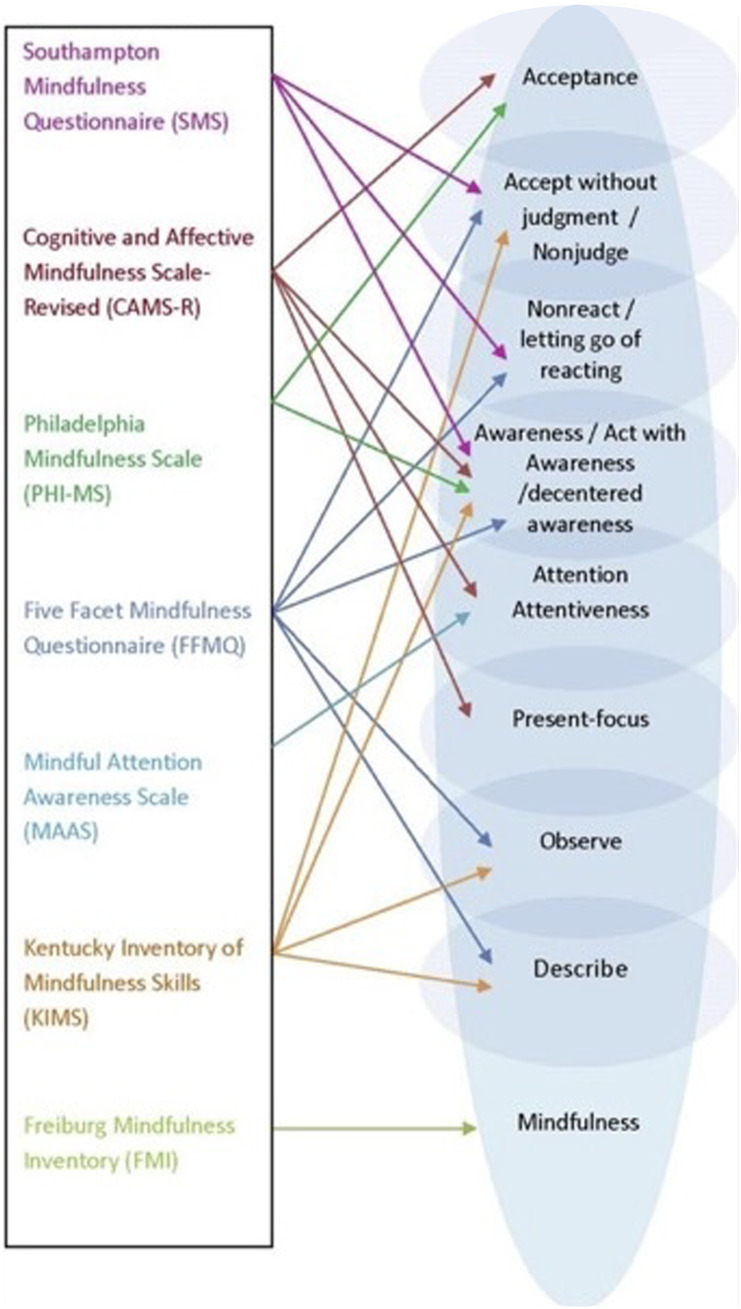
Mindfulness meditation is ubiquitous in health care, education, and communities at large. Mindfulness-Based Interventions (MBIs) are the focus of hundreds of NIH-funded trials given the myriad health benefits associated with this practice across multiple populations. Notwithstanding, significant gaps exist in how mindfulness concepts are measured using currently available self-report instruments. Due to the number of available mindfulness measurement tools, each measuring different aspects, it is difficult to determine the extent to which individuals develop comparable mindfulness skills and attitudes and which health benefits can be attributed to which gains in mindfulness. The Patient-Reported Outcomes Measurement Information System (Puerto RicoOMIS®) has established a rigorous instrument development methodology to create brief, precise, and clinically relevant outcomes tools.
This is the first of 4 papers representing an NCCIH-funded initiative (R01AT009539), which has applied Puerto RicoOMIS® instrument development methodologies to mindfulness measurement to improve the rigor, relevance, and reproducibility of MBI research results.
METHODS/RESULTS: This introductory paper sets the stage for why improved mindfulness measurement tools are needed and briefly describes the Puerto RicoOMIS® development approach. The second 2 papers highlight results from a national survey, focus groups, and expert interviews to identify and organize relevant mindfulness concepts, domains, and items for eventual item bank creation. The fourth paper reviews the item writing and development process of these new instruments, including results from stakeholder cognitive interviews and a translatability review.
Together these papers feature the rigorous development approach, rationale, logic, and significance that supports the development, calibration, and validation of new Puerto RicoOMIS® measures of mindfulness and related concepts.
正念冥想在医疗保健、教育以及广大社区中无处不在。基于正念的干预措施(MBIs)是美国国立卫生研究院(NIH)资助的数百项试验的重点,因为这种做法对多个人群具有诸多健康益处。尽管如此,在使用现有自我报告工具测量正念概念的方式上仍存在重大差距。由于可用的正念测量工具数量众多,且每个工具测量的方面不同,因此很难确定个体在多大程度上培养了可比的正念技能和态度,以及哪些健康益处可归因于正念方面的哪些提升。患者报告结果测量信息系统(PROMIS®)已经建立了一种严格的工具开发方法,以创建简短、精确且与临床相关的结果工具。
本文是代表一项由美国国立补充与综合健康中心(NCCIH)资助的倡议(R01AT009539)的4篇论文中的第一篇,该倡议已将PROMIS®工具开发方法应用于正念测量,以提高MBI研究结果的严谨性、相关性和可重复性。
方法/结果:这篇介绍性论文阐述了为何需要改进正念测量工具的原因,并简要描述了PROMIS®的开发方法。另外两篇论文重点介绍了一项全国性调查、焦点小组和专家访谈的结果,以识别和组织相关的正念概念、领域和项目,最终创建项目库。第四篇论文回顾了这些新工具的项目编写和开发过程,包括利益相关者认知访谈的结果和可翻译性审查。
这些论文共同展示了严谨的开发方法、原理、逻辑和意义,支持了新的PROMIS®正念及相关概念测量工具的开发、校准和验证。