California Institute of Technology, Pasadena, CA, USA.
Department of Electrical Engineering, Stanford University, Stanford, CA, USA.
Nature. 2024 Oct;634(8033):321-327. doi: 10.1038/s41586-024-08005-8. Epub 2024 Oct 9.
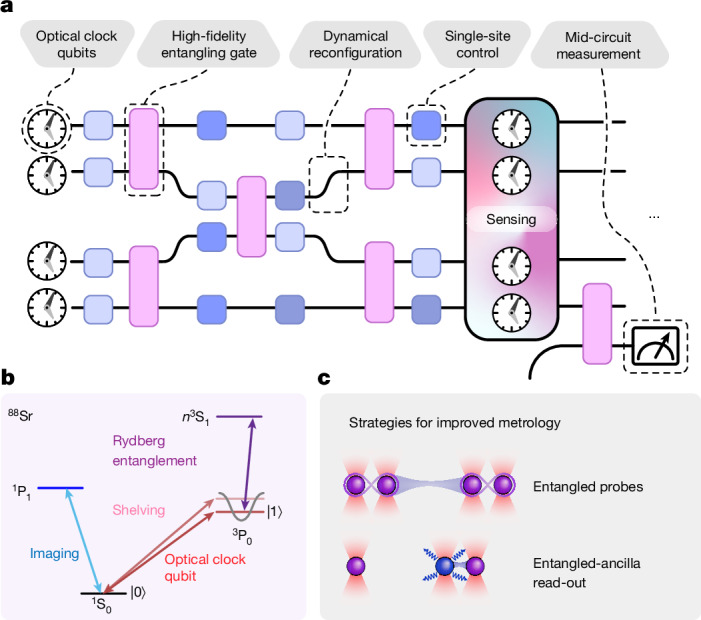
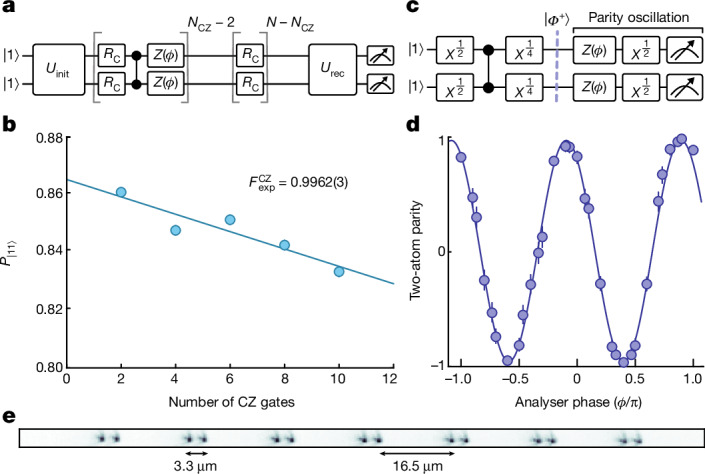
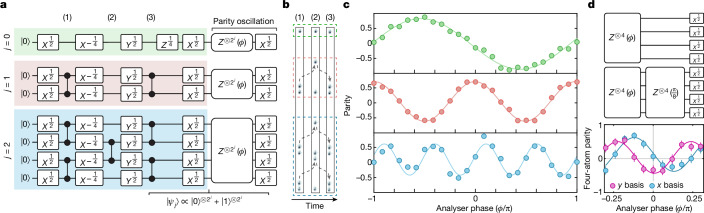
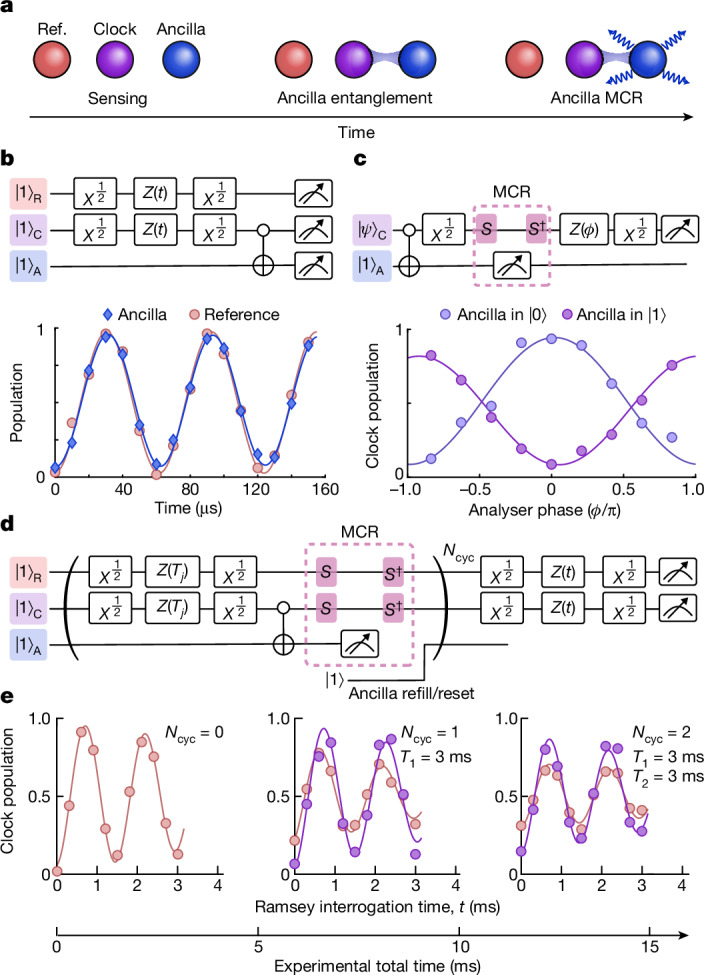
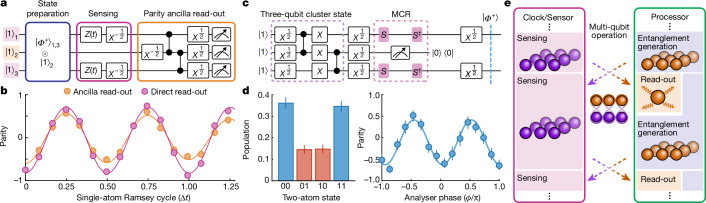
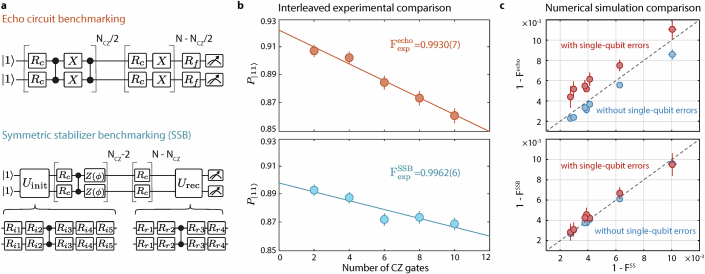
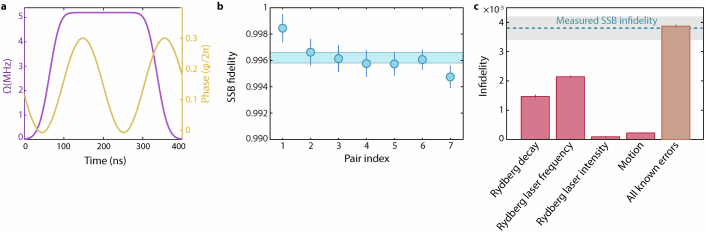
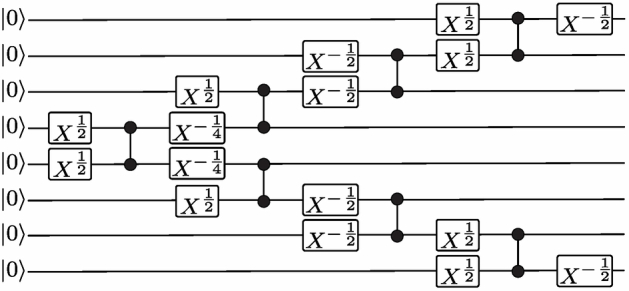
Enhancing the precision of measurements by harnessing entanglement is a long-sought goal in quantum metrology. Yet attaining the best sensitivity allowed by quantum theory in the presence of noise is an outstanding challenge, requiring optimal probe-state generation and read-out strategies. Neutral-atom optical clocks, which are the leading systems for measuring time, have shown recent progress in terms of entanglement generation but at present lack the control capabilities for realizing such schemes. Here we show universal quantum operations and ancilla-based read-out for ultranarrow optical transitions of neutral atoms. Our demonstration in a tweezer clock platform enables a circuit-based approach to quantum metrology with neutral-atom optical clocks. To this end, we demonstrate two-qubit entangling gates with 99.62(3)% fidelity-averaged over symmetric input states-through Rydberg interactions and dynamical connectivity for optical clock qubits, which we combine with local addressing to implement universally programmable quantum circuits. Using this approach, we generate a near-optimal entangled probe state, a cascade of Greenberger-Horne-Zeilinger states of different sizes, and perform a dual-quadrature Greenberger-Horne-Zeilinger read-out. We also show repeated fast phase detection with non-destructive conditional reset of clock qubits and minimal dead time between repetitions by implementing ancilla-based quantum logic spectroscopy for neutral atoms. Finally, we extend this to multi-qubit parity checks and measurement-based, heralded, Bell-state preparation. Our work lays the foundation for hybrid processor-clock devices with neutral atoms and more generally points to a future of practical applications for quantum processors linked with quantum sensors.
利用纠缠来提高测量精度是量子计量学中长期追求的目标。然而,在存在噪声的情况下实现量子理论允许的最佳灵敏度是一个突出的挑战,这需要最优的探针态生成和读出策略。中性原子光学钟是测量时间的领先系统,在纠缠产生方面最近取得了进展,但目前缺乏实现这些方案的控制能力。在这里,我们展示了用于中性原子超窄光学跃迁的通用量子操作和基于辅助量子比特的读出。我们在镊子时钟平台上的演示使基于中性原子光学钟的基于电路的量子计量学方法成为可能。为此,我们通过针对光学时钟量子比特的里德堡相互作用和动态连接,展示了具有 99.62(3)%平均保真度的双量子比特纠缠门-对于对称输入态而言-我们将其与本地寻址相结合,以实现通用可编程量子电路。通过这种方法,我们生成了一个近乎最优的纠缠探针态,即不同大小的格林伯格-霍恩-泽林格态的级联,并执行了双量子比特格林伯格-霍恩-泽林格读出。我们还通过实现基于辅助量子比特的量子逻辑光谱学,展示了具有破坏性条件重置的时钟量子比特的重复快速相位检测,以及在重复之间具有最小的死区时间。最后,我们将其扩展到多量子比特奇偶校验和基于测量的、被预言的、贝尔态制备。我们的工作为具有中性原子的混合处理器-时钟设备奠定了基础,更广泛地指出了与量子传感器相关的量子处理器的实际应用的未来。