Effective Basic Services (eBASE) Africa, Yaoundé, Cameroon.
Department of Public Administration and Policy (DPAP), Institute of Local Government Studies (INLOGOV), University of Birmingham, Birmingham, United Kingdom.
Front Public Health. 2024 Sep 24;12:1275702. doi: 10.3389/fpubh.2024.1275702. eCollection 2024.
The 21st century has brought about a damaging information crisis, significantly challenging and undermining efforts to increase the uptake of scientific research evidence in both policy and practice. The World Health Organization (WHO) recognizes misinformation and disinformation as major drivers of pandemic spread and impact, dedicating a policy brief to pandemic preparedness on this issue. In this study, we examine the impact of mis/disinformation on the use of research evidence in public policy decision-making in West and Central Africa and reflect on how this can inform future pandemic preparedness.
What factors affect the uptake of scientific evidence during disease outbreaks in Africa?
We used the JBI Scoping Review and Prevalence/Incidence Review methodologies to synthesize the best available evidence. A DELPHI survey was conducted in two stages: the first gathered experiences from policymakers, practitioners, and citizens in Cameroon, Nigeria, and Senegal regarding mis/disinformation and its impact. The second stage explored potential situations related to the issues identified in the first stage. Qualitative data analysis was conducted using MAXQDA.
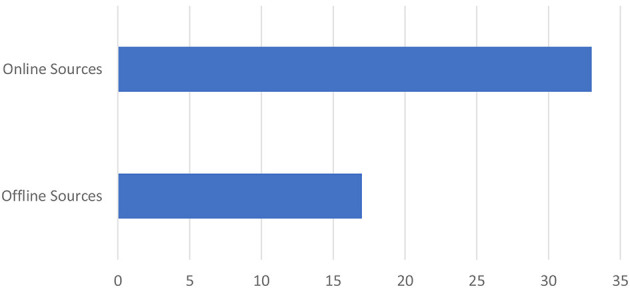
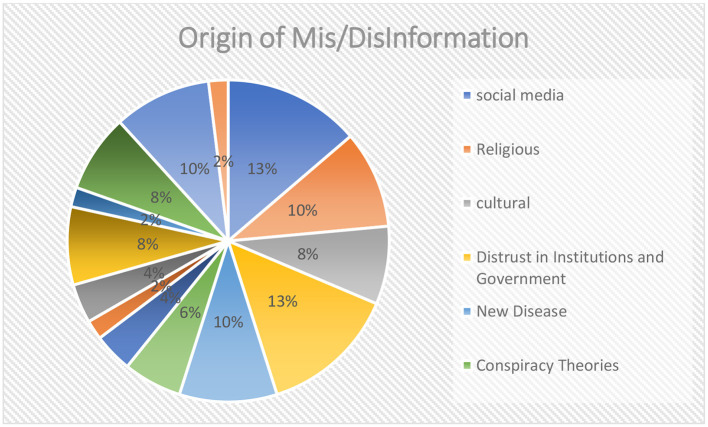
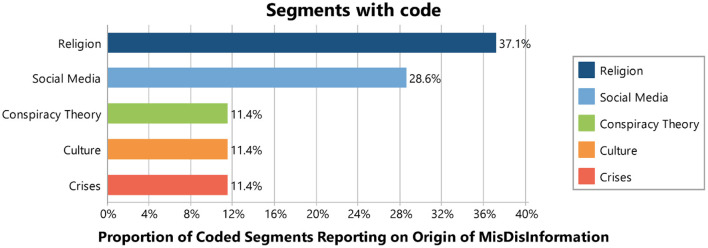
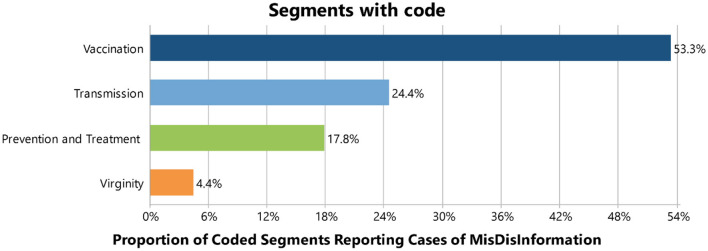
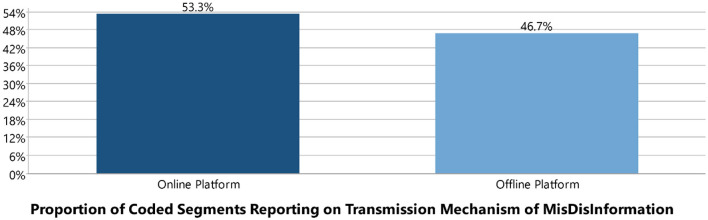
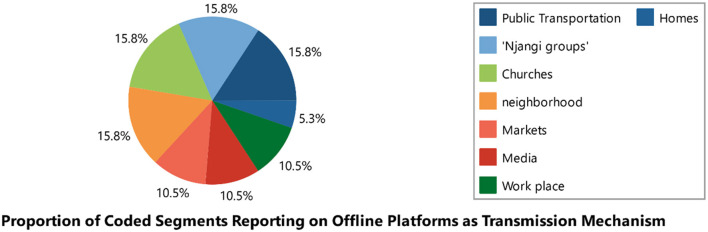
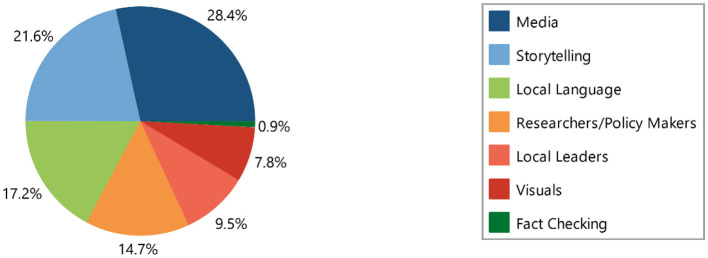
The research identified the origins ( = 5), transmission platforms ( = 15), cases ( = 4), mitigation strategies ( = 6), and impacts ( = 4) of infodemic on policy design, implementation, and uptake. Online platforms were identified as the main source of infodemic in 53.3% of cases, compared to 46.7% attributed to offline platforms. We conclude that the severity of COVID-19 as a global pandemic has highlighted the dangers of mis/disinformation, with a considerable number of studies from Middle Africa demonstrating a significant negative impact on the uptake of health policies and to an extend evidence informed policy making. It is also imperative to consider addressing evidence hesitancy in citizens through innovative and indigenous approaches like storytelling.
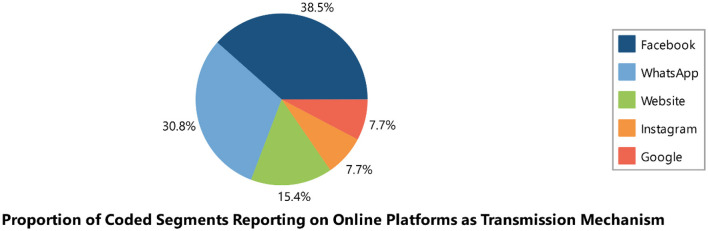
Digital technologies, especially social media, play a key role in the propagation of infodemics. For future pandemic preparedness, stakeholders must consider using digital tools and platforms to prevent and mitigate pandemics. This study adds new evidence to the existing body of evidence, emphasizing the need to address infodemics within the context of future pandemic preparedness in Middle Africa.
21 世纪带来了破坏性的信息危机,严重挑战和破坏了在政策和实践中增加对科学研究证据的采用。世界卫生组织(WHO)认识到错误信息和虚假信息是大流行传播和影响的主要驱动因素,为此专门发布了一份政策简报来讨论这个问题。在这项研究中,我们考察了错误/虚假信息对非洲公共政策决策中研究证据使用的影响,并反思了这如何为未来的大流行防范提供信息。
在非洲疾病爆发期间,哪些因素会影响科学证据的采用?
我们使用 JBI 范围审查和患病率/发病率审查方法来综合最佳可用证据。德尔菲调查分两个阶段进行:第一阶段收集了来自喀麦隆、尼日利亚和塞内加尔的政策制定者、实践者和公民对错误/虚假信息及其影响的经验;第二阶段探讨了与第一阶段确定的问题有关的潜在情况。使用 MAXQDA 进行定性数据分析。
研究确定了信息疫情对政策设计、实施和采用的影响的起源( = 5)、传播平台( = 15)、案例( = 4)、缓解策略( = 6)和影响( = 4)。在线平台在 53.3%的情况下被确定为信息疫情的主要来源,而 46.7%归因于离线平台。我们得出的结论是,作为全球大流行的 COVID-19 的严重性凸显了错误/虚假信息的危险,来自中非的大量研究表明,这对卫生政策的采用以及在一定程度上对循证政策制定产生了重大负面影响。考虑通过创新和本土方法(如讲故事)来解决公民对证据的犹豫也是至关重要的。
数字技术,尤其是社交媒体,在信息疫情的传播中起着关键作用。为了未来的大流行防范,利益相关者必须考虑使用数字工具和平台来预防和减轻大流行。这项研究为现有证据体系增添了新的证据,强调了在中非未来的大流行防范中需要解决信息疫情问题。