School of Electronics Engineering, Vellore Institute of Technology, Vellore, India.
BMC Med Imaging. 2024 Oct 22;24(1):285. doi: 10.1186/s12880-024-01455-6.
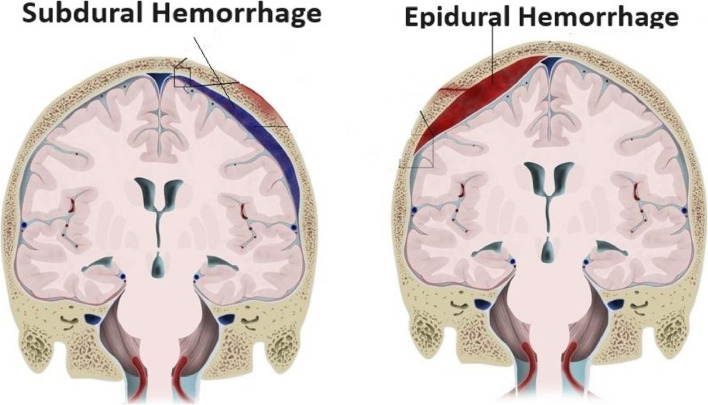
Automatic diagnosis and brain hemorrhage segmentation in Computed Tomography (CT) may be helpful in assisting the neurosurgeon in developing treatment plans that improve the patient's chances of survival. Because medical segmentation of images is important and performing operations manually is challenging, many automated algorithms have been developed for this purpose, primarily focusing on certain image modalities. Whenever a blood vessel bursts, a dangerous medical condition known as intracranial hemorrhage (ICH) occurs. For best results, quick action is required. That being said, identifying subdural (SDH) and epidural haemorrhages (EDH) is a difficult task in this field and calls for a new, more precise detection method.
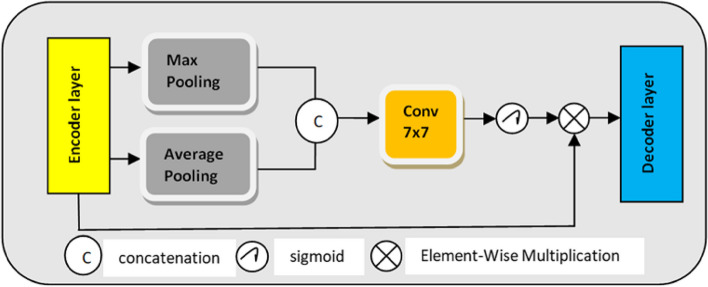
This work uses a head CT scan to detect cerebral bleeding and distinguish between two types of dural hemorrhages using deep learning techniques. This paper proposes a rich segmentation approach to segment both SDH and EDH by enhancing segmentation efficiency with a better feature extraction procedure. This method incorporates Spatial attention- based CSR (convolution-SE-residual) Unet, for rich segmentation and precise feature extraction.
According to the study's findings, the CSR based Spatial network performs better than the other models, exhibiting impressive metrics for all assessed parameters with a mean dice coefficient of 0.970 and mean IoU of 0.718, while EDH and SDH dice scores are 0.983 and 0.969 respectively.
The CSR Spatial network experiment results show that it can perform well regarding dice coefficient. Furthermore, Spatial Unet based on CSR may effectively model the complicated in segmentations and rich feature extraction and improve the representation learning compared to alternative deep learning techniques, of illness and medical treatment, to enhance the meticulousness in predicting the fatality.
在计算机断层扫描(CT)中自动诊断和脑出血分割可能有助于神经外科医生制定改善患者生存机会的治疗计划。由于医学图像分割很重要,手动操作具有挑战性,因此已经开发了许多自动化算法来实现这一目的,主要集中在某些图像模式上。每当血管破裂时,就会发生一种称为颅内出血(ICH)的危险医疗状况。为了获得最佳效果,需要迅速采取行动。也就是说,在该领域,识别硬膜下(SDH)和硬膜外血肿(EDH)是一项艰巨的任务,需要一种新的、更精确的检测方法。
这项工作使用头部 CT 扫描来检测脑内出血,并使用深度学习技术区分两种硬膜下出血。本文提出了一种丰富的分割方法,通过使用更好的特征提取过程增强分割效率,对 SDH 和 EDH 进行分割。该方法结合了基于空间注意力的 CSR(卷积-SE-残差)Unet,用于丰富分割和精确特征提取。
根据研究结果,基于 CSR 的空间网络的表现优于其他模型,在所有评估参数上均表现出出色的指标,平均骰子系数为 0.970,平均 IoU 为 0.718,而 EDH 和 SDH 的骰子分数分别为 0.983 和 0.969。
CSR 空间网络实验结果表明,它在骰子系数方面表现良好。此外,基于 CSR 的空间 U-Net 可以有效地对复杂的分割和丰富的特征提取进行建模,并通过与替代深度学习技术相比,提高表示学习能力,从而提高对疾病和治疗的预测准确性。