Department of Infectious Diseases, Hospital Universitario Ramón y Cajal, IRYCIS and Universidad de Alcalá, Carretera de Colmenar Viejo, Km 9.100, 28034, Madrid, Spain.
CIBERINFEC, Instituto de Salud Carlos III, 28029, Madrid, Spain.
Microbiome. 2024 Oct 22;12(1):214. doi: 10.1186/s40168-024-01919-5.
Despite effective antiretroviral therapy, people with HIV (PWH) experience persistent systemic inflammation and increased morbidity and mortality. Modulating the gut microbiome through fecal microbiota transplantation (FMT) represents a novel therapeutic strategy. We aimed to evaluate proteomic changes in inflammatory pathways following repeated, low-dose FMT versus placebo.
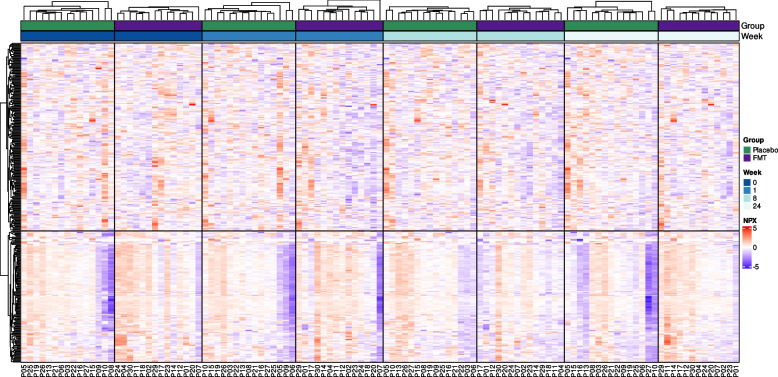
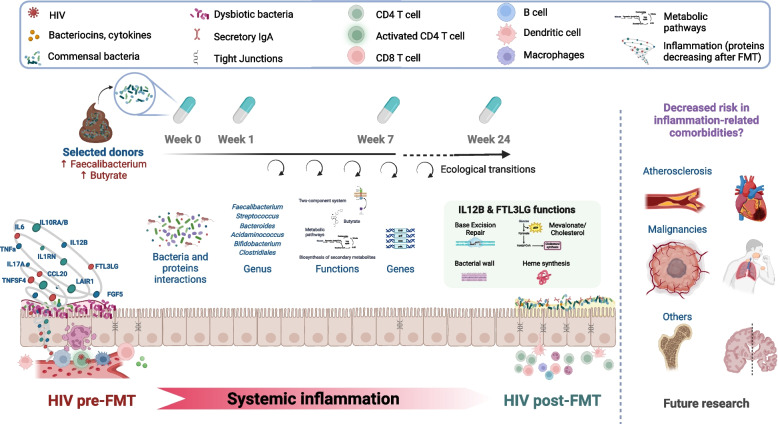
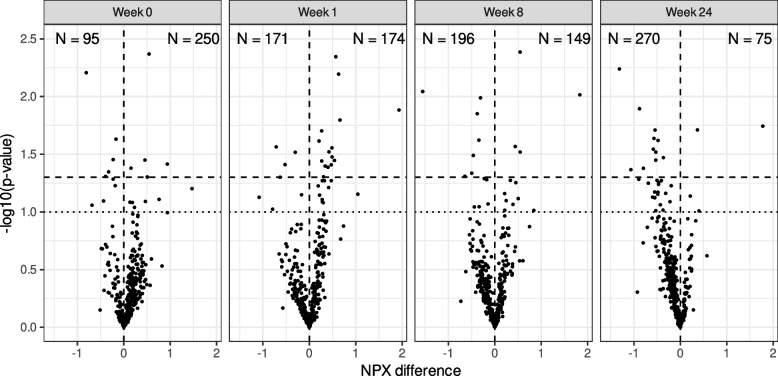
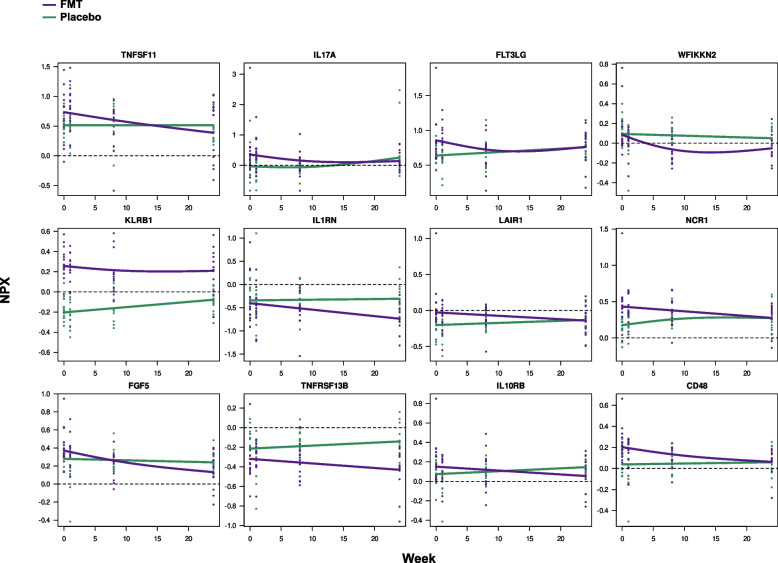
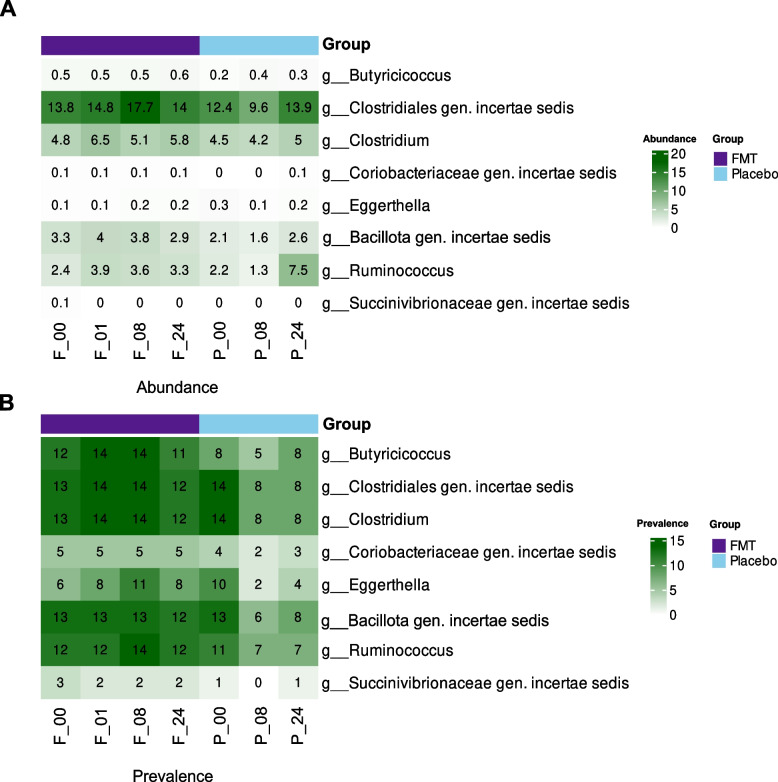
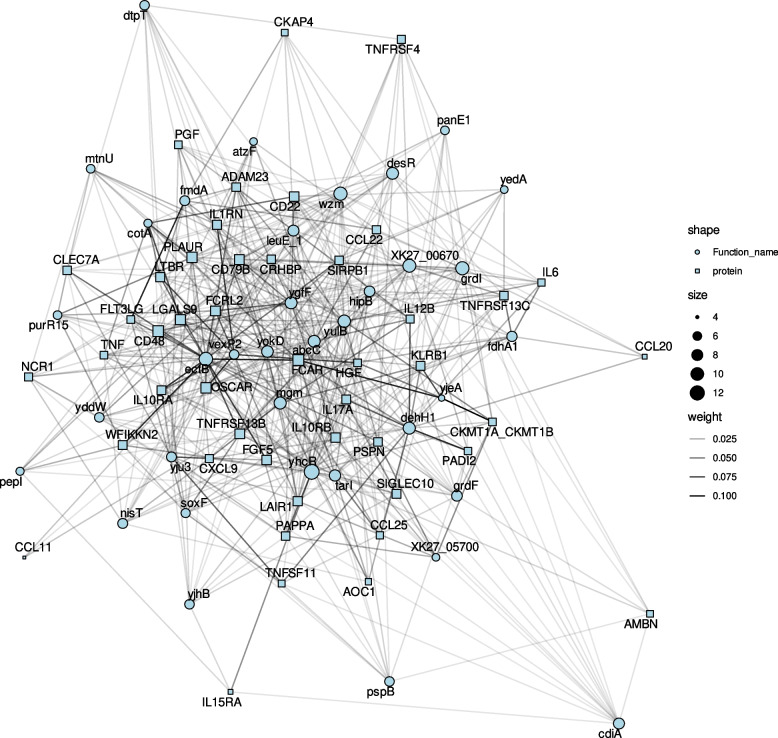
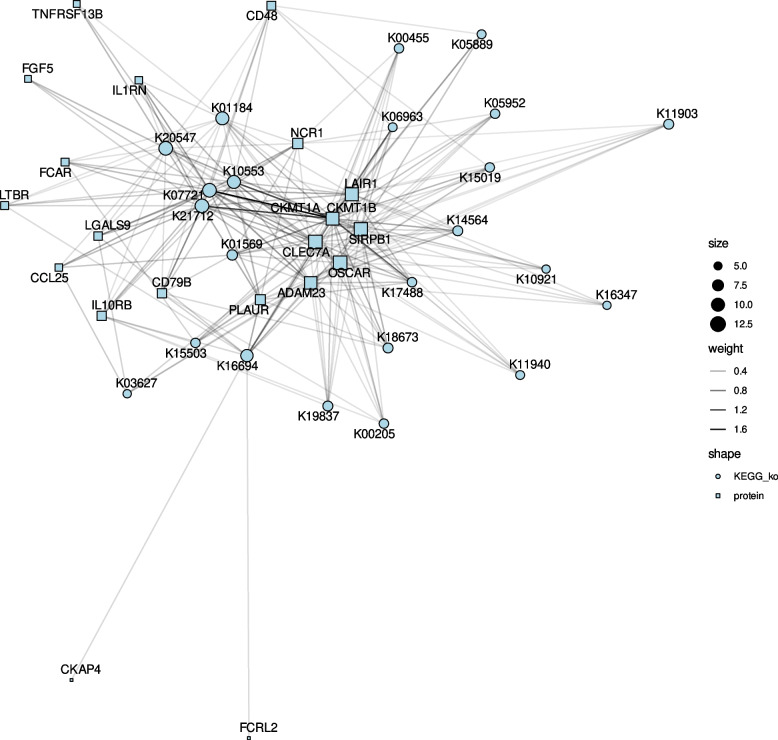
This double-masked, placebo-controlled pilot study assessed the proteomic impacts of weekly FMT versus placebo treatment over 8 weeks on systemic inflammation in 29 PWH receiving stable antiretroviral therapy (ART). Three stool donors with high Faecalibacterium and butyrate profiles were selected, and their individual stools were used for FMT capsule preparation. Proteomic changes in 345 inflammatory proteins in plasma were quantified using the proximity extension assay, with samples collected at baseline and at weeks 1, 8, and 24. Concurrently, we characterized shifts in the gut microbiota composition and annotated functions through shotgun metagenomics. We fitted generalized additive models to evaluate the dynamics of protein expression. We selected the most relevant proteins to explore their correlations with microbiome composition and functionality over time using linear mixed models.
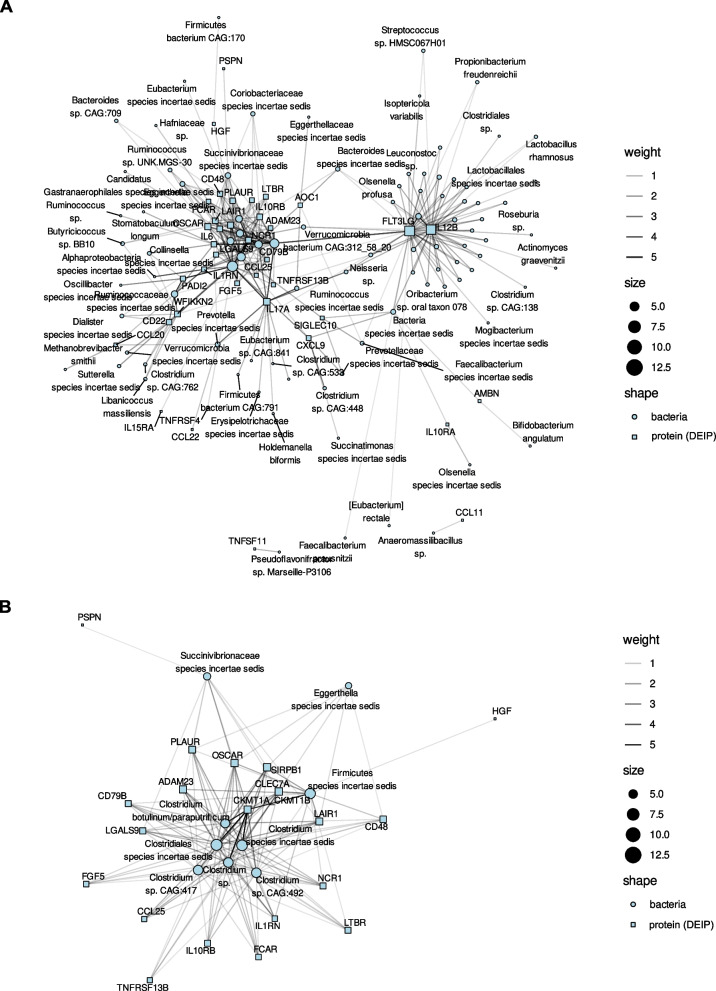
FMT significantly reduced the plasma levels of 45 inflammatory proteins, including established mortality predictors such as IL6 and TNF-α. We found notable reductions persisting up to 16 weeks after the final FMT procedure, including in the expression of proteins such as CCL20 and CD22. We identified changes in 46 proteins, including decreases in FT3LG, IL6, IL10RB, IL12B, and IL17A, which correlated with multiple bacterial species. We found that specific bacterial species within the Ruminococcaceae, Succinivibrionaceae, Prevotellaceae families, and the Clostridium genus, in addition to their associated genes and functions, were significantly correlated with changes in inflammatory markers.
Targeting the gut microbiome through FMT effectively decreased inflammatory proteins in PWH, with sustained effects. These findings suggest the potential of the microbiome as a therapeutic target to mitigate inflammation-related complications in this population, encouraging further research and development of microbiome-based interventions. Video Abstract.
尽管有有效的抗逆转录病毒疗法,艾滋病毒感染者(PWH)仍会持续出现全身炎症,并增加发病率和死亡率。通过粪便微生物群移植(FMT)来调节肠道微生物群代表了一种新的治疗策略。我们旨在评估重复低剂量 FMT 与安慰剂相比对炎症途径的蛋白质组学变化。
这项双盲、安慰剂对照的初步研究评估了每周 FMT 与安慰剂治疗在 29 名接受稳定抗逆转录病毒治疗(ART)的 PWH 中对全身炎症的蛋白质组学影响,共 8 周。选择了三个具有高粪杆菌和丁酸 profile 的粪便供体,并使用他们各自的粪便制备 FMT 胶囊。使用接近延伸测定法定量测量血浆中 345 种炎症蛋白的蛋白质组学变化,在基线和第 1、8 和 24 周收集样本。同时,我们通过 shotgun 宏基因组学描述了肠道微生物群落组成和注释功能的变化。我们使用广义加性模型评估蛋白质表达的动态。我们选择了最相关的蛋白质,使用线性混合模型来探索它们与微生物群落组成和功能的相关性随时间的变化。
FMT 显著降低了 45 种炎症蛋白的血浆水平,包括 IL6 和 TNF-α 等已确立的死亡率预测因子。我们发现,在最后一次 FMT 手术后长达 16 周的时间里,这种降低仍然存在,包括 CCL20 和 CD22 等蛋白质的表达。我们确定了 46 种蛋白质的变化,包括 FT3LG、IL6、IL10RB、IL12B 和 IL17A 的减少,这些变化与多种细菌物种相关。我们发现,Ruminococcaceae、Succinivibrionaceae、Prevotellaceae 科和 Clostridium 属内的特定细菌物种,以及它们相关的基因和功能,与炎症标志物的变化显著相关。
通过 FMT 靶向肠道微生物群可有效降低 PWH 的炎症蛋白,且效果持久。这些发现表明,微生物组作为减轻该人群炎症相关并发症的治疗靶点具有潜力,鼓励进一步研究和开发基于微生物组的干预措施。视频摘要。