Serrano-Villar Sergio, Talavera-Rodríguez Alba, Gosalbes María José, Madrid Nadia, Pérez-Molina José A, Elliott Ryan J, Navia Beatriz, Lanza Val F, Vallejo Alejandro, Osman Majdi, Dronda Fernando, Budree Shrish, Zamora Javier, Gutiérrez Carolina, Manzano Mónica, Vivancos María Jesús, Ron Raquel, Martínez-Sanz Javier, Herrera Sabina, Ansa Uxua, Moya Andrés, Moreno Santiago
Department of Infectious Diseases, Hospital Universitario Ramon y Cajal, and IRYCIS, Madrid, Spain.
Bioinformatics Unit, Hospital Universitario Ramon y Cajal, IRYCIS, Madrid, Spain.
Nat Commun. 2021 Feb 18;12(1):1139. doi: 10.1038/s41467-021-21472-1.
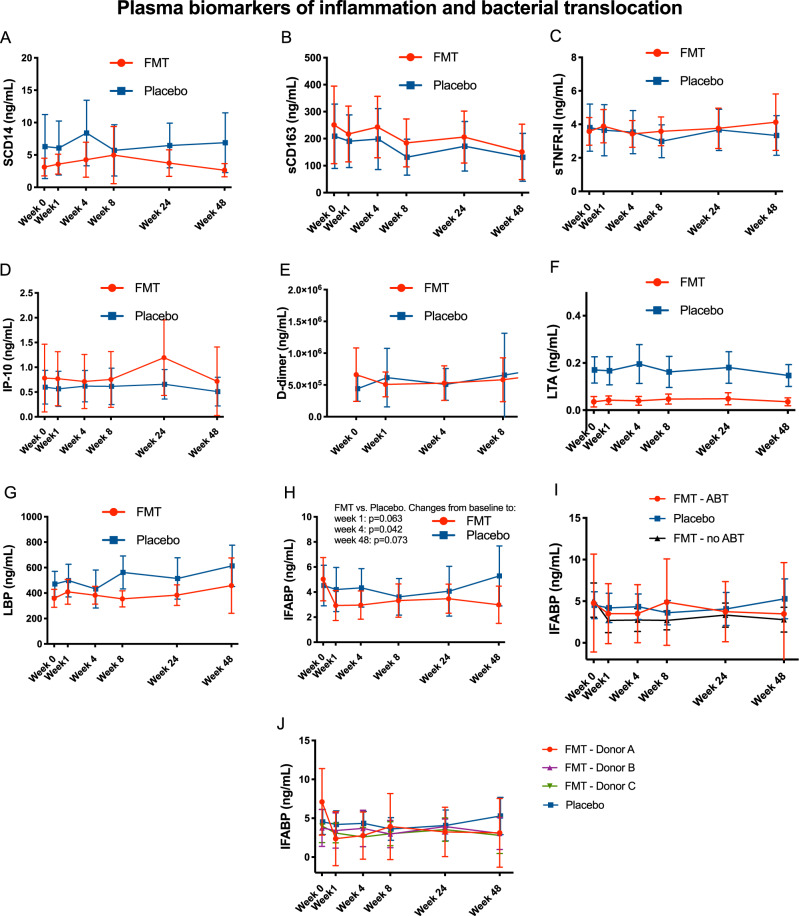
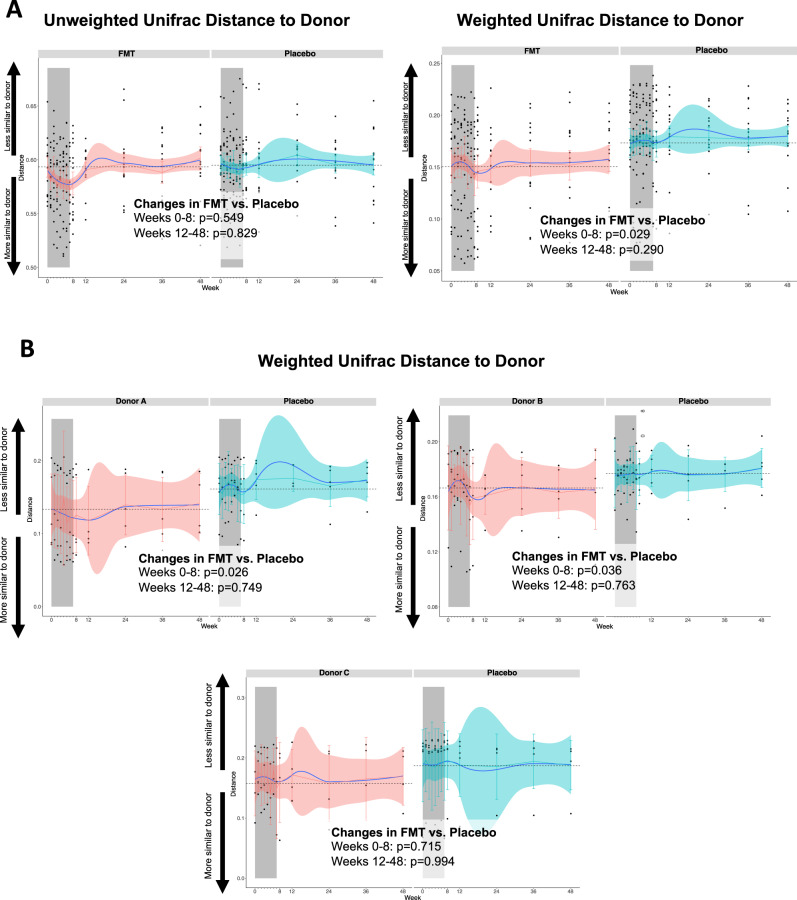
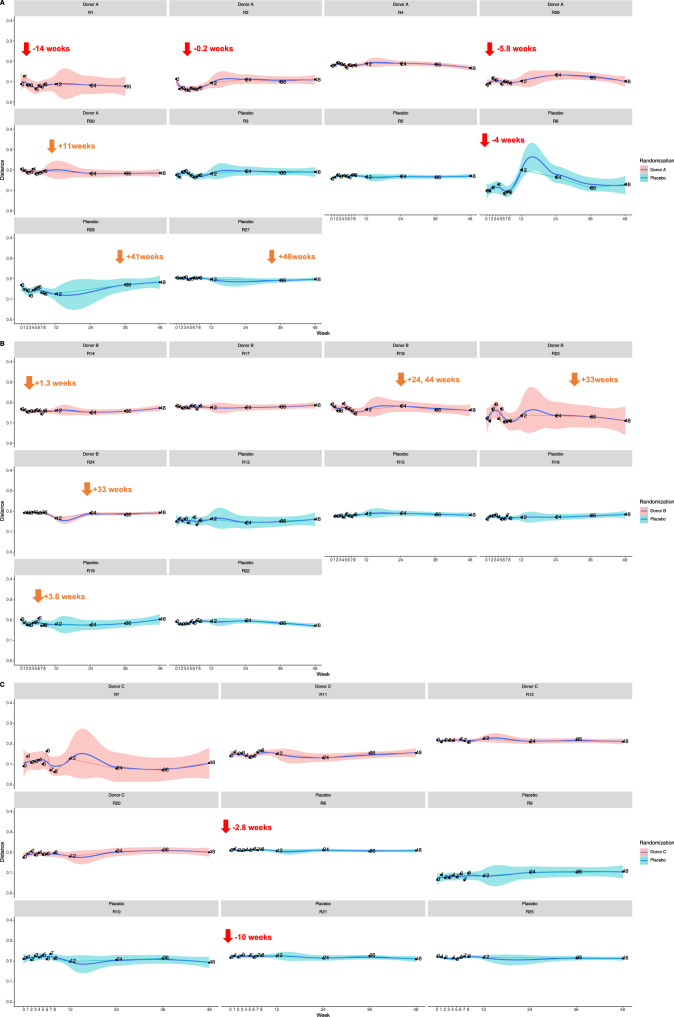
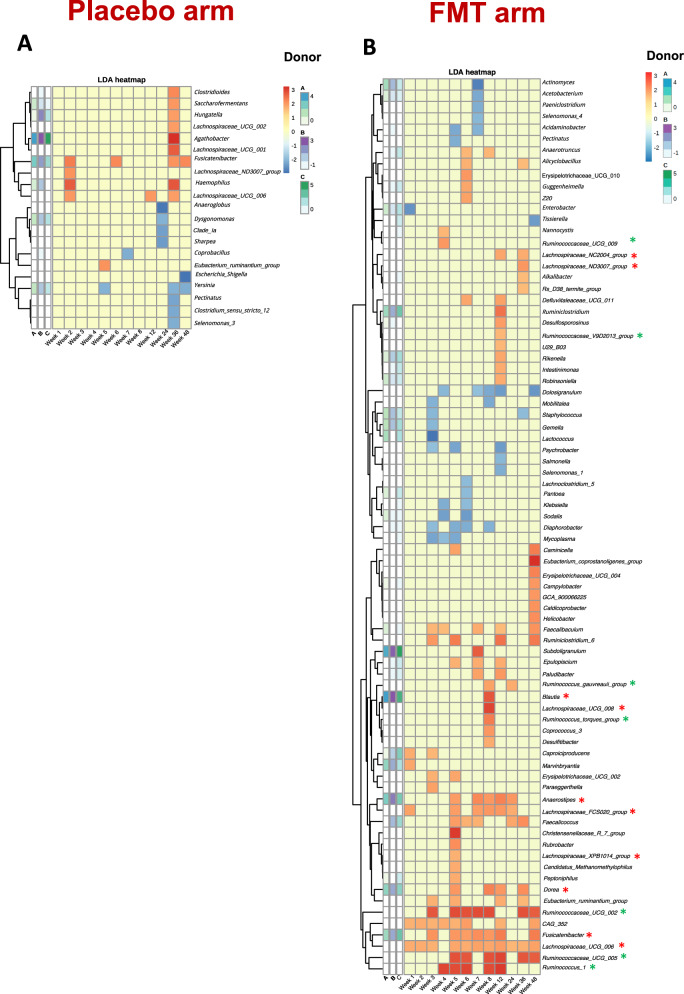
Changes in the microbiota have been linked to persistent inflammation during treated HIV infection. In this pilot double-blind study, we study 30 HIV-infected subjects on antiretroviral therapy (ART) with a CD4/CD8 ratio < 1 randomized to either weekly fecal microbiota capsules or placebo for 8 weeks. Stool donors were rationally selected based on their microbiota signatures. We report that fecal microbiota transplantation (FMT) is safe, not related to severe adverse events, and attenuates HIV-associated dysbiosis. FMT elicits changes in gut microbiota structure, including significant increases in alpha diversity, and a mild and transient engraftment of donor's microbiota during the treatment period. The greater engraftment seems to be achieved by recent antibiotic use before FMT. The Lachnospiraceae and Ruminococcaceae families, which are typically depleted in people with HIV, are the taxa more robustly engrafted across time-points. In exploratory analyses, we describe a significant amelioration in the FMT group in intestinal fatty acid-binding protein (IFABP), a biomarker of intestinal damage that independently predicts mortality. Gut microbiota manipulation using a non-invasive and safe strategy of FMT delivery is feasible and deserves further investigation. Trial number: NCT03008941.
微生物群的变化与接受治疗的HIV感染期间的持续性炎症有关。在这项双盲试验研究中,我们对30名接受抗逆转录病毒疗法(ART)且CD4/CD8比率<1的HIV感染者进行了研究,他们被随机分为两组,分别接受为期8周的每周一次的粪便微生物群胶囊或安慰剂治疗。粪便捐献者是根据其微生物群特征合理挑选出来的。我们报告称,粪便微生物群移植(FMT)是安全的,与严重不良事件无关,并且可减轻HIV相关的生态失调。FMT引起肠道微生物群结构的变化,包括α多样性显著增加,以及在治疗期间供体微生物群的轻度和短暂植入。更大程度的植入似乎是通过FMT前近期使用抗生素实现的。在HIV感染者中通常减少的毛螺菌科和瘤胃球菌科是在各个时间点植入更稳定的分类群。在探索性分析中,我们描述了FMT组中肠道脂肪酸结合蛋白(IFABP)的显著改善,IFABP是一种肠道损伤生物标志物,可独立预测死亡率。使用非侵入性且安全的FMT递送策略来操纵肠道微生物群是可行的,值得进一步研究。试验编号:NCT03008941。