• 文献检索
  • 文档翻译
  • 深度研究
  • 学术资讯
  • Suppr Zotero 插件Zotero 插件
  • 邀请有礼
  • 套餐&价格
  • 历史记录
应用&插件
Suppr Zotero 插件Zotero 插件浏览器插件Mac 客户端Windows 客户端微信小程序
定价
高级版会员购买积分包购买API积分包
服务
文献检索文档翻译深度研究API 文档MCP 服务
关于我们
关于 Suppr公司介绍联系我们用户协议隐私条款
关注我们

Suppr 超能文献

核心技术专利:CN118964589B侵权必究
粤ICP备2023148730 号-1Suppr @ 2026

文献检索

告别复杂PubMed语法,用中文像聊天一样搜索,搜遍4000万医学文献。AI智能推荐,让科研检索更轻松。

立即免费搜索

文件翻译

保留排版,准确专业,支持PDF/Word/PPT等文件格式,支持 12+语言互译。

免费翻译文档

深度研究

AI帮你快速写综述,25分钟生成高质量综述,智能提取关键信息,辅助科研写作。

立即免费体验

基于改进的克氏原螯虾优化算法的深度学习在口腔鳞状细胞癌识别中的应用:基于组织病理学图像。

Deep transfer learning with improved crayfish optimization algorithm for oral squamous cell carcinoma cancer recognition using histopathological images.

机构信息

Information Technology Department, Faculty of Computing and Information Technology, King Abdulaziz University, Jeddah, 21589, Saudi Arabia.

Department of Biology, College of Science and Arts at Alkamil, University of Jeddah, Jeddah, Saudi Arabia.

出版信息

Sci Rep. 2024 Oct 25;14(1):25348. doi: 10.1038/s41598-024-75330-3.

DOI:10.1038/s41598-024-75330-3
PMID:39455617
原文链接:https://pmc.ncbi.nlm.nih.gov/articles/PMC11512072/
Abstract

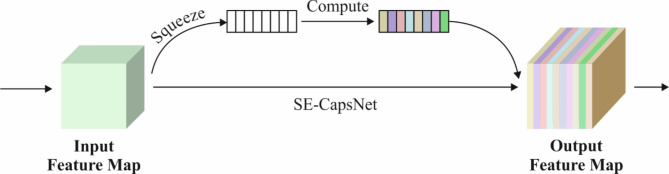
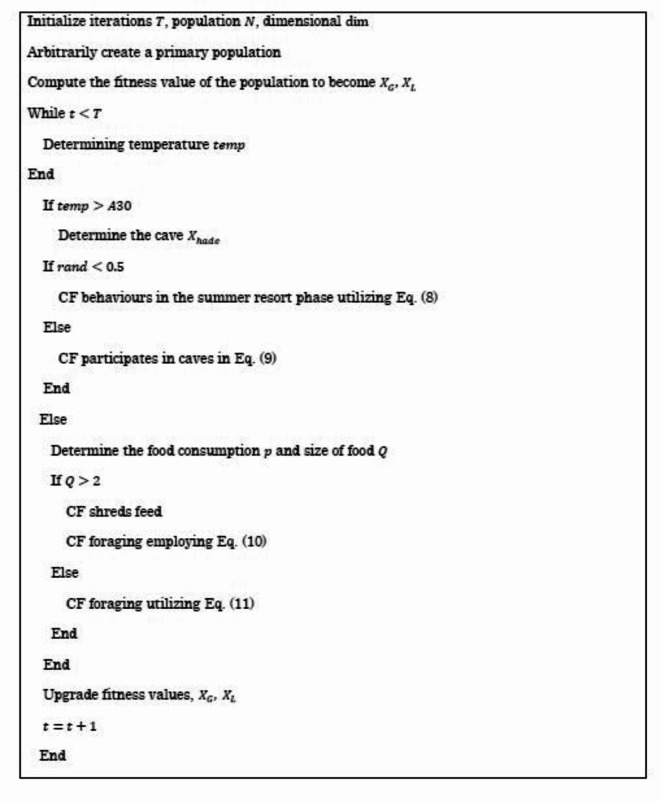
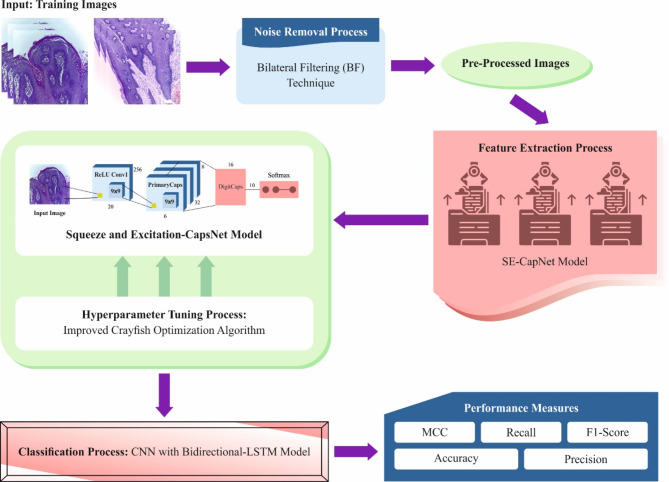
Oral Squamous Cell Carcinoma (OSCC) causes a severe challenge in oncology due to the lack of diagnostic devices, leading to delays in detecting the disorder. The OSCC diagnosis through histopathology demands a pathologist expert because the cellular presentation is variable and highly complex. Existing diagnostic approaches for OSCC have specific efficiency and accuracy restrictions, highlighting the necessity for more reliable techniques. The increase of deep neural networks (DNN) model and their applications in medical imaging have been instrumental in disease diagnosis and detection. Automatic detection systems using deep learning (DL) approaches show tremendous promise in investigating medical imagery with speed, efficiency, and accuracy. In terms of OSCC, this system allows the diagnostic method to be streamlined, facilitating earlier diagnosis and enhancing survival rates. Automatic analysis of histopathological image (HI) can assist in accurately detecting and identifying tumorous tissue, reducing diagnostic turnaround times and increasing the efficacy of pathologists. This study presents a Squeeze-Excitation with Hybrid Deep Learning for Oral Squamous Cell Carcinoma Recognition (SEHDL-OSCCR) on HIs. The presented SEHDL-OSCCR technique mainly focuses on detecting oral cancer (OC) using hybrid DL models. The bilateral filtering (BF) technique is initially used to remove the noise. Next, the SEHDL-OSCCR technique employs the SE-CapsNet model to recognize the feature extractors. An improved crayfish optimization algorithm (ICOA) technique is utilized to improve the performance of the SE-CapsNet model. At last, the classification of the OSCC technique is performed by employing a convolutional neural network with a bidirectional long short-term memory (CNN-BiLSTM) model. The simulation results obtained using the SEHDL-OSCCR technique are investigated using a benchmark medical image dataset. The experimental validation of the SEHDL-OSCCR technique illustrated a greater accuracy outcome of 98.75% compared to recent approaches.

摘要

口腔鳞状细胞癌 (OSCC) 由于缺乏诊断设备,在肿瘤学领域构成了严重挑战,导致疾病的检测出现延误。通过组织病理学进行 OSCC 诊断需要病理学家的专业知识,因为细胞表现具有多样性且非常复杂。现有的 OSCC 诊断方法具有特定的效率和准确性限制,这突显了对更可靠技术的需求。深度神经网络 (DNN) 模型的增加及其在医学成像中的应用在疾病诊断和检测方面发挥了重要作用。使用深度学习 (DL) 方法的自动检测系统在快速、高效和准确地研究医学图像方面具有巨大的潜力。就 OSCC 而言,该系统允许简化诊断方法,促进早期诊断并提高生存率。对组织病理学图像 (HI) 的自动分析有助于准确检测和识别肿瘤组织,减少诊断周转时间并提高病理学家的工作效率。本研究提出了一种基于挤压激励与混合深度学习的口腔鳞状细胞癌识别方法 (SEHDL-OSCCR) 用于 HI。所提出的 SEHDL-OSCCR 技术主要专注于使用混合 DL 模型检测口腔癌 (OC)。该技术首先使用双边滤波 (BF) 技术去除噪声。接下来,SEHDL-OSCCR 技术采用 SE-CapsNet 模型识别特征提取器。改进的小龙虾优化算法 (ICOA) 技术用于提高 SE-CapsNet 模型的性能。最后,通过使用具有双向长短期记忆 (CNN-BiLSTM) 模型的卷积神经网络对 OSCC 技术进行分类。使用 SEHDL-OSCCR 技术获得的模拟结果使用基准医学图像数据集进行了研究。与最近的方法相比,SEHDL-OSCCR 技术的实验验证表明其具有更高的准确性,达到了 98.75%。
https://cdn.ncbi.nlm.nih.gov/pmc/blobs/2db1/11512072/0a3815fb3e91/41598_2024_75330_Fig14_HTML.jpg
https://cdn.ncbi.nlm.nih.gov/pmc/blobs/2db1/11512072/e572baa0aa8e/41598_2024_75330_Fig1_HTML.jpg
https://cdn.ncbi.nlm.nih.gov/pmc/blobs/2db1/11512072/6f302ef1b747/41598_2024_75330_Fig2_HTML.jpg
https://cdn.ncbi.nlm.nih.gov/pmc/blobs/2db1/11512072/e0d212493118/41598_2024_75330_Fig3_HTML.jpg
https://cdn.ncbi.nlm.nih.gov/pmc/blobs/2db1/11512072/233b834276c8/41598_2024_75330_Fig4_HTML.jpg
https://cdn.ncbi.nlm.nih.gov/pmc/blobs/2db1/11512072/35b662b8b9db/41598_2024_75330_Figa_HTML.jpg
https://cdn.ncbi.nlm.nih.gov/pmc/blobs/2db1/11512072/17e0f24e24e8/41598_2024_75330_Fig5_HTML.jpg
https://cdn.ncbi.nlm.nih.gov/pmc/blobs/2db1/11512072/d449d3257d8c/41598_2024_75330_Fig6_HTML.jpg
https://cdn.ncbi.nlm.nih.gov/pmc/blobs/2db1/11512072/91ab9011b830/41598_2024_75330_Fig7_HTML.jpg
https://cdn.ncbi.nlm.nih.gov/pmc/blobs/2db1/11512072/97eea835fd87/41598_2024_75330_Fig8_HTML.jpg
https://cdn.ncbi.nlm.nih.gov/pmc/blobs/2db1/11512072/5a7972cba0e5/41598_2024_75330_Fig9_HTML.jpg
https://cdn.ncbi.nlm.nih.gov/pmc/blobs/2db1/11512072/bf6e864e5071/41598_2024_75330_Fig10_HTML.jpg
https://cdn.ncbi.nlm.nih.gov/pmc/blobs/2db1/11512072/6bc81a318441/41598_2024_75330_Fig11_HTML.jpg
https://cdn.ncbi.nlm.nih.gov/pmc/blobs/2db1/11512072/54913153fd56/41598_2024_75330_Fig12_HTML.jpg
https://cdn.ncbi.nlm.nih.gov/pmc/blobs/2db1/11512072/c9752bfbb1b6/41598_2024_75330_Fig13_HTML.jpg
https://cdn.ncbi.nlm.nih.gov/pmc/blobs/2db1/11512072/0a3815fb3e91/41598_2024_75330_Fig14_HTML.jpg
https://cdn.ncbi.nlm.nih.gov/pmc/blobs/2db1/11512072/e572baa0aa8e/41598_2024_75330_Fig1_HTML.jpg
https://cdn.ncbi.nlm.nih.gov/pmc/blobs/2db1/11512072/6f302ef1b747/41598_2024_75330_Fig2_HTML.jpg
https://cdn.ncbi.nlm.nih.gov/pmc/blobs/2db1/11512072/e0d212493118/41598_2024_75330_Fig3_HTML.jpg
https://cdn.ncbi.nlm.nih.gov/pmc/blobs/2db1/11512072/233b834276c8/41598_2024_75330_Fig4_HTML.jpg
https://cdn.ncbi.nlm.nih.gov/pmc/blobs/2db1/11512072/35b662b8b9db/41598_2024_75330_Figa_HTML.jpg
https://cdn.ncbi.nlm.nih.gov/pmc/blobs/2db1/11512072/17e0f24e24e8/41598_2024_75330_Fig5_HTML.jpg
https://cdn.ncbi.nlm.nih.gov/pmc/blobs/2db1/11512072/d449d3257d8c/41598_2024_75330_Fig6_HTML.jpg
https://cdn.ncbi.nlm.nih.gov/pmc/blobs/2db1/11512072/91ab9011b830/41598_2024_75330_Fig7_HTML.jpg
https://cdn.ncbi.nlm.nih.gov/pmc/blobs/2db1/11512072/97eea835fd87/41598_2024_75330_Fig8_HTML.jpg
https://cdn.ncbi.nlm.nih.gov/pmc/blobs/2db1/11512072/5a7972cba0e5/41598_2024_75330_Fig9_HTML.jpg
https://cdn.ncbi.nlm.nih.gov/pmc/blobs/2db1/11512072/bf6e864e5071/41598_2024_75330_Fig10_HTML.jpg
https://cdn.ncbi.nlm.nih.gov/pmc/blobs/2db1/11512072/6bc81a318441/41598_2024_75330_Fig11_HTML.jpg
https://cdn.ncbi.nlm.nih.gov/pmc/blobs/2db1/11512072/54913153fd56/41598_2024_75330_Fig12_HTML.jpg
https://cdn.ncbi.nlm.nih.gov/pmc/blobs/2db1/11512072/c9752bfbb1b6/41598_2024_75330_Fig13_HTML.jpg
https://cdn.ncbi.nlm.nih.gov/pmc/blobs/2db1/11512072/0a3815fb3e91/41598_2024_75330_Fig14_HTML.jpg

相似文献

1
Deep transfer learning with improved crayfish optimization algorithm for oral squamous cell carcinoma cancer recognition using histopathological images.基于改进的克氏原螯虾优化算法的深度学习在口腔鳞状细胞癌识别中的应用:基于组织病理学图像。
Sci Rep. 2024 Oct 25;14(1):25348. doi: 10.1038/s41598-024-75330-3.
2
Automated classification of cells into multiple classes in epithelial tissue of oral squamous cell carcinoma using transfer learning and convolutional neural network.利用迁移学习和卷积神经网络对口腔鳞状细胞癌上皮组织中的细胞进行自动分类成多个类别。
Neural Netw. 2020 Aug;128:47-60. doi: 10.1016/j.neunet.2020.05.003. Epub 2020 May 7.
3
Enhancing oral squamous cell carcinoma detection: a novel approach using improved EfficientNet architecture.提高口腔鳞状细胞癌检测的准确率:一种利用改进的 EfficientNet 架构的新方法。
BMC Oral Health. 2024 May 23;24(1):601. doi: 10.1186/s12903-024-04307-5.
4
Deep Learning-Based Image Classification and Segmentation on Digital Histopathology for Oral Squamous Cell Carcinoma: A Systematic Review and Meta-Analysis.基于深度学习的口腔鳞状细胞癌数字组织病理学图像分类和分割:系统评价和荟萃分析。
J Oral Pathol Med. 2024 Oct;53(9):551-566. doi: 10.1111/jop.13578. Epub 2024 Sep 10.
5
Histopathology-Based Diagnosis of Oral Squamous Cell Carcinoma Using Deep Learning.基于深度学习的口腔鳞状细胞癌的组织病理学诊断。
J Dent Res. 2022 Oct;101(11):1321-1327. doi: 10.1177/00220345221089858. Epub 2022 Apr 21.
6
DETECTION OF ORAL SQUAMOUS CELL CARCINOMA USING PRE-TRAINED DEEP LEARNING MODELS.使用预训练深度学习模型检测口腔鳞状细胞癌。
Exp Oncol. 2024 Oct 9;46(2):119-128. doi: 10.15407/exp-oncology.2024.02.119.
7
Effectiveness of deep learning classifiers in histopathological diagnosis of oral squamous cell carcinoma by pathologists.深度学习分类器在病理学家口腔鳞状细胞癌组织学诊断中的应用效果。
Sci Rep. 2023 Jul 19;13(1):11676. doi: 10.1038/s41598-023-38343-y.
8
Towards laryngeal cancer diagnosis using Dandelion Optimizer Algorithm with ensemble learning on biomedical throat region images.基于生物医学喉部图像的 Dandelion Optimizer 算法集成学习进行喉癌诊断。
Sci Rep. 2024 Aug 24;14(1):19713. doi: 10.1038/s41598-024-70525-0.
9
Self-attention-based generative adversarial network optimized with color harmony algorithm for brain tumor classification.基于自注意力的生成对抗网络,结合颜色调和算法,用于脑肿瘤分类。
Electromagn Biol Med. 2024 Apr 2;43(1-2):31-45. doi: 10.1080/15368378.2024.2312363. Epub 2024 Feb 18.
10
Automatic Classification of Cancerous Tissue in Laserendomicroscopy Images of the Oral Cavity using Deep Learning.使用深度学习对口腔激光共聚焦显微镜图像中的癌变组织进行自动分类。
Sci Rep. 2017 Sep 20;7(1):11979. doi: 10.1038/s41598-017-12320-8.

引用本文的文献

1
Updates, Applications and Future Directions of Deep Learning for the Images Processing in the Field of Cranio-Maxillo-Facial Surgery.深度学习在颅颌面外科图像处理中的更新、应用及未来方向
Bioengineering (Basel). 2025 May 29;12(6):585. doi: 10.3390/bioengineering12060585.
2
Current AI Applications and Challenges in Oral Pathology.口腔病理学中当前的人工智能应用与挑战
Oral (Basel). 2025 Mar;5(1). doi: 10.3390/oral5010002. Epub 2025 Jan 6.

本文引用的文献

1
Oral squamous cell carcinoma detection using EfficientNet on histopathological images.基于高效神经网络(EfficientNet)的组织病理学图像口腔鳞状细胞癌检测
Front Med (Lausanne). 2024 Jan 29;10:1349336. doi: 10.3389/fmed.2023.1349336. eCollection 2023.
2
Multi-Method Analysis of Histopathological Image for Early Diagnosis of Oral Squamous Cell Carcinoma Using Deep Learning and Hybrid Techniques.基于深度学习和混合技术的口腔鳞状细胞癌早期诊断组织病理学图像多方法分析
Cancers (Basel). 2023 Oct 31;15(21):5247. doi: 10.3390/cancers15215247.
3
Development of a Machine Learning Model to Predict Recurrence of Oral Tongue Squamous Cell Carcinoma.
用于预测口腔舌鳞状细胞癌复发的机器学习模型的开发。
Cancers (Basel). 2023 May 16;15(10):2769. doi: 10.3390/cancers15102769.
4
Classifying histopathological images of oral squamous cell carcinoma using deep transfer learning.使用深度迁移学习对口腔鳞状细胞癌的组织病理学图像进行分类。
Heliyon. 2023 Feb 6;9(3):e13444. doi: 10.1016/j.heliyon.2023.e13444. eCollection 2023 Mar.
5
Automatic Detection of Oral Squamous Cell Carcinoma from Histopathological Images of Oral Mucosa Using Deep Convolutional Neural Network.基于深度卷积神经网络的口腔黏膜组织病理图像口腔鳞状细胞癌自动检测
Int J Environ Res Public Health. 2023 Jan 24;20(3):2131. doi: 10.3390/ijerph20032131.
6
Diagnosis of Oral Squamous Cell Carcinoma Using Deep Neural Networks and Binary Particle Swarm Optimization on Histopathological Images: An AIoMT Approach.基于深度学习神经网络和二进制粒子群优化算法的Histopathological 图像在口腔鳞状细胞癌诊断中的应用:一种 AIoMT 方法。
Comput Intell Neurosci. 2022 Sep 30;2022:6364102. doi: 10.1155/2022/6364102. eCollection 2022.
7
Early Diagnosis of Oral Squamous Cell Carcinoma Based on Histopathological Images Using Deep and Hybrid Learning Approaches.基于组织病理学图像,运用深度学习和混合学习方法对口腔鳞状细胞癌进行早期诊断。
Diagnostics (Basel). 2022 Aug 5;12(8):1899. doi: 10.3390/diagnostics12081899.
8
Intelligent Deep Learning Enabled Oral Squamous Cell Carcinoma Detection and Classification Using Biomedical Images.基于深度学习的智能口腔鳞状细胞癌检测与分类方法研究:生物医学图像的应用
Comput Intell Neurosci. 2022 Jun 30;2022:7643967. doi: 10.1155/2022/7643967. eCollection 2022.
9
Histopathologic Oral Cancer Prediction Using Oral Squamous Cell Carcinoma Biopsy Empowered with Transfer Learning.基于迁移学习的口腔鳞状细胞癌活检用于预测口腔癌的组织病理学。
Sensors (Basel). 2022 May 18;22(10):3833. doi: 10.3390/s22103833.
10
A deep learning algorithm for detection of oral cavity squamous cell carcinoma from photographic images: A retrospective study.一种用于从摄影图像中检测口腔鳞状细胞癌的深度学习算法:一项回顾性研究。
EClinicalMedicine. 2020 Sep 23;27:100558. doi: 10.1016/j.eclinm.2020.100558. eCollection 2020 Oct.