Department of Biomedical Sciences and Pathobiology, Virginia-Maryland College of Veterinary Medicine, Virginia Polytechnic Institute and State University, Blacksburg, VA, USA.
Department of Mathematics, Virginia Polytechnic Institute and State University, Blacksburg, VA, USA.
Emerg Microbes Infect. 2021 Dec;10(1):725-738. doi: 10.1080/22221751.2021.1908850.
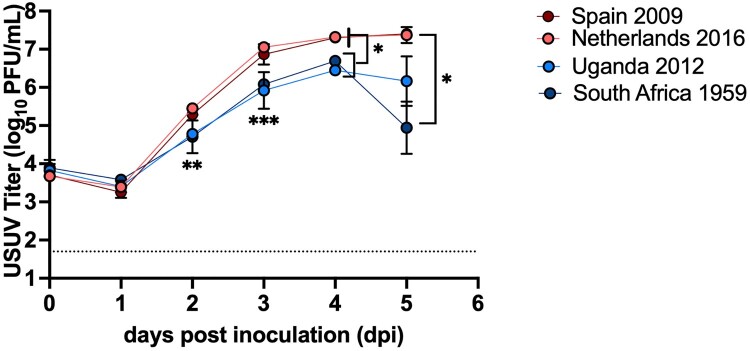
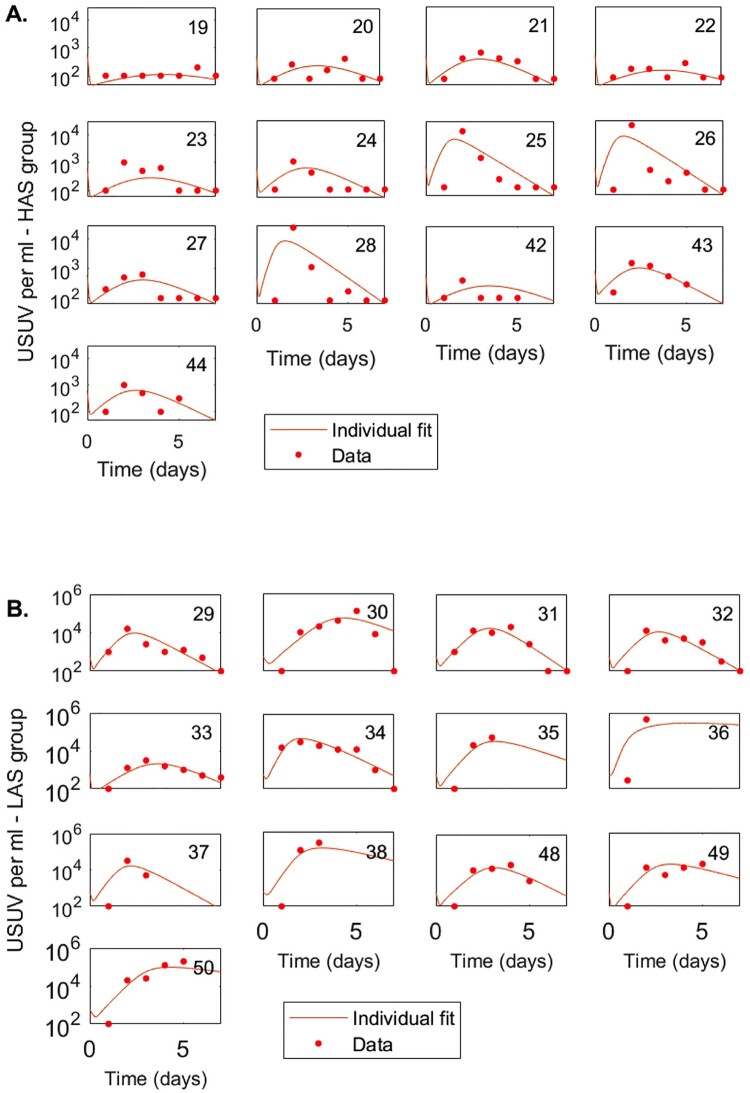
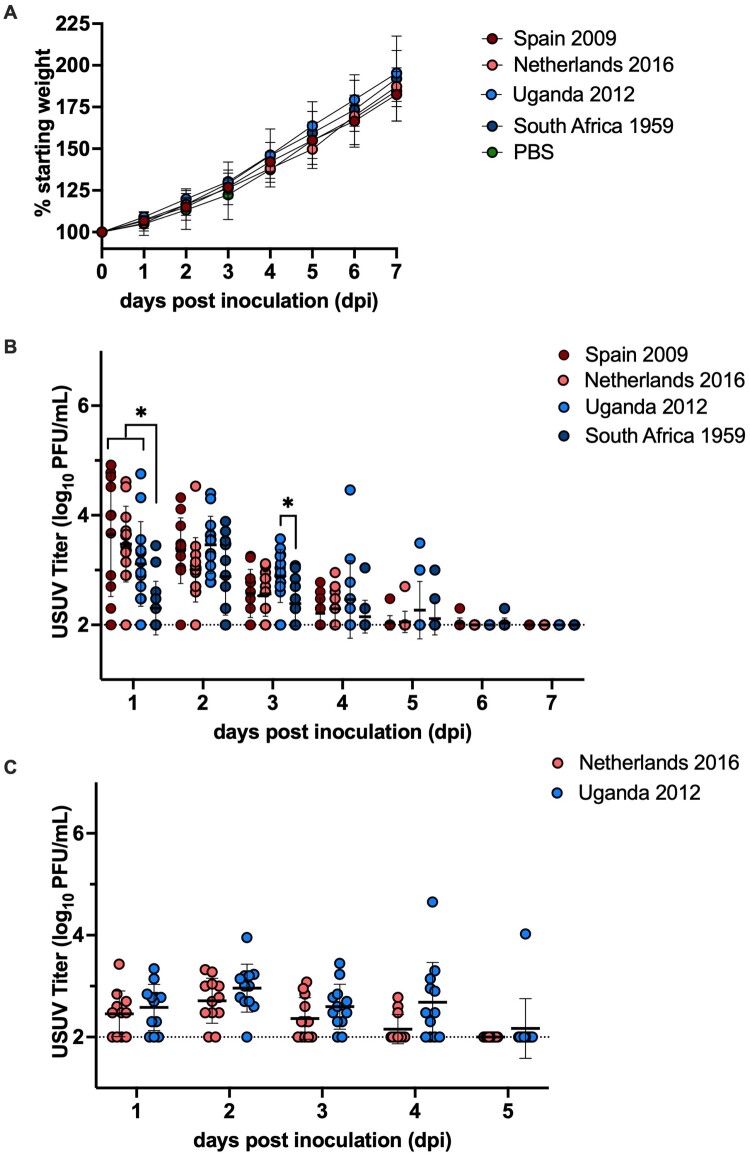
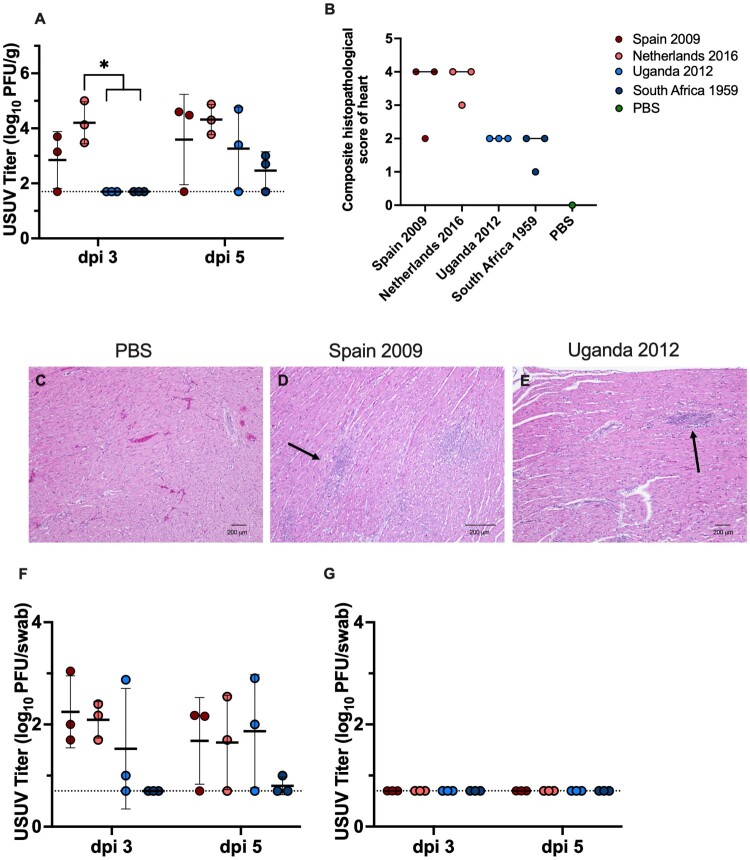
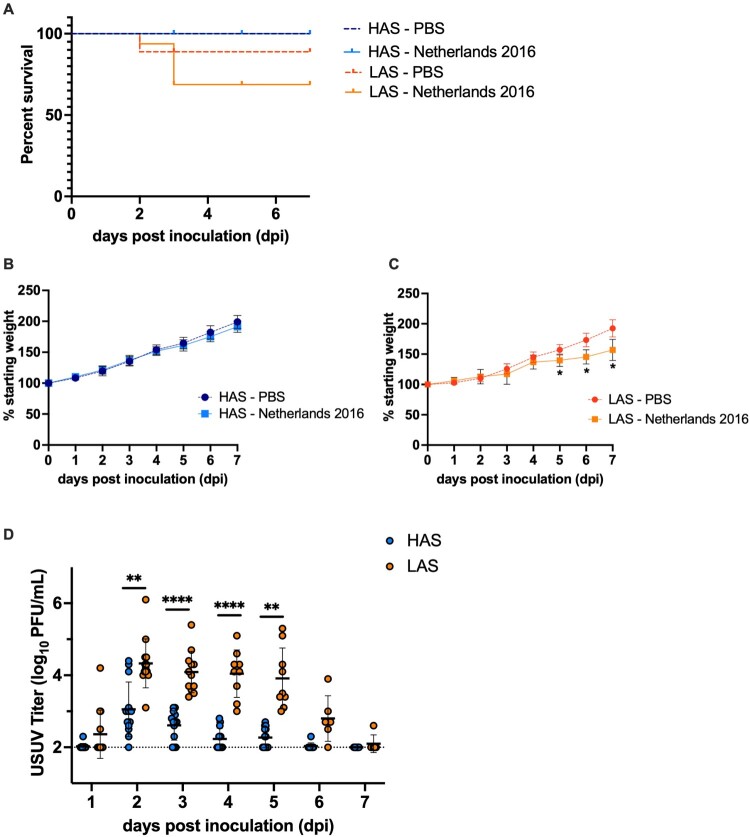
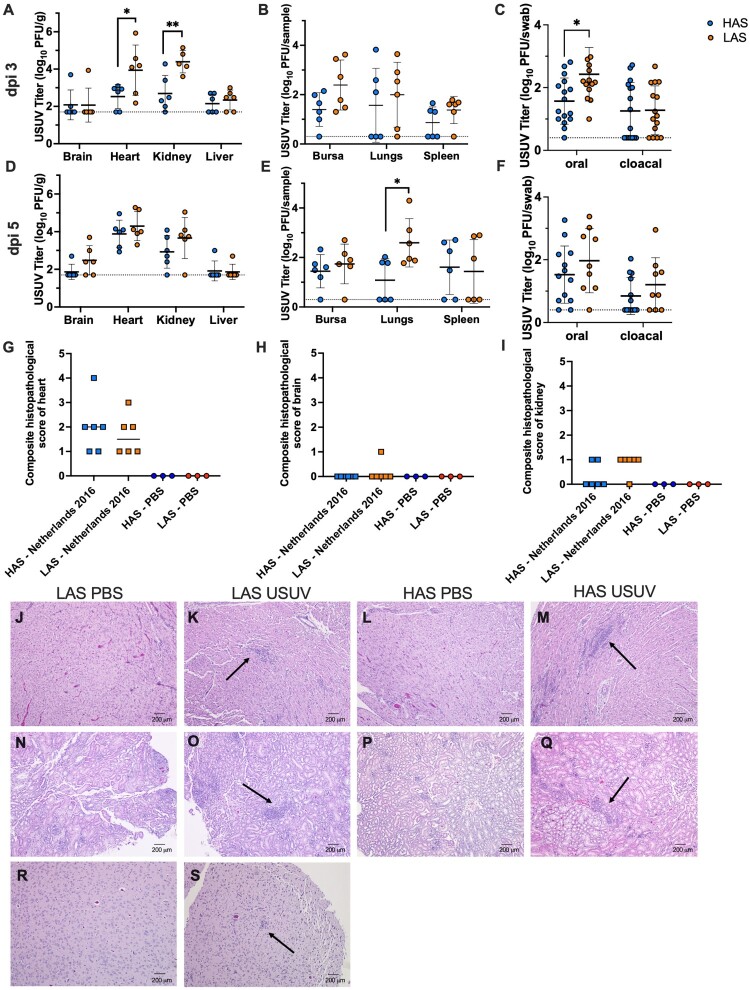
Usutu virus (USUV; family: genus: ), is an emerging zoonotic arbovirus that causes severe neuroinvasive disease in humans and has been implicated in the loss of breeding bird populations in Europe. USUV is maintained in an enzootic cycle between ornithophilic mosquitos and wild birds. As a member of the Japanese encephalitis serocomplex, USUV is closely related to West Nile virus (WNV) and St. Louis encephalitis virus (SLEV), both neuroinvasive arboviruses endemic in wild bird populations in the United States. An avian model for USUV is essential to understanding zoonotic transmission. Here we describe the first avian models of USUV infection with the development of viremia. Juvenile commercial ISA Brown chickens were susceptible to infection by multiple USUV strains with evidence of cardiac lesions. Juvenile chickens from two chicken lines selected for high (HAS) or low (LAS) antibody production against sheep red blood cells showed markedly different responses to USUV infection. Morbidity and mortality were observed in the LAS chickens, but not HAS chickens. LAS chickens had significantly higher viral titers in blood and other tissues, as well as oral secretions, and significantly lower development of neutralizing antibody responses compared to HAS chickens. Mathematical modelling of virus-host interactions showed that the viral clearance rate is a stronger mitigating factor for USUV viremia than neutralizing antibody response in this avian model. These chicken models provide a tool for further understanding USUV pathogenesis in birds and evaluating transmission dynamics between avian hosts and mosquito vectors.
乌苏图病毒(USUV;科:属:)是一种新兴的人畜共患病虫媒病毒,可导致人类严重的神经侵袭性疾病,并被认为是欧洲育雏鸟类数量减少的原因。USUV 在嗜鸟性蚊子和野生鸟类之间维持着地方性的生态循环。作为日本脑炎血清复合物的一员,USUV 与西尼罗河病毒(WNV)和圣路易斯脑炎病毒(SLEV)密切相关,这两种神经侵袭性虫媒病毒在美国野生鸟类中流行。USUV 的禽模型对于理解人畜共患病的传播至关重要。在这里,我们描述了首例具有病毒血症的 USUV 感染禽模型。商业 ISA 褐鸡幼鸡易受多种 USUV 株感染,并出现心脏病变的证据。来自两个鸡系的幼鸡,一个鸡系选择对绵羊红细胞产生高(HAS)抗体,另一个鸡系选择对绵羊红细胞产生低(LAS)抗体,它们对 USUV 感染的反应明显不同。LAS 鸡出现了发病率和死亡率,但 HAS 鸡没有。LAS 鸡血液和其他组织以及口腔分泌物中的病毒滴度明显更高,而 HAS 鸡的中和抗体反应明显较低。病毒-宿主相互作用的数学模型表明,在该禽模型中,病毒清除率是影响 USUV 病毒血症的更强的缓解因素,而不是中和抗体反应。这些鸡模型为进一步了解鸟类中的 USUV 发病机制以及评估禽宿主和蚊子媒介之间的传播动态提供了工具。