Laboratory "Mobilité, Vieillissement, Exercice (MOVE)-UR 20296", Faculty of Sport Sciences, University of Poitiers, Poitiers, 86000, France.
Department of Sport and Performance, Unit of Formation and Research in Sports, Laboratory C3S (EA 4660), University of Franche-Comte, Besançon, 25000, France.
J Physiol Anthropol. 2024 Nov 1;43(1):28. doi: 10.1186/s40101-024-00375-2.
The efficacy of whole-body cryostimulation (WBC) may be influenced by individual characteristics. The aim of this study is to determine the optimal exposure time required to reach the analgesic threshold of 13.6 °C, which has been proposed to be a target temperature to be reached at skin level. Our objective is also to follow the skin temperature changes during and after WBC considering the participants body mass index (BMI).
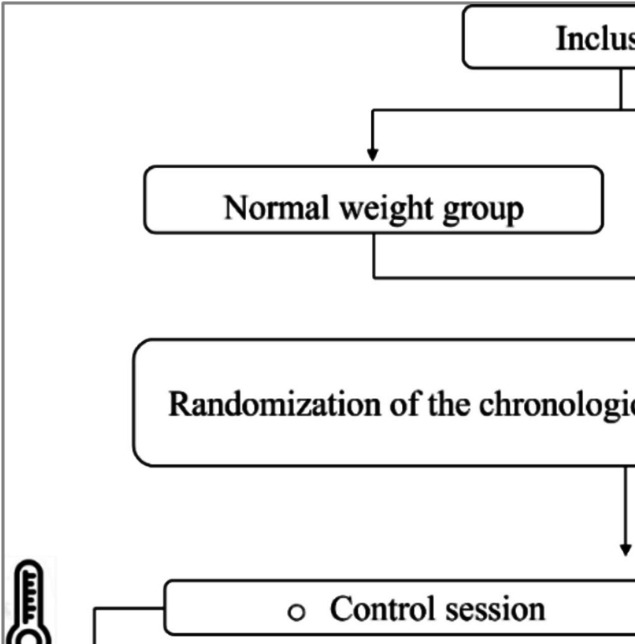
Thirty healthy men were assigned into 2 groups based on their BMI [normal weight (n = 15; BMI = 21.53 ± 1.63 kg·m) and overweight (n = 15; BMI = 27.98 ± 1.16 kg·m)]. In a random order, each participant experienced a 4-min WBC exposure, as well as a control session with no cold exposure. Skin temperature was measured using a thermal imaging camera during and after cold exposure.
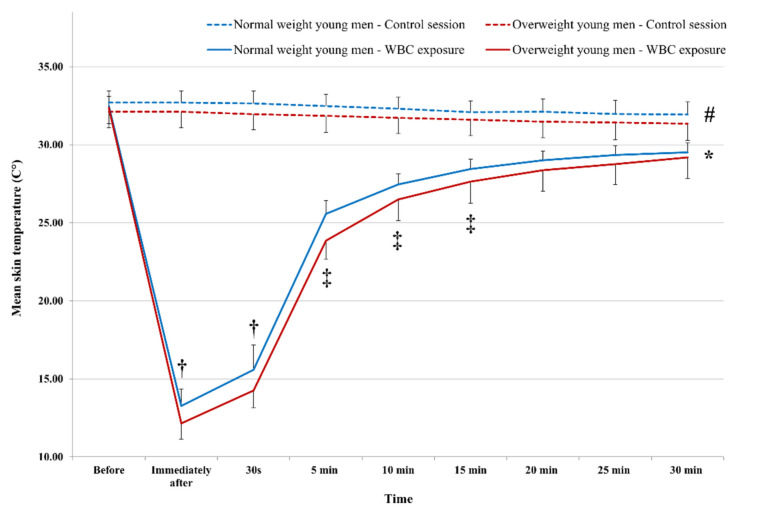
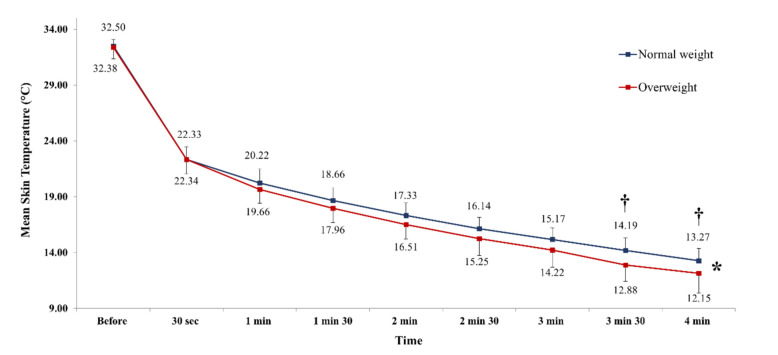
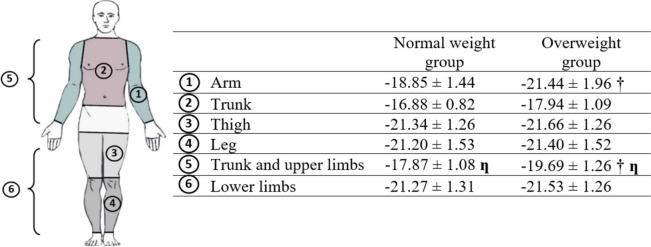
Normal weight participants reached the threshold in 4 min, whereas overweight participants reached it in 3 min 30 s. Following WBC, a rapid mean skin temperature (MsT°) increase was observed for both groups, immediately after exposure. However, after 30 min, MsT° remained significantly lower than at baseline.
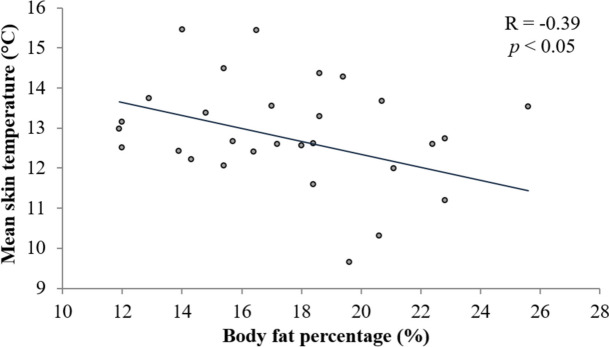
Our findings suggest that appropriate WBC dosage may differ according to BMI. Understanding the impact of such variable on cold exposure outcomes can help to optimize WBC treatments and maximize potential benefits.
全身冷冻刺激(WBC)的疗效可能受个体特征的影响。本研究旨在确定达到 13.6°C 镇痛阈值所需的最佳暴露时间,该温度被提议为达到皮肤水平的目标温度。我们的目标还在于考虑参与者的体重指数(BMI),在 WBC 期间和之后跟踪皮肤温度变化。
根据 BMI 将 30 名健康男性分为 2 组[正常体重(n=15;BMI=21.53±1.63 kg·m)和超重(n=15;BMI=27.98±1.16 kg·m)]。每个参与者以随机顺序经历 4 分钟的 WBC 暴露,以及无冷暴露的对照期。在冷暴露期间和之后使用热成像摄像机测量皮肤温度。
正常体重组在 4 分钟内达到阈值,而超重组在 3 分 30 秒内达到阈值。WBC 后,两组的平均皮肤温度(MsT°)立即迅速升高。然而,30 分钟后,MsT°仍明显低于基线。
我们的发现表明,根据 BMI,适当的 WBC 剂量可能会有所不同。了解此类变量对冷暴露结果的影响有助于优化 WBC 治疗并最大限度地发挥潜在益处。