Le Sage Valerie, Werner Bailee D, Merrbach Grace A, Petnuch Sarah E, O'Connell Aoife K, Simmons Holly C, McCarthy Kevin R, Reed Douglas S, Moncla Louise H, Bhavsar Disha, Krammer Florian, Crossland Nicholas A, McElroy Anita K, Duprex W Paul, Lakdawala Seema S
Center for Vaccine Research, University of Pittsburgh, Pittsburgh, PA.
Department of Microbiology and Molecular Genetics, University of Pittsburgh, Pittsburgh, PA.
bioRxiv. 2024 Oct 23:2024.10.23.619881. doi: 10.1101/2024.10.23.619881.
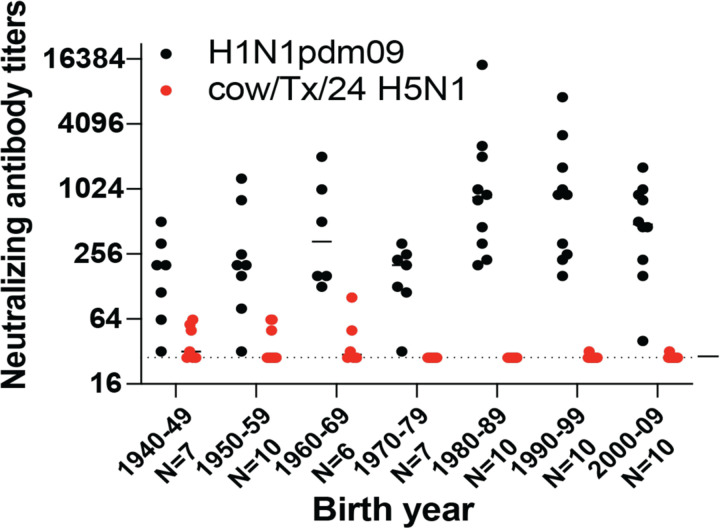
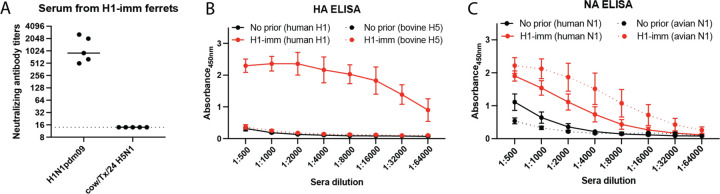
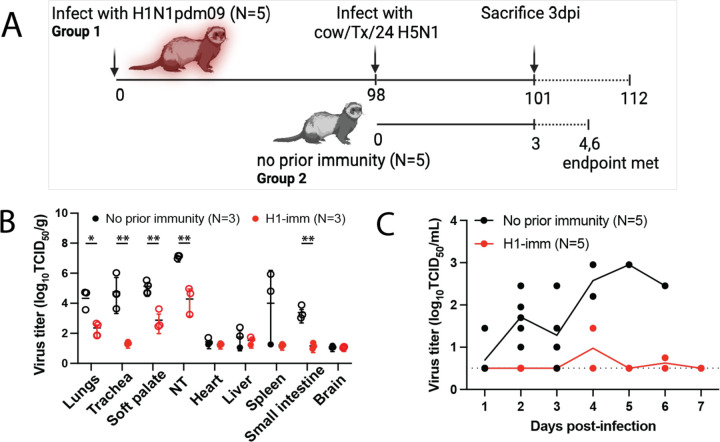
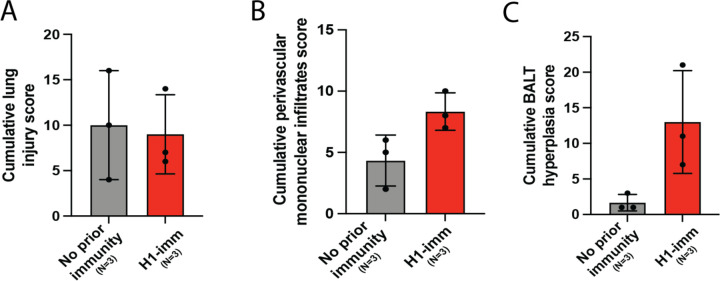
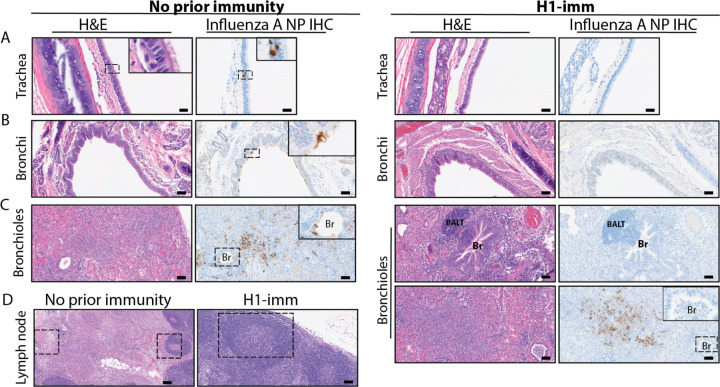
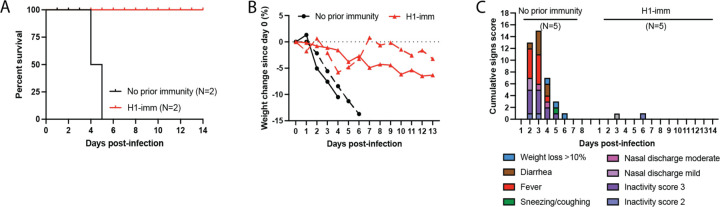
The emergence of highly pathogenic H5N1 avian influenza in dairy cattle herds across the United States has caused multiple mild human infections. There is an urgent need to understand the risk of spillover into humans. Here, we show that pre-existing immunity from the 2009 H1N1 pandemic influenza virus provided protection from mortality and severe clinical disease to ferrets intranasally infected with bovine H5N1. H1N1 immune ferrets exhibited a differential tissue tropism with little bovine H5N1 viral dissemination to organs outside the respiratory tract and significantly less H5N1 virus found in nasal secretions and the respiratory tract. Additionally, ferrets with H1N1 prior immunity produced antibodies that cross-reacted with H5N1 neuraminidase protein. Taken together, these results suggest that mild disease in humans may be linked to prior immunity to human seasonal influenza viruses.
高致病性H5N1禽流感在美国奶牛群中出现,已导致多起人类轻度感染病例。迫切需要了解病毒传播给人类的风险。在此,我们表明,2009年甲型H1N1大流行性流感病毒产生的预先存在的免疫力,为经鼻感染牛H5N1的雪貂提供了对死亡和严重临床疾病的保护。具有H1N1免疫力的雪貂表现出不同的组织嗜性,牛H5N1病毒很少扩散到呼吸道以外的器官,并且在鼻分泌物和呼吸道中发现的H5N1病毒明显较少。此外,具有H1N1预先免疫力的雪貂产生了与H5N1神经氨酸酶蛋白发生交叉反应的抗体。综上所述,这些结果表明,人类的轻度疾病可能与对人类季节性流感病毒的预先免疫力有关。