Infectious Disease & Microbiome Program, Broad Institute, Cambridge, MA, 02142, USA.
Delft Bioinformatics Lab, Delft University of Technology, Van Mourik Broekmanweg 6, Delft, 2628 XE, The Netherlands.
Nat Commun. 2024 Nov 2;15(1):9466. doi: 10.1038/s41467-024-53829-7.
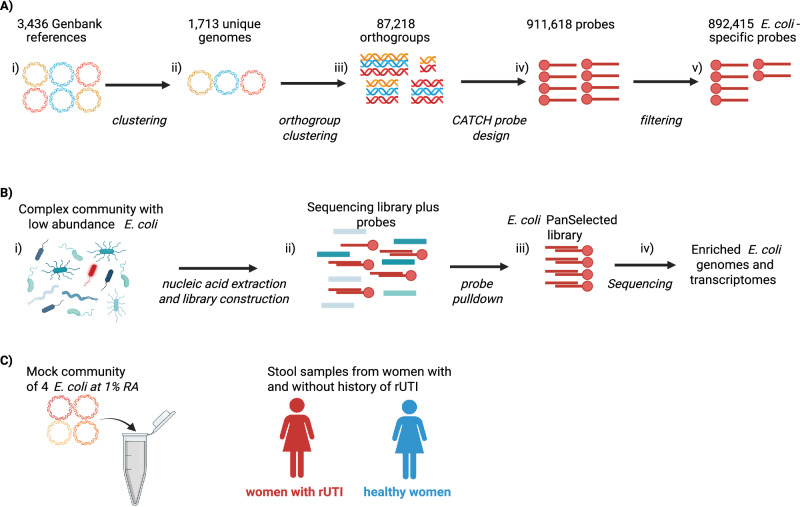
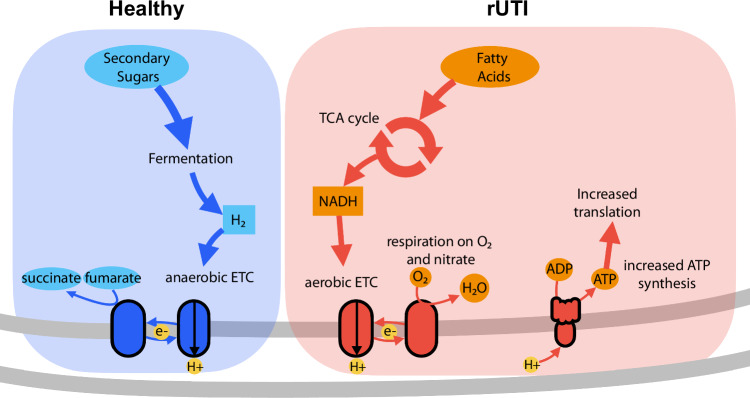
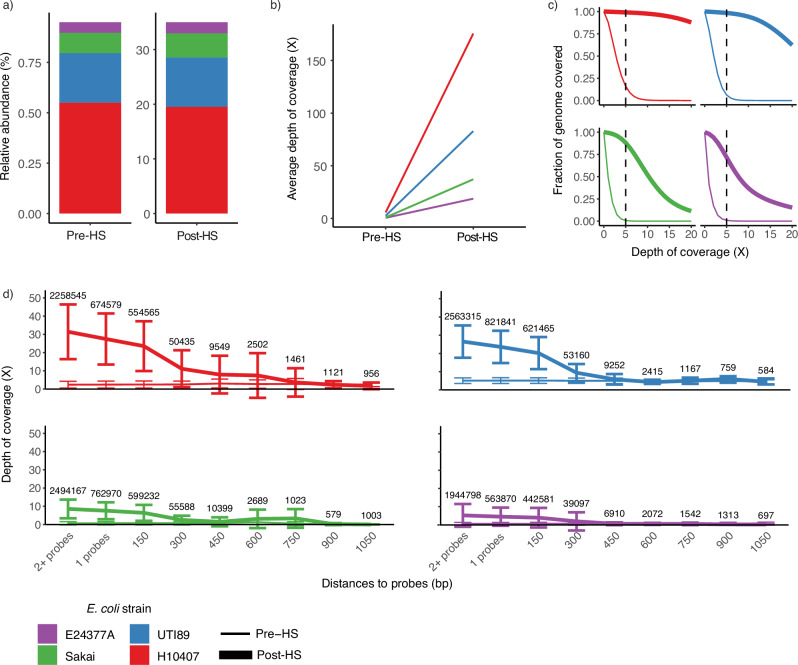
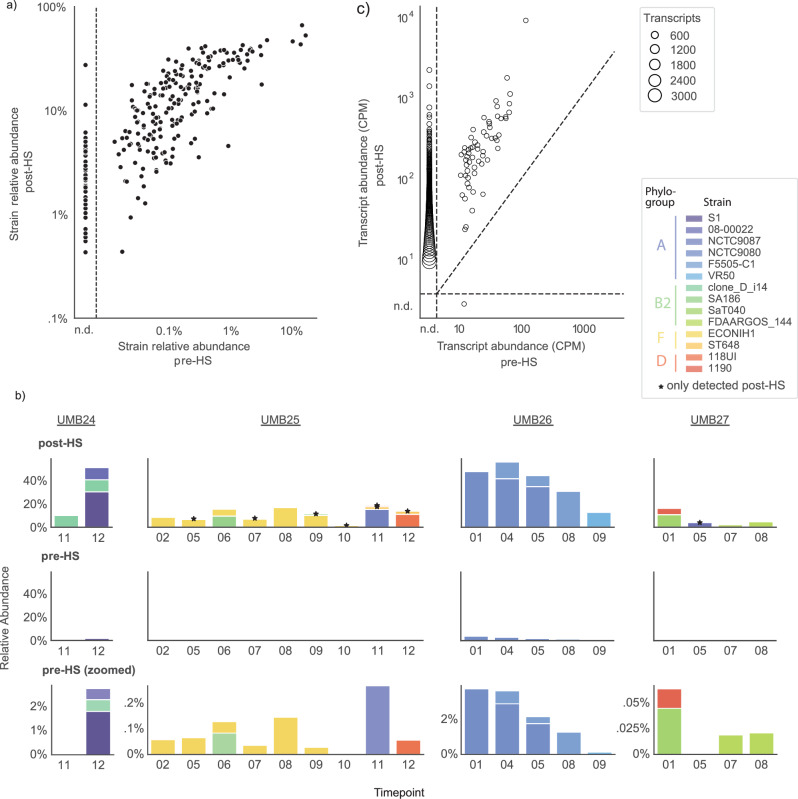
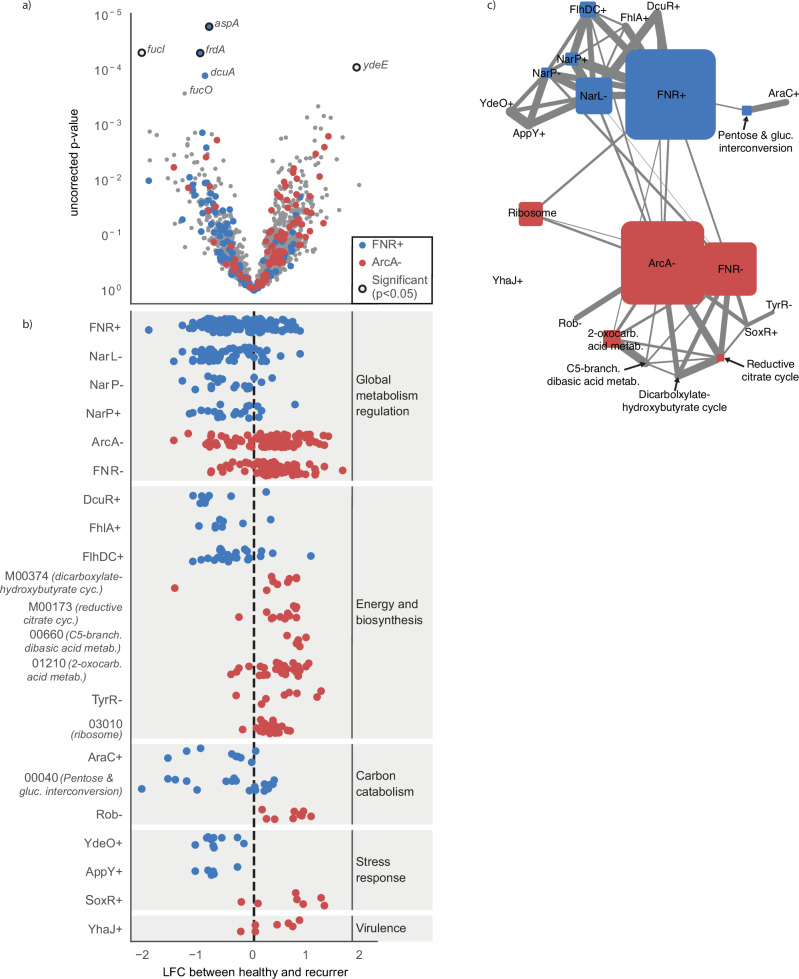
Low-abundance members of microbial communities are difficult to study in their native habitats, including Escherichia coli, a minor but common inhabitant of the gastrointestinal tract, and key opportunistic pathogen of the urinary tract. While multi-omic analyses have detailed interactions between uropathogenic Escherichia coli (UPEC) and the bladder mediating urinary tract infection (UTI), little is known about UPEC in its pre-infection reservoir, the gastrointestinal tract, partly due to its low relative abundance (<1%). To sensitively explore the genomes and transcriptomes of diverse gut E. coli, we develop E. coli PanSelect, which uses probes designed to specifically capture E. coli's broad pangenome. We demonstrate its ability to enrich diverse E. coli by orders of magnitude, in a mock community and in human stool from a study investigating recurrent UTI (rUTI). Comparisons of transcriptomes between gut E. coli of women with and without history of rUTI suggest rUTI gut E. coli are responding to increased oxygen and nitrate, suggestive of mucosal inflammation, which may have implications for recurrent disease. E. coli PanSelect is well suited for investigations of in vivo E. coli biology in other low-abundance environments, and the framework described here has broad applicability to other diverse, low-abundance organisms.
微生物群落中的低丰度成员在其天然栖息地中难以研究,包括大肠杆菌,它是胃肠道的次要但常见的居民,也是尿路感染(UTI)的关键机会性病原体。尽管多组学分析详细描述了尿路致病性大肠杆菌(UPEC)与膀胱之间介导尿路感染(UTI)的相互作用,但对于其在感染前的储库——胃肠道中的 UPEC 知之甚少,部分原因是其相对丰度较低(<1%)。为了灵敏地探索不同肠道大肠杆菌的基因组和转录组,我们开发了大肠杆菌 PanSelect,它使用专门设计的探针来特异性捕获大肠杆菌的广泛泛基因组。我们证明了它在模拟群落和研究复发性尿路感染(rUTI)的人类粪便中,能够对不同的大肠杆菌进行数量级的富集。比较有和无 rUTI 病史的女性肠道大肠杆菌的转录组表明,rUTI 肠道大肠杆菌对增加的氧气和硝酸盐有反应,提示黏膜炎症,这可能对复发性疾病有影响。大肠杆菌 PanSelect 非常适合研究其他低丰度环境中的体内大肠杆菌生物学,这里描述的框架具有广泛的适用性,可以用于其他多样化的低丰度生物体。