Department of Gastroenterology, Changshu Hospital Affiliated to Soochow University, Suzhou, 215500, China.
Changshu Key Laboratory of Medical Artificial Intelligence and Big Data, Changshu City, Suzhou, 215500, China.
BMC Gastroenterol. 2024 Nov 6;24(1):394. doi: 10.1186/s12876-024-03482-7.
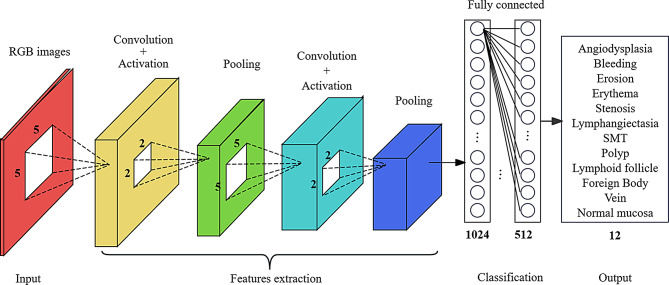
Although capsule endoscopy (CE) is a crucial tool for diagnosing small bowel diseases, the need to process a vast number of images imposes a significant workload on physicians, leading to a high risk of missed diagnoses. This study aims to develop an artificial intelligence (AI) model and application based on convolutional neural networks that can automatically recognize various lesions in small bowel capsule endoscopy.
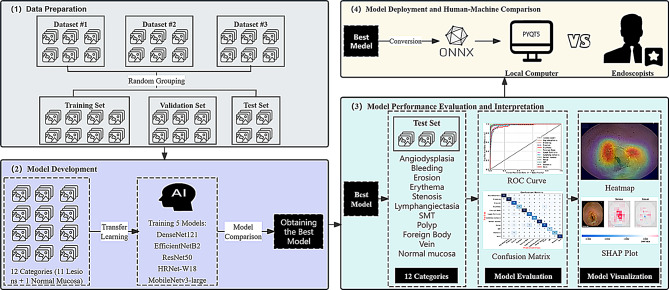
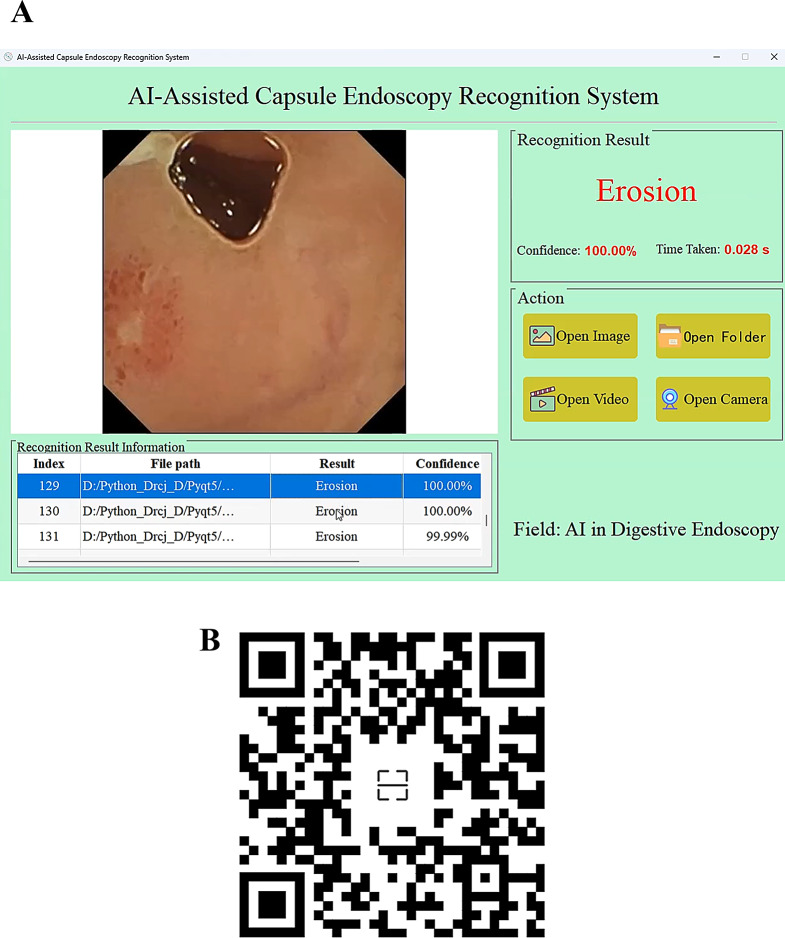
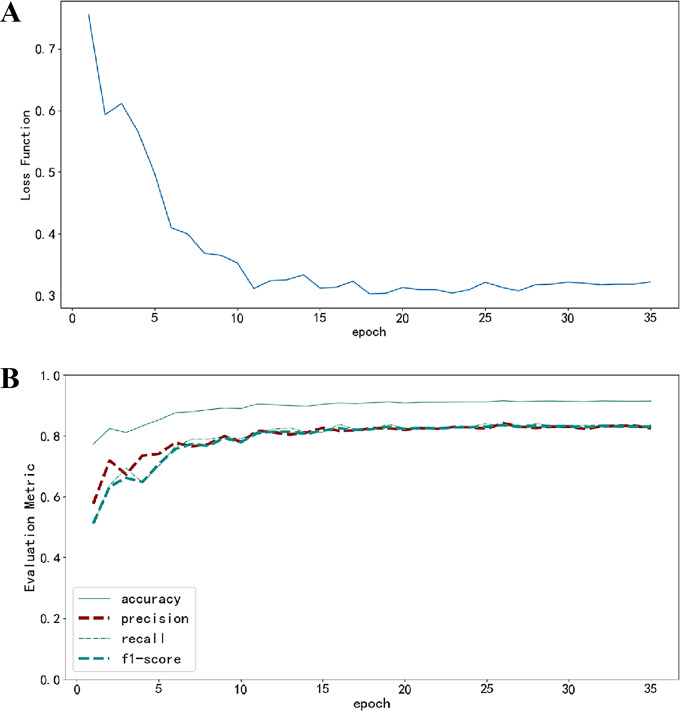
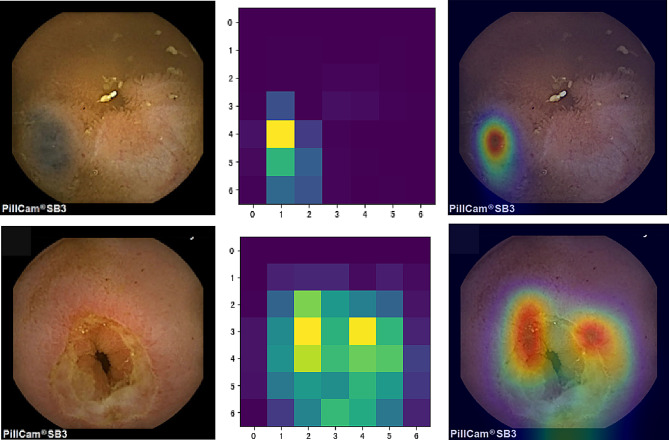
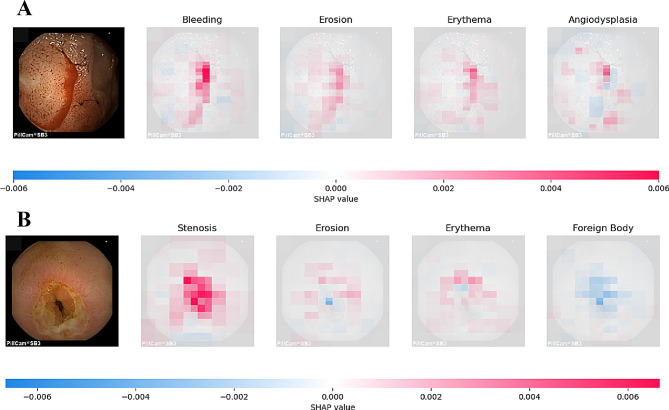
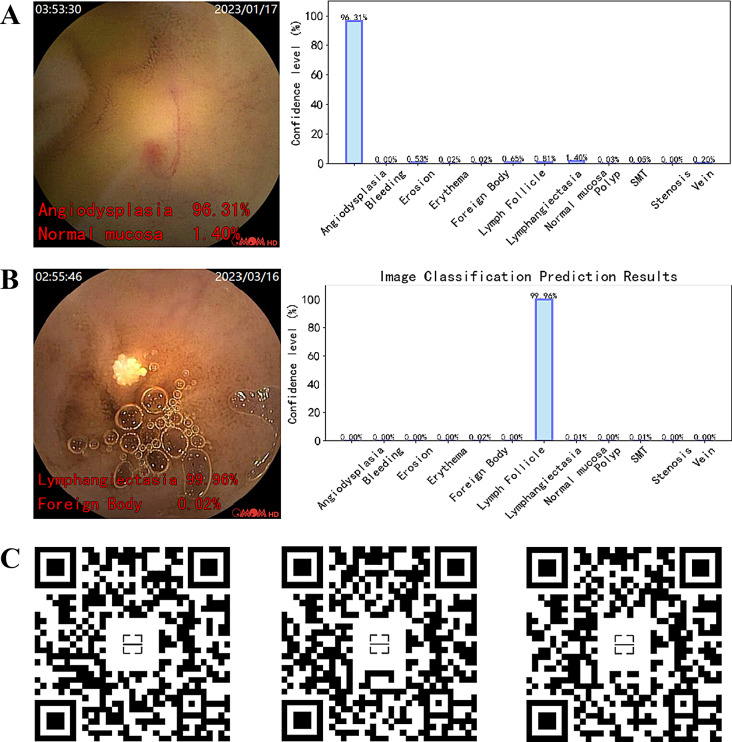
Three small bowel capsule endoscopy datasets were used for AI model training, validation, and testing, encompassing 12 categories of images. The model's performance was evaluated using metrics such as AUC, sensitivity, specificity, precision, accuracy, and F1 score to select the best model. A human-machine comparison experiment was conducted using the best model and endoscopists with varying levels of experience. Model interpretability was analyzed using Grad-CAM and SHAP techniques. Finally, a clinical application was developed based on the best model using PyQt5 technology.
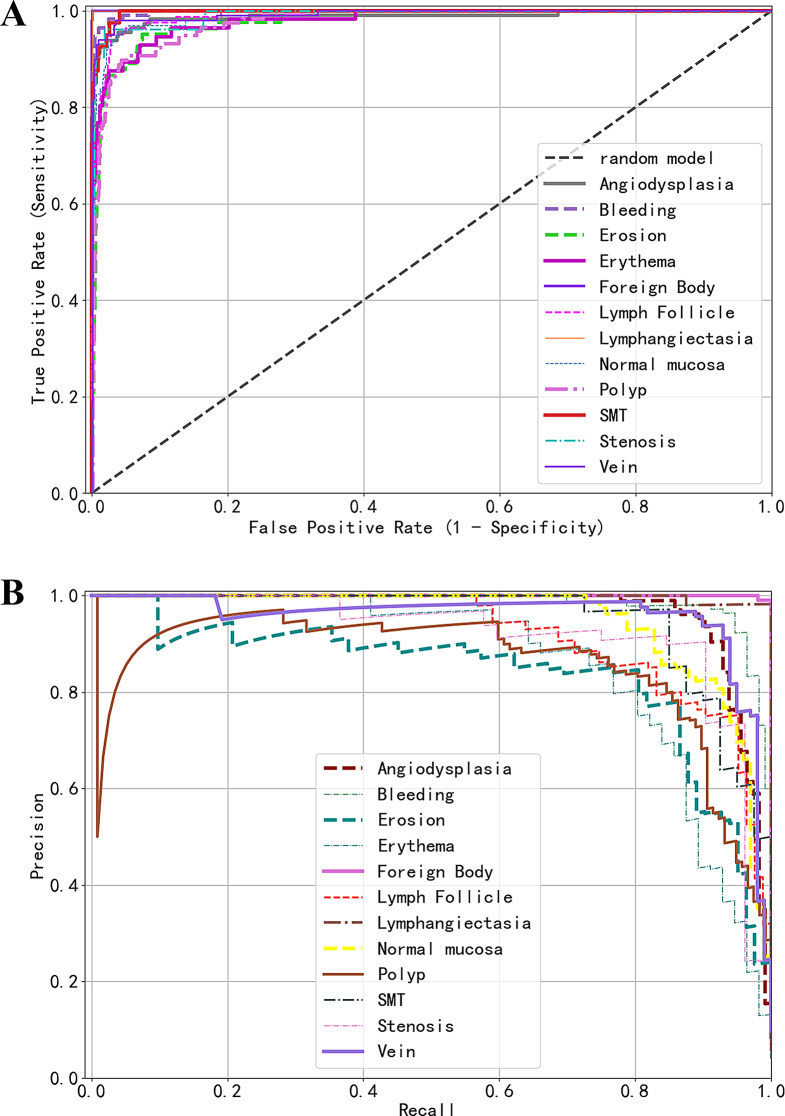
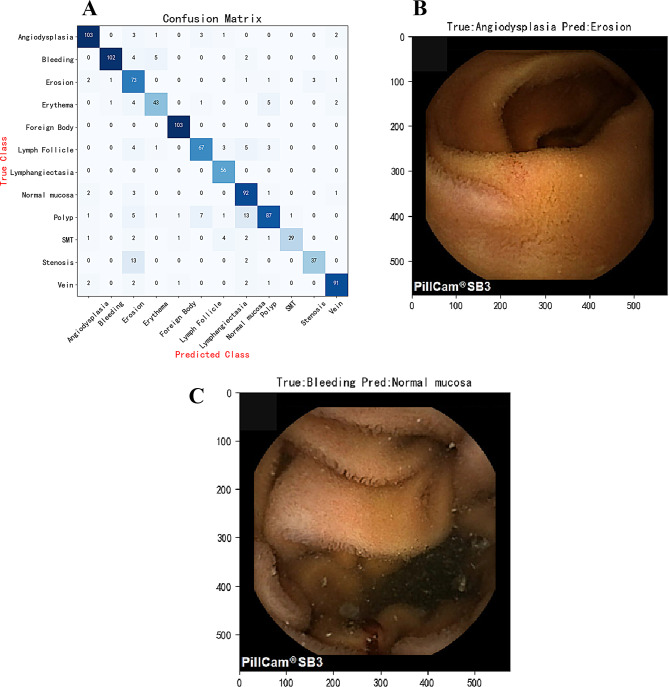
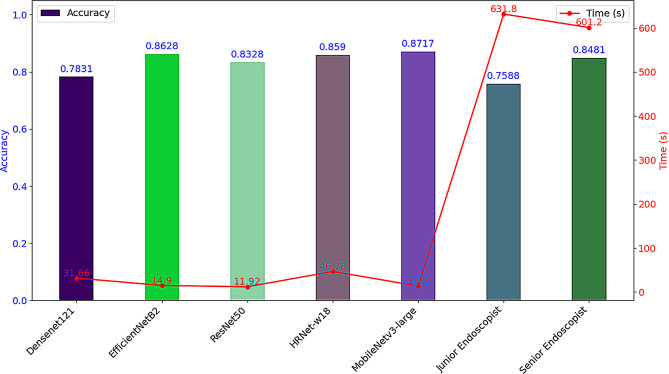
A total of 34,303 images were included in this study. The best model, MobileNetv3-large, achieved a weighted average sensitivity of 87.17%, specificity of 98.77%, and an AUC of 0.9897 across all categories. The application developed based on this model performed exceptionally well in comparison with endoscopists, achieving an accuracy of 87.17% and a processing speed of 75.04 frames per second, surpassing endoscopists of varying experience levels.
The AI model and application developed based on convolutional neural networks can quickly and accurately identify 12 types of small bowel lesions. With its high sensitivity, this system can effectively assist physicians in interpreting small bowel capsule endoscopy images.Future studies will validate the AI system for video evaluations and real-world clinical integration.
胶囊内镜(CE)是诊断小肠疾病的重要工具,但需要处理大量图像,这给医生带来了很大的工作量,导致漏诊的风险很高。本研究旨在开发一种基于卷积神经网络的人工智能(AI)模型和应用程序,能够自动识别小肠胶囊内镜中的各种病变。
使用三个小肠胶囊内镜数据集进行 AI 模型的训练、验证和测试,涵盖 12 类图像。使用 AUC、敏感性、特异性、精度、准确性和 F1 评分等指标来评估模型的性能,以选择最佳模型。使用最佳模型和不同经验水平的内镜医生进行人机比较实验。使用 Grad-CAM 和 SHAP 技术分析模型的可解释性。最后,使用 PyQt5 技术基于最佳模型开发了一个临床应用程序。
本研究共纳入 34303 张图像。最佳模型 MobileNetv3-large 在所有类别中达到了加权平均敏感性为 87.17%、特异性为 98.77%和 AUC 为 0.9897。基于该模型开发的应用程序在与内镜医生的比较中表现出色,准确率为 87.17%,处理速度为 75.04 帧/秒,超过了不同经验水平的内镜医生。
基于卷积神经网络的 AI 模型和应用程序可以快速准确地识别 12 种小肠病变。该系统具有较高的敏感性,可以有效地帮助医生解读小肠胶囊内镜图像。未来的研究将验证 AI 系统用于视频评估和实际临床应用。