Computational Biology, Center for Biotechnology (CeBiTec) and Faculty of Biology, Bielefeld University, Bielefeld, Germany.
Genetics and Genomics of Plants, Center for Biotechnology (CeBiTec) and Faculty of Biology, Bielefeld University, Bielefeld, Germany.
Microbiology (Reading). 2024 Nov;170(11). doi: 10.1099/mic.0.001515.
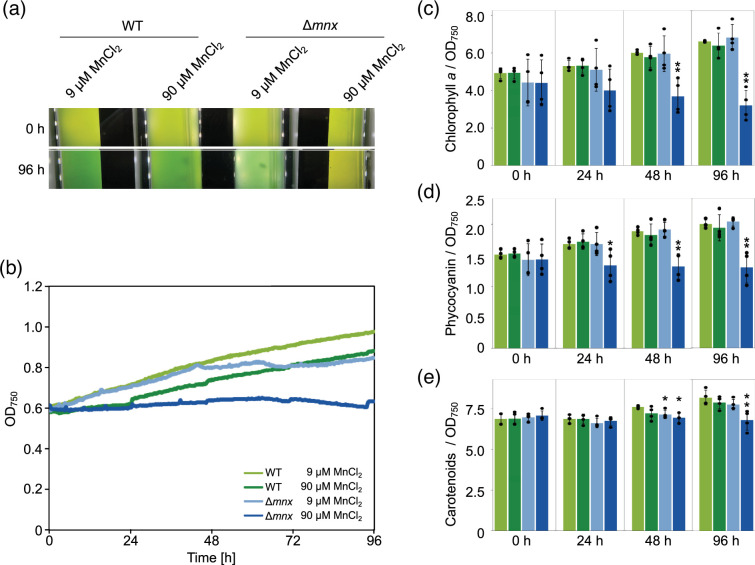
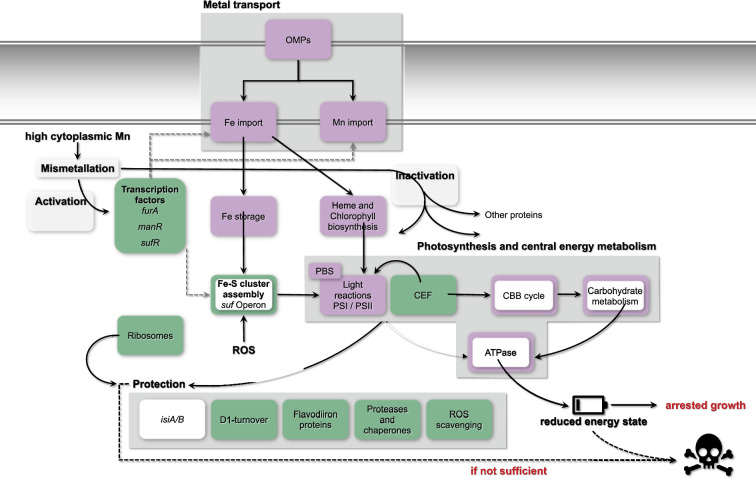
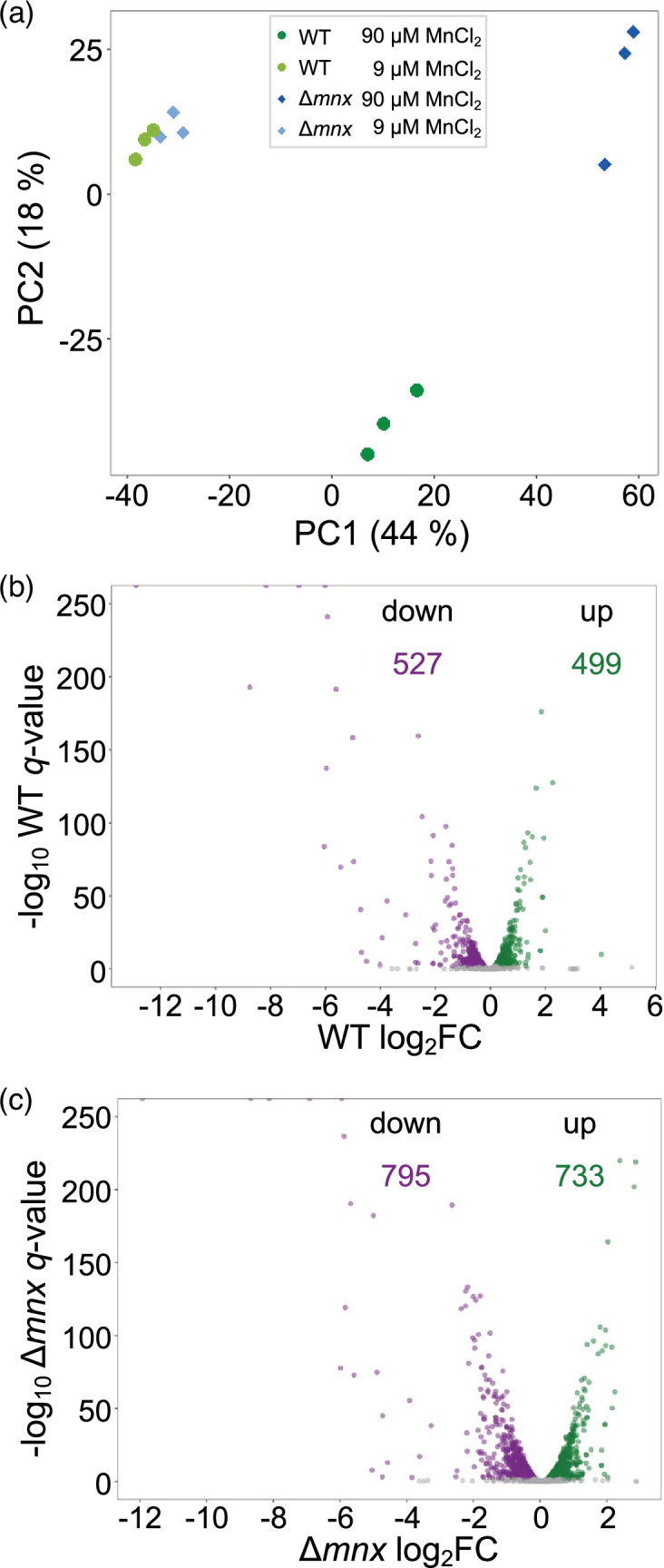
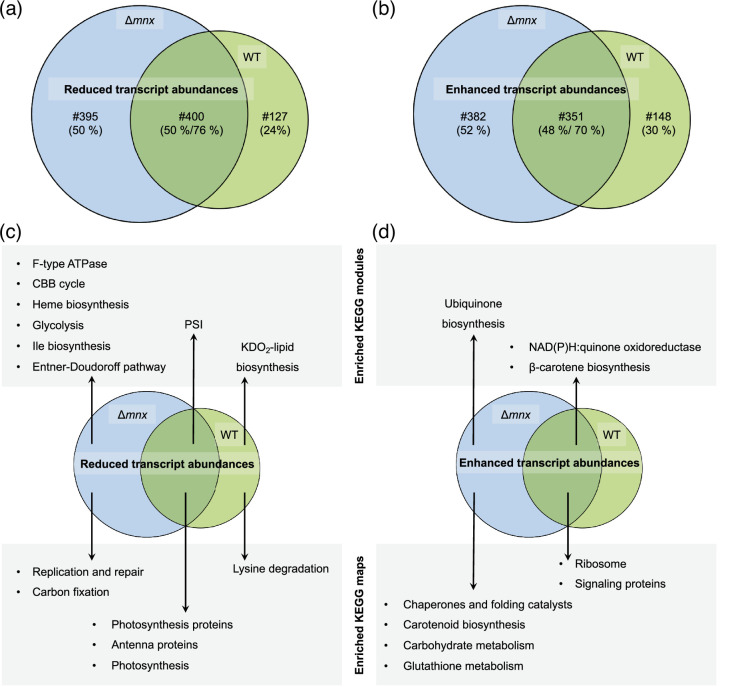
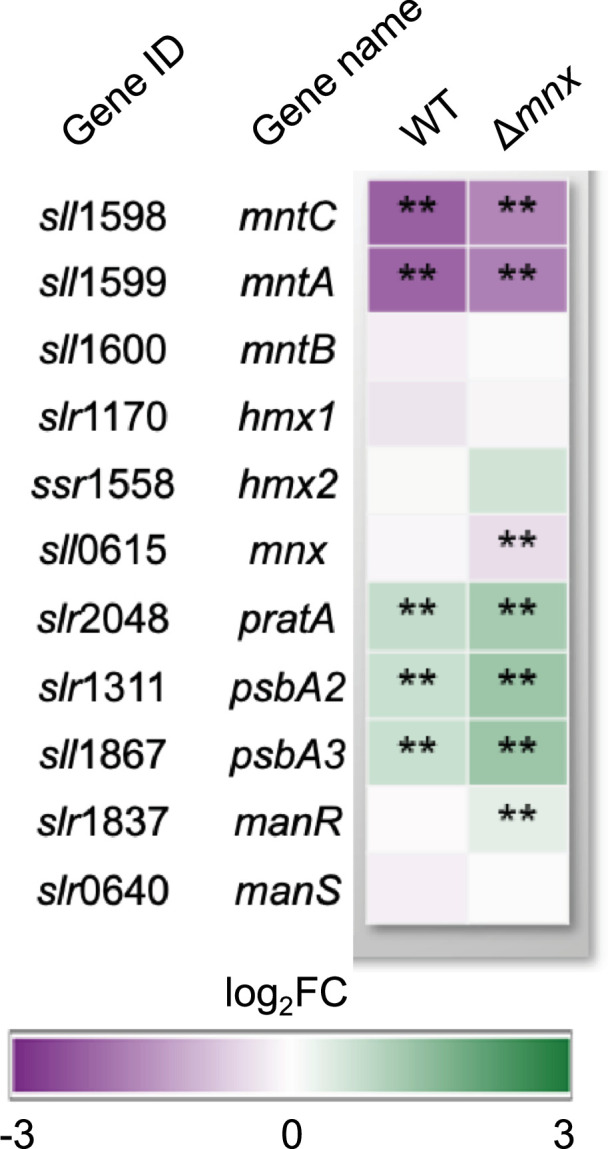
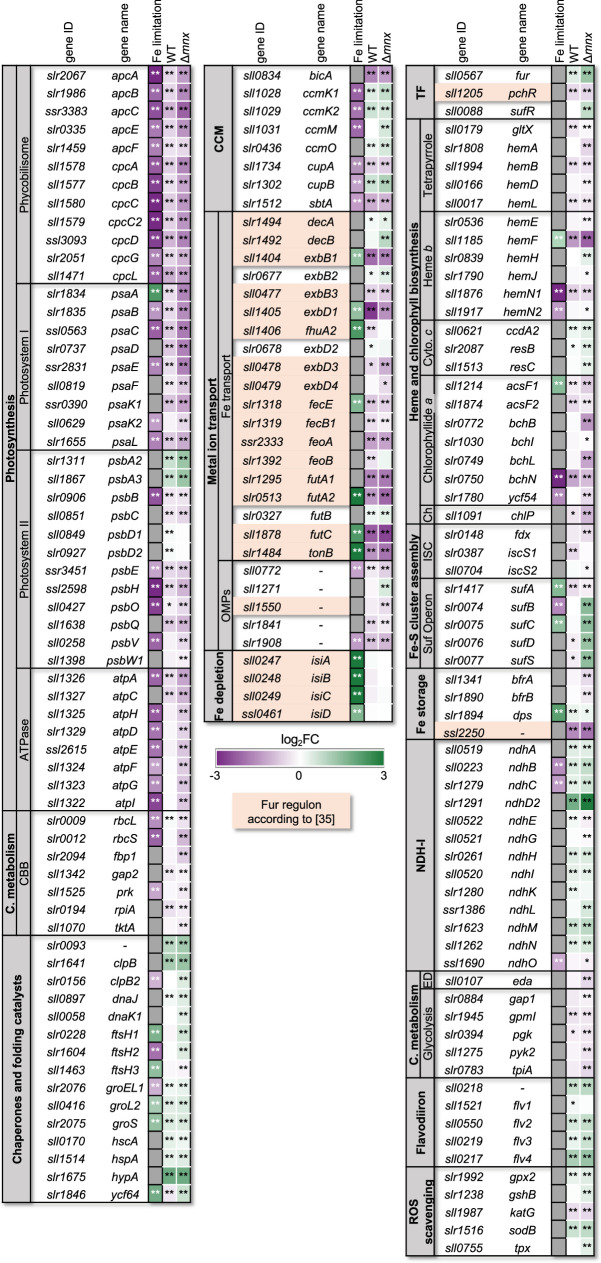
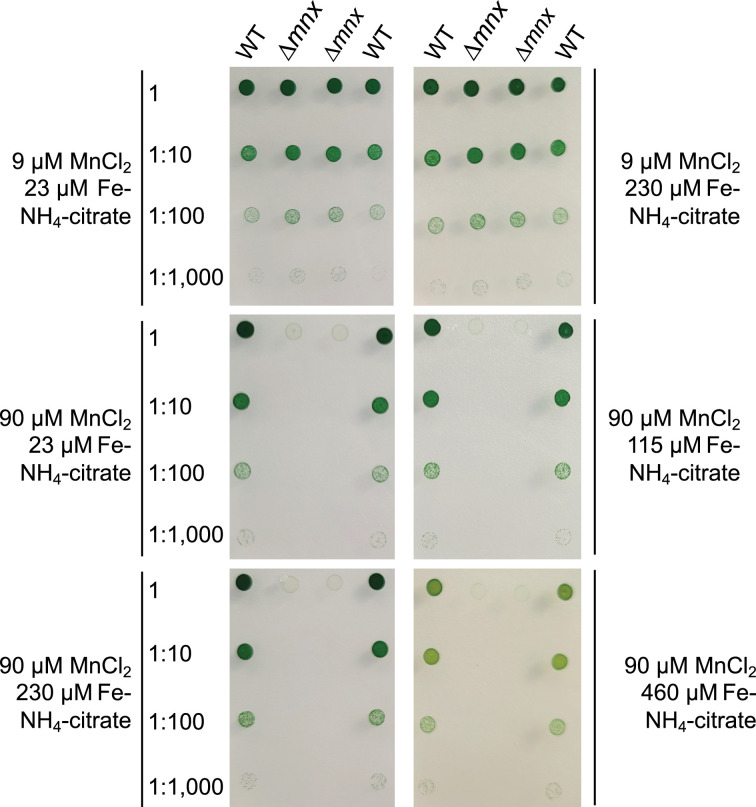
Cellular levels of the essential micronutrient manganese (Mn) need to be carefully balanced within narrow borders. In cyanobacteria, a sufficient Mn supply is critical for ensuring the function of the oxygen-evolving complex as the central part of the photosynthetic machinery. However, Mn accumulation is fatal for the cells. The reason for the observed cytotoxicity is unclear. To understand the causality behind Mn toxicity in cyanobacteria, we investigated the impact of excess Mn on physiology and global gene expression in the model organism sp. PCC 6803. We compared the response of the WT and the knock-out mutant in the eporter (Mnx), ∆, which is disabled in the export of surplus Mn and thus functions as a model for toxic Mn overaccumulation. While growth and pigment accumulation in ∆ were severely impaired 24 h after the addition of tenfold Mn, the WT was not affected and thus mounted an adequate transcriptional response. RNA-seq data analysis revealed that the Mn stress transcriptomes partly resembled an iron limitation transcriptome. However, the expression of iron limitation signature genes was not affected by the Mn treatment, indicating that Mn excess is not accompanied by iron limitation in . We suggest that the ferric uptake regulator, Fur, gets partially mismetallated under Mn excess conditions and thus interferes with an iron-dependent transcriptional response. To encounter mismetallation and other Mn-dependent problems on a protein level, the cells invest in transcripts of ribosomes, proteases and chaperones. In the case of the ∆ mutant, the consequences of the disability to export excess Mn from the cytosol manifest in additionally impaired energy metabolism and oxidative stress transcriptomes with a fatal outcome. This study emphasizes the central importance of Mn homeostasis and the transporter Mnx's role in restoring and holding it.
细胞内必需微量元素锰 (Mn) 的水平需要在狭窄的范围内精确平衡。在蓝藻中,充足的 Mn 供应对于确保作为光合作用机器核心部分的氧释放复合物的功能至关重要。然而,Mn 的积累对细胞是致命的。观察到的细胞毒性的原因尚不清楚。为了了解蓝藻中 Mn 毒性的因果关系,我们研究了过量 Mn 对模式生物 sp. PCC 6803 的生理学和全局基因表达的影响。我们比较了 WT 和敲除突变体 中的响应 ,在 中缺失了 Mn 的外排,因此作为 Mn 过度积累的毒性模型。虽然在添加十倍 Mn 24 小时后,∆ 的生长和色素积累严重受损,但 WT 不受影响,因此启动了适当的转录反应。RNA-seq 数据分析表明,Mn 胁迫转录组部分类似于铁限制转录组。然而,铁限制特征基因的表达不受 Mn 处理的影响,这表明 Mn 过量不会伴随着 中的铁限制。我们认为,在 Mn 过量条件下,亚铁摄取调节因子 Fur 会部分错配位,从而干扰铁依赖性转录反应。为了在蛋白质水平上应对错配位和其他 Mn 依赖性问题,细胞投资于核糖体、蛋白酶和伴侣的转录本。在 ∆ 突变体中,无法从细胞质中排出多余 Mn 的能力的后果表现在能量代谢和氧化应激转录本的进一步受损,最终导致致命后果。这项研究强调了 Mn 动态平衡的核心重要性和转运蛋白 Mnx 在恢复和维持它方面的作用。