Men Yatai, Jiang Ke, Li Yaoji, Xing Ran, Luo Zhihan, Huang Tianyao, Ou'yang Shuyu, Du Wei, Chen Yuanchen, Shen Guofeng
MOE Key Lab for Earth Surface Process, College of Urban and Environmental Sciences, Peking University, Beijing, 100871, China.
Yunnan Provincial Key Laboratory of Soil Carbon Sequestration and Pollution Control, Faculty of Environmental Science & Engineering, Kunming University of Science & Technology, Kunming, 650500, China.
Environ Sci Ecotechnol. 2024 Oct 22;23:100501. doi: 10.1016/j.ese.2024.100501. eCollection 2025 Jan.
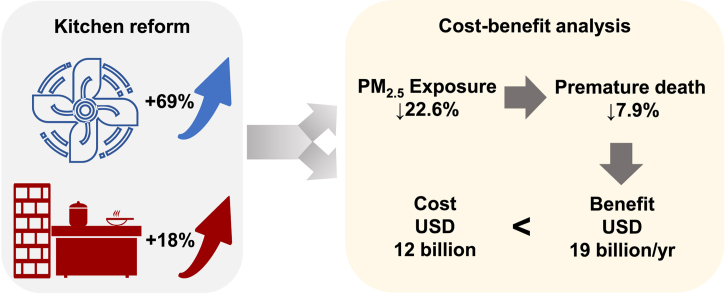
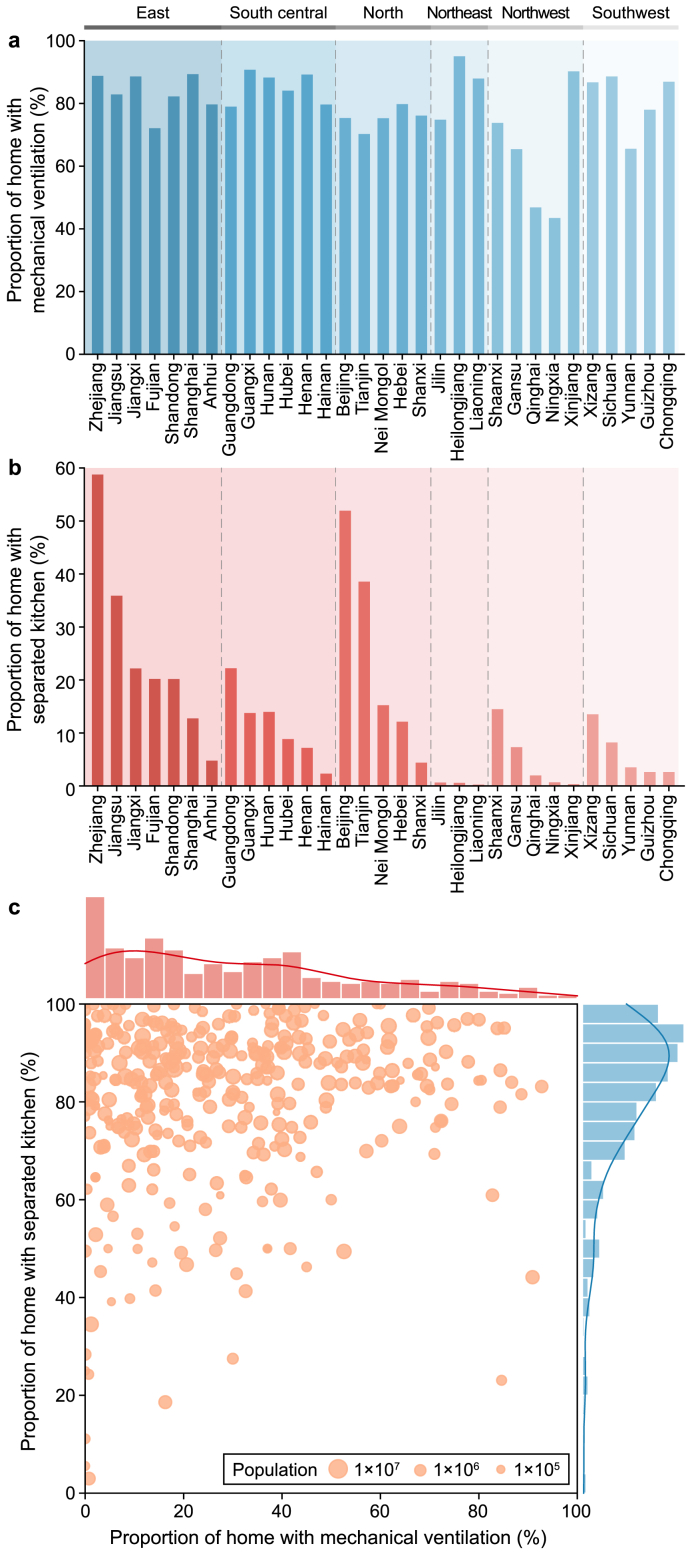
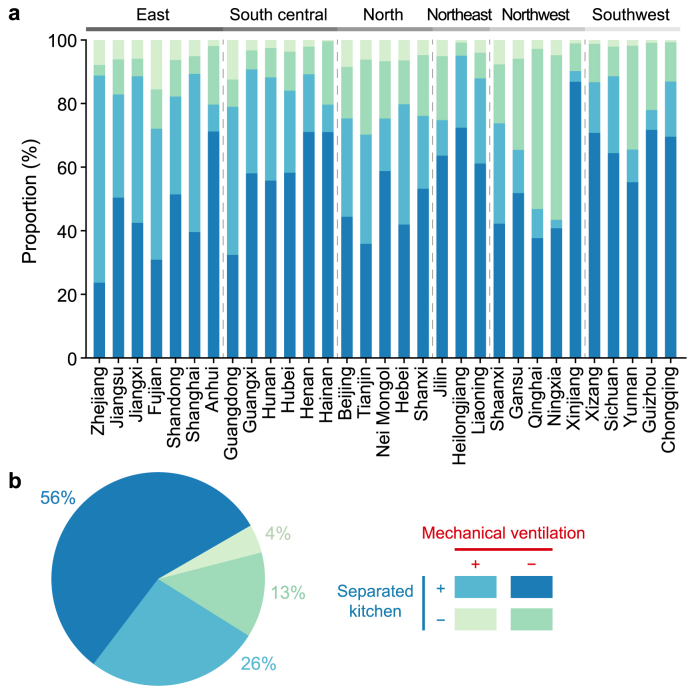
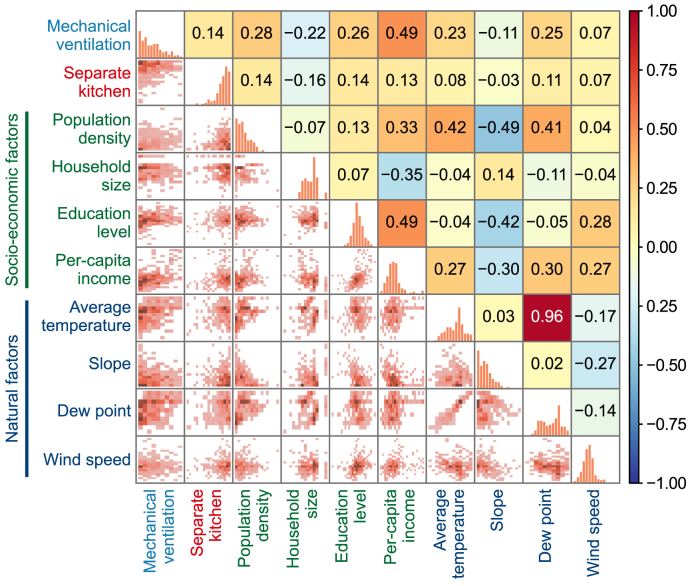
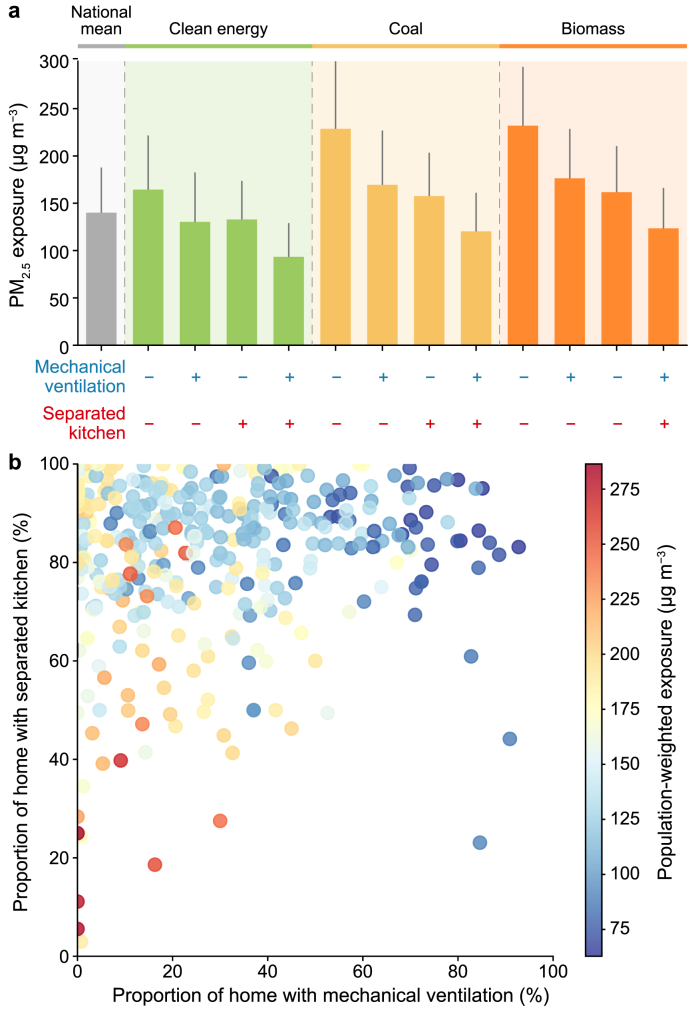
Globally, over three billion people rely on traditional solid fuels for cooking and heating, leading to significant household air pollution and critical public health concerns. While transitioning to clean energy carriers faces challenges of accessibility and affordability-especially among low-income, rural populations-alternative strategies like kitchen layout modifications and the use of ventilation fans may effectively reduce exposure to pollutants. Here, we analyze factors influencing the adoption of separated kitchens and mechanical ventilation and evaluate changes in human exposure to PM under different kitchen renovation scenarios by conducting a nationwide survey of household kitchen characteristics in rural China. We found that although 82% of rural households have kitchens separated from other rooms, only 34% use mechanical ventilation. The adoption of ventilation fans is significantly influenced by income and education levels. We estimate that widespread implementation of ventilation fans and separated kitchen designs could prevent approximately 67400 premature deaths annually, resulting in a health benefit of about USD 19 billion per year-substantially exceeding the costs involved. These findings suggest that cost-effective kitchen renovations offer enormous potential for substantial health benefits and present a practical solution compared to the challenges of clean energy transitions in rural areas.
在全球范围内,超过30亿人依靠传统固体燃料做饭和取暖,这导致了严重的家庭空气污染和重大的公共卫生问题。虽然向清洁能源载体过渡面临着可及性和可负担性方面的挑战,尤其是在低收入农村人口中,但诸如改造厨房布局和使用通风扇等替代策略可能会有效减少污染物暴露。在此,我们通过对中国农村家庭厨房特征进行全国性调查,分析了影响采用独立厨房和机械通风的因素,并评估了在不同厨房改造方案下人体接触细颗粒物(PM)的变化情况。我们发现,尽管82%的农村家庭厨房与其他房间分开,但只有34%的家庭使用机械通风。通风扇的采用受到收入和教育水平的显著影响。我们估计,广泛安装通风扇和采用独立厨房设计每年可预防约67400例过早死亡,每年带来约190亿美元的健康效益,大大超过相关成本。这些研究结果表明,具有成本效益的厨房改造具有带来巨大健康效益的巨大潜力,并且与农村地区清洁能源转型面临的挑战相比,提供了一个切实可行的解决方案。