Yang Xiaoling, Shi Jingyan, Shi Bori, Li Jianing, Xue Chang, Ma Jingyun, Gao Xinghua
Materials Genome Institute, Shanghai University, Shanghai, 200444, China.
Ningbo Institute of Innovation for Combined Medicine and Engineering, The Affiliated Lihuili Hospital of Ningbo University, Ningbo, Zhejiang, 315040, China.
Mater Today Bio. 2024 Oct 31;29:101322. doi: 10.1016/j.mtbio.2024.101322. eCollection 2024 Dec.
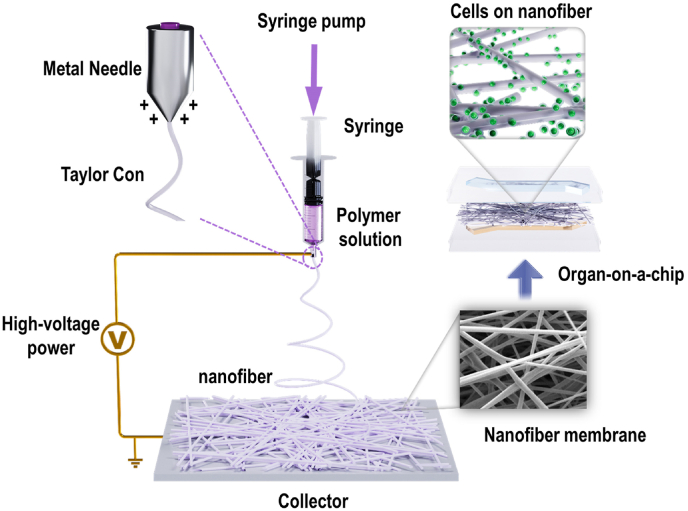
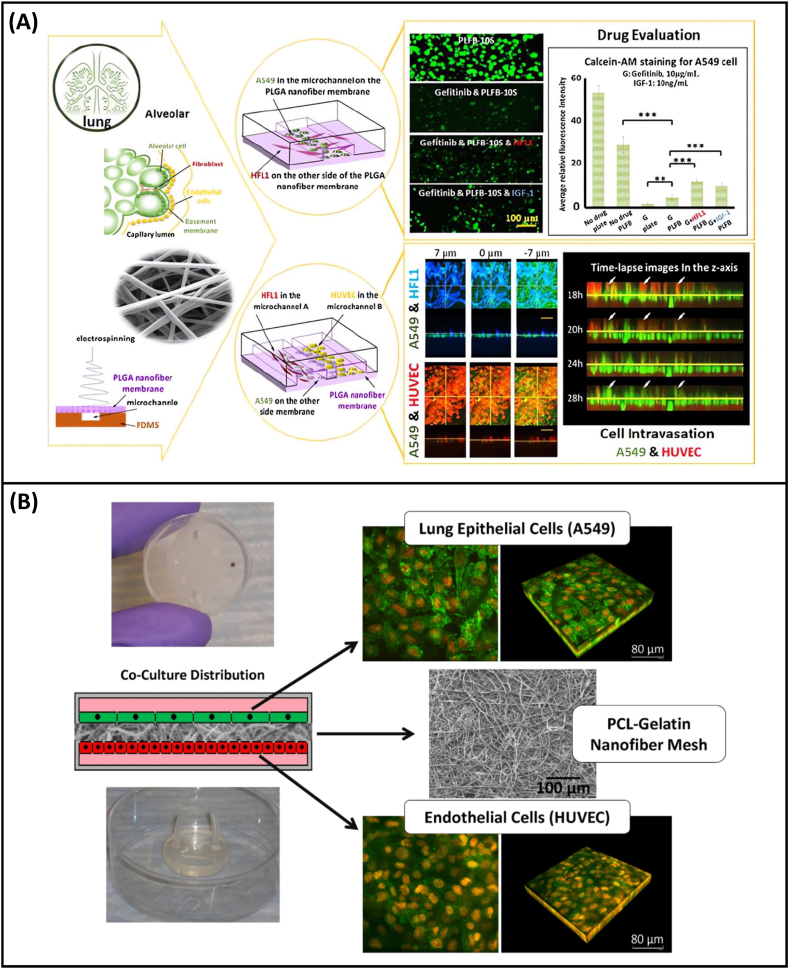
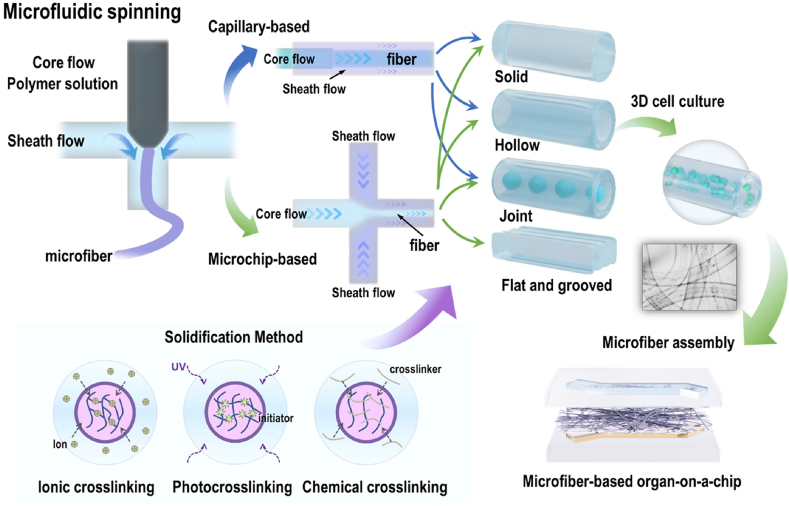
Organ-on-a-chip, an in vitro biomimetic microsystem that enables precise regulation and real-time observation of the cell microenvironment, has the potential to become a powerful platform for recapitulating the real microenvironment of organs in vitro. Microenvironmental factors, such as living cells, three-dimensional (3D) culture, tissue-tissue interfaces, and biomechanical factors, are important cues in the construction of biomimetic microsystems. It is important to provide an appropriate 3D culture environment for living cells to grow. Fibers, particularly microfibers and nanofibers, can provide a suitable 3D culture environment for living cells via surface adhesion or internal loading. In addition, fibers can further expand their applications in tissue engineering and biomedical research by being assembled at a higher level in various ways to create functional 3D tissues or organs with more complex structures. The use of fiber to construct an organ-on-a-chip, whether as a 3D scaffold for cell culture or to more closely mimic real tissues/organs, will introduce new ideas and strategies for developing novel organ-on-a-chip systems. Based on this context, this review summarizes the research progress in the construction and applications of micro/nanofibers for organ-on-a-chip systems. It outlines the preparation methods and material selections for micro/nanofibers and provides a detailed overview of their respective strategies for cell 3D culture and organ-on-a-chip construction. This review also highlights the main research findings and applications of micro/nanofiber in this field, which have significant implications for future practice, and finally concludes by examining potential directions for future development.
器官芯片是一种体外仿生微系统,能够精确调控和实时观察细胞微环境,有潜力成为在体外重现器官真实微环境的强大平台。微环境因素,如活细胞、三维(3D)培养、组织-组织界面和生物力学因素,是构建仿生微系统的重要线索。为活细胞生长提供合适的3D培养环境很重要。纤维,特别是微纤维和纳米纤维,可通过表面黏附或内部负载为活细胞提供合适的3D培养环境。此外,纤维可以通过以各种方式在更高层次上组装,以创建具有更复杂结构的功能性3D组织或器官,从而进一步扩展其在组织工程和生物医学研究中的应用。使用纤维构建器官芯片,无论是作为细胞培养的3D支架还是更紧密地模拟真实组织/器官,都将为开发新型器官芯片系统引入新的思路和策略。基于此背景,本综述总结了微/纳米纤维在器官芯片系统构建和应用方面的研究进展。它概述了微/纳米纤维的制备方法和材料选择,并详细介绍了它们各自用于细胞3D培养和器官芯片构建的策略。本综述还强调了微/纳米纤维在该领域的主要研究成果和应用,这些成果对未来实践具有重要意义,最后通过探讨未来发展的潜在方向得出结论。