Prentice Jojo A, Kasivisweswaran Sandhya, van de Weerd Robert, Bridges Andrew A
Department of Biological Sciences, Carnegie Mellon University, Pittsburgh, Pennsylvania, United States of America.
Ray and Stephanie Lane Computational Biology Department, Carnegie Mellon University, Pittsburgh, Pennsylvania, United States of America.
PLoS Biol. 2024 Nov 25;22(11):e3002928. doi: 10.1371/journal.pbio.3002928. eCollection 2024 Nov.
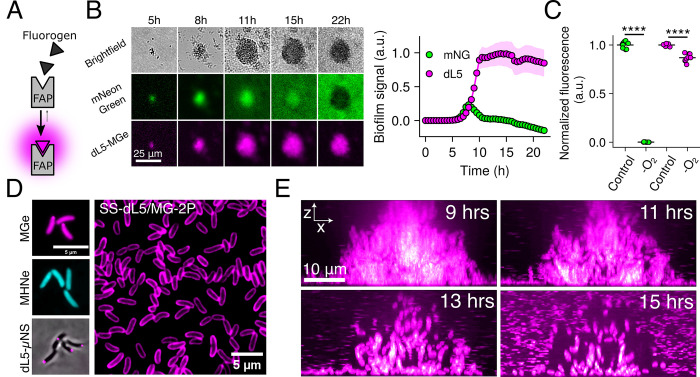
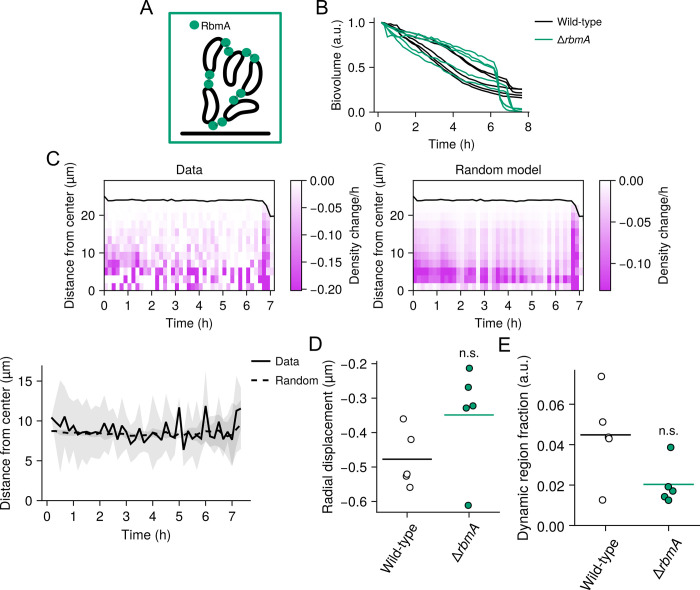
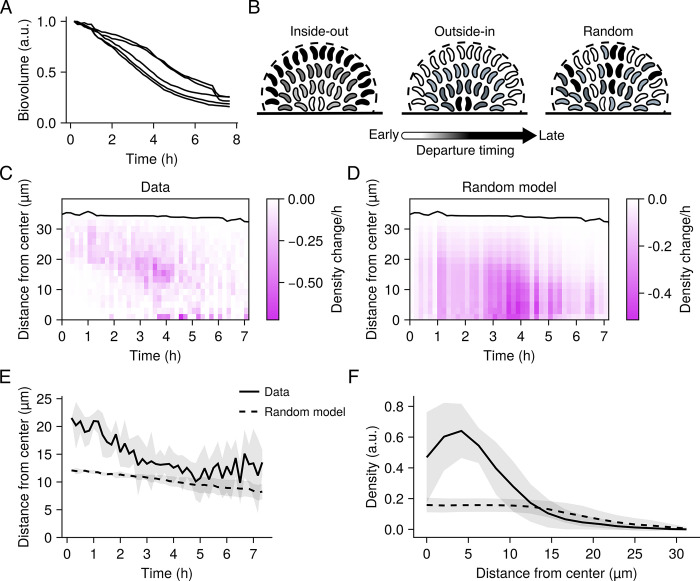
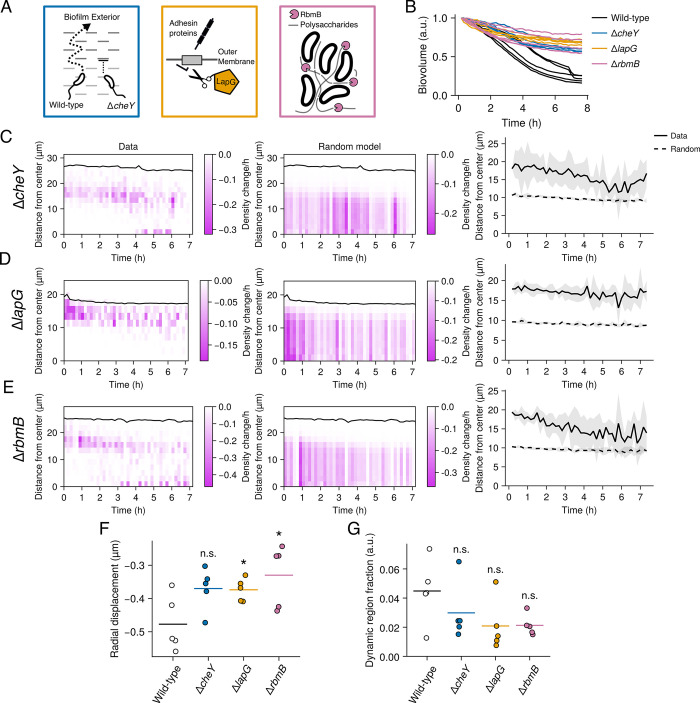
Bacteria frequently colonize niches by forming multicellular communities called biofilms. To explore new territories, cells exit biofilms through an active process called dispersal. Biofilm dispersal is essential for bacteria to spread between infection sites, yet how the process is executed at the single-cell level remains mysterious due to the limitations of traditional fluorescent proteins, which lose functionality in large, oxygen-deprived biofilms. To overcome this challenge, we developed a cell-labeling strategy utilizing fluorogen-activating proteins (FAPs) and cognate far-red dyes, which remain functional throughout biofilm development, enabling long-term imaging. Using this approach, we characterize dispersal at unprecedented resolution for the global pathogen Vibrio cholerae. We reveal that dispersal initiates at the biofilm periphery and approximately 25% of cells never disperse. We define novel micro-scale patterns that occur during dispersal, including biofilm compression during cell departure and regional heterogeneity in cell motions. These patterns are attenuated in mutants that reduce overall dispersal or that increase dispersal at the cost of homogenizing local mechanical properties. Collectively, our findings provide fundamental insights into the mechanisms of biofilm dispersal, advancing our understanding of how pathogens disseminate. Moreover, we demonstrate the broad applicability of FAPs as a powerful tool for high-resolution studies of microbial dynamics in complex environments.
细菌经常通过形成称为生物膜的多细胞群落来定殖于生态位。为了探索新的领地,细胞通过一个称为扩散的主动过程离开生物膜。生物膜扩散对于细菌在感染部位之间传播至关重要,然而由于传统荧光蛋白的局限性,该过程在单细胞水平上是如何执行的仍然是个谜,传统荧光蛋白在大型、缺氧的生物膜中会失去功能。为了克服这一挑战,我们开发了一种利用荧光激活蛋白(FAPs)和同源远红染料的细胞标记策略,这些蛋白和染料在生物膜发育过程中始终保持功能,从而实现长期成像。使用这种方法,我们以前所未有的分辨率对全球病原体霍乱弧菌的扩散进行了表征。我们发现扩散始于生物膜的外围,大约25%的细胞从未扩散。我们定义了扩散过程中出现的新型微观尺度模式,包括细胞离开时生物膜的压缩以及细胞运动的区域异质性。这些模式在减少整体扩散或以牺牲局部机械性能均匀化为代价增加扩散的突变体中减弱。总的来说,我们的发现为生物膜扩散机制提供了基本见解,增进了我们对病原体传播方式的理解。此外,我们证明了FAPs作为一种强大工具在复杂环境中对微生物动态进行高分辨率研究的广泛适用性。