Academy of Traditional Chinese Medicine, Henan University of Chinese Medicine, Zhengzhou, 450046, Henan Province, PR China.
Henan Collaborative Innovation Center for Research and Development on the Whole Industry Chain of Yu- Yao Affiliated to Henan University of Chinese Medicine, Zhengzhou, 450046, Henan Province, PR China.
J Transl Med. 2024 Nov 25;22(1):1059. doi: 10.1186/s12967-024-05892-3.
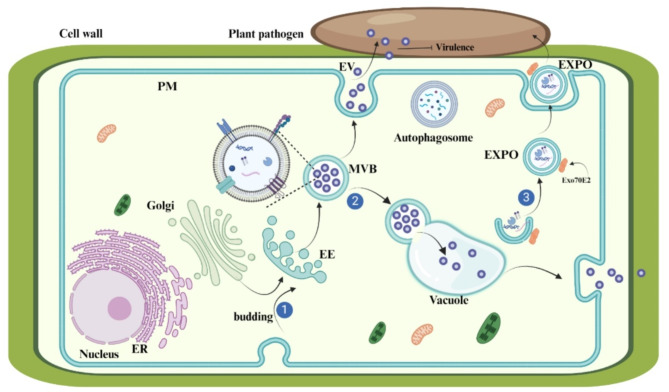
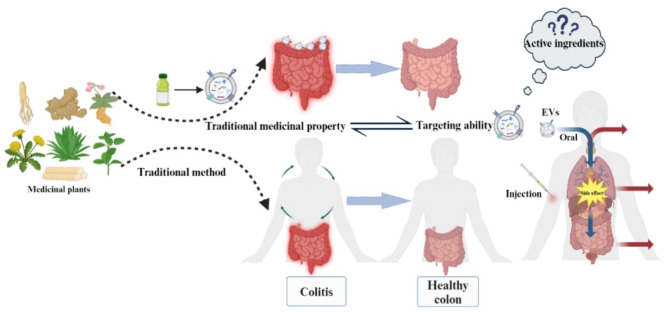
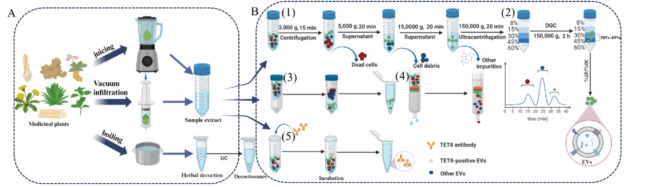
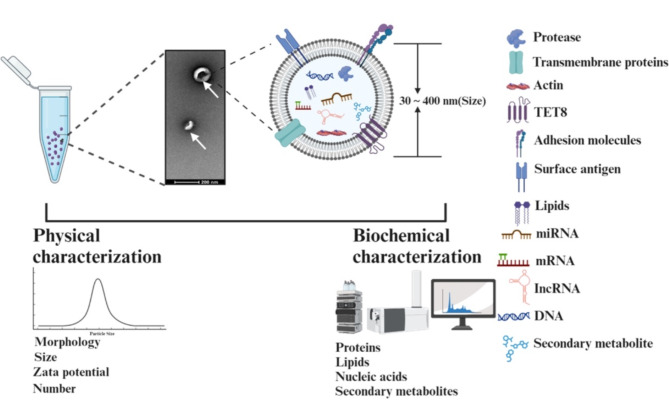
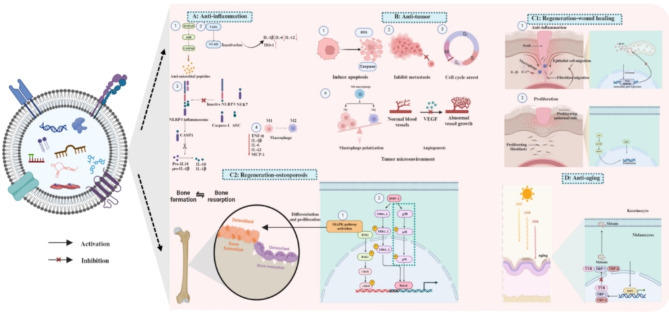
Extracellular vesicles (EVs) are phospholipid bilayer-enclosed biological particles that are secreted by almost all living cells including animals, plants, and microorganisms. Chinese herbal medicines (CHM) have a long history of using plant-based remedies to treat and prevent human diseases. Chinese herbal medicine-derived extracellular vesicle (CHMEV) generic term refers to nanoscale membrane structures isolated from medicinal plants such as ginseng, ginger, and Panax notoginseng. In recent years, CHMEVs have garnered substantial attention as a novel class of functional components due to their high bioavailability, safety, easy accessibility, and diverse therapeutic effects, indicating their great potential for development as a new dosage form of CHM. Research on CHMEVs in traditional Chinese medicine (TCM) has become a prominent area of interest, opening new avenues for further exploration into the therapeutic effects and functional mechanisms of CHM. Nonetheless, as an emerging field, there is much unknown about these vesicles, and current research remains inconsistent. The review comprehensively summarizes the biogenesis, isolation methods, and physical, and biochemical characterizations of CHMEVs. Additionally, we highlight their biomedical applications as therapeutic agents and drug delivery carriers, including anti-inflammatory, anticancer, regenerative, and antiaging activities. Finally, we propose current challenges and future perspectives. By summarizing the existing literature, we aim to offer valuable clues and inspiration for future CHMEV research, thereby facilitating research standardization of CHMEVs in the treatment of human diseases and drug discovery.
细胞外囊泡(EVs)是由几乎所有活细胞分泌的磷脂双层封闭的生物颗粒,包括动物、植物和微生物。中草药(CHM)一直以来都使用植物制剂来治疗和预防人类疾病。中药衍生的细胞外囊泡(CHMEV)是一个通用术语,指的是从人参、生姜和三七等药用植物中分离出来的纳米级膜结构。近年来,CHMEVs 作为一类新型的功能成分备受关注,因为它们具有高生物利用度、安全性、易于获得和多样化的治疗效果,表明它们具有作为 CHM 新剂型开发的巨大潜力。中药(TCM)中 CHMEVs 的研究已成为一个热门领域,为进一步探索 CHM 的治疗效果和功能机制开辟了新途径。然而,作为一个新兴领域,人们对这些囊泡知之甚少,目前的研究仍然不一致。本综述全面总结了 CHMEVs 的生物发生、分离方法以及物理和生化特性。此外,我们强调了它们作为治疗剂和药物输送载体的生物医学应用,包括抗炎、抗癌、再生和抗衰老活性。最后,我们提出了当前的挑战和未来的展望。通过总结现有文献,我们旨在为未来的 CHMEV 研究提供有价值的线索和启示,从而促进 CHMEVs 在人类疾病治疗和药物发现中的研究标准化。