School of Public Heath, University of Kinshasa, Kinshasa, Democratic Republic of Congo
Global and Public Health, Kamuzu University of Health Sciences, Blantyre, Malawi.
BMJ Open. 2024 Nov 27;14(11):e085360. doi: 10.1136/bmjopen-2024-085360.
The Democratic Republic of Congo has one of the highest burdens of malaria in the world, accounting for 12.3% of malaria cases and 11.6% of malaria deaths. The country has been scaling up various malaria control interventions, but how the malaria burden and risk factors have evolved remains unclear. This study aimed to estimate the trend in the burden of malaria in different settings in Kinshasa Province and assess factors contributing to the infection.
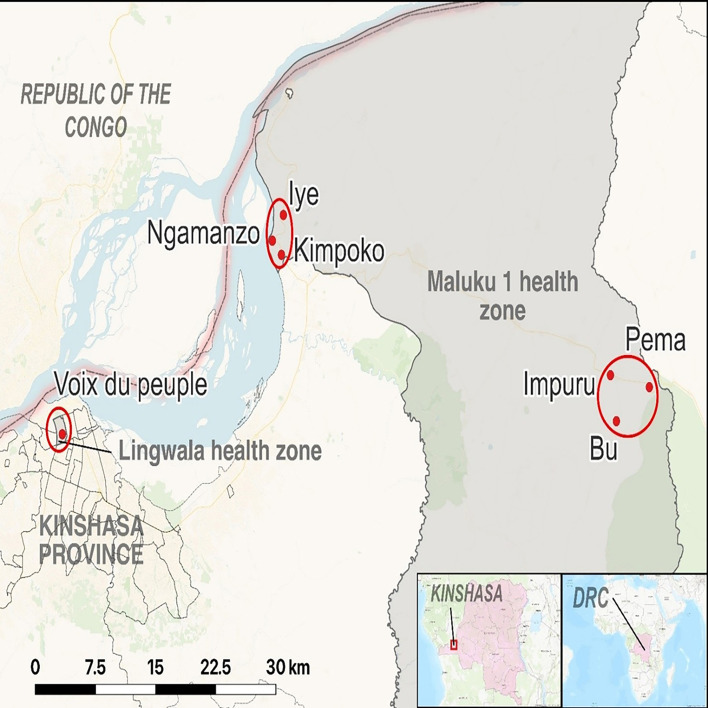
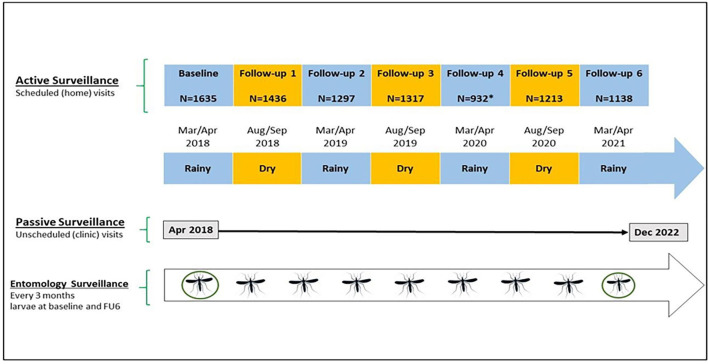
From 2018 to 2022, a cohort study was conducted in three health areas in Kinshasa Province known to have varying malaria endemicities: Voix du Peuple (urban), Kimpoko (peri-urban), and Bu (rural) health areas in Kinshasa Province. Participants 6 months of age and older were recruited and followed biannually through household visits and encouraged to visit study health centres whenever they felt ill. The participants' sociodemographic data, illness history and access to malaria interventions were collected along with blood specimens. During the same study period, mosquitoes and larvae were collected to study entomological characteristics that may contribute to malaria transmission.
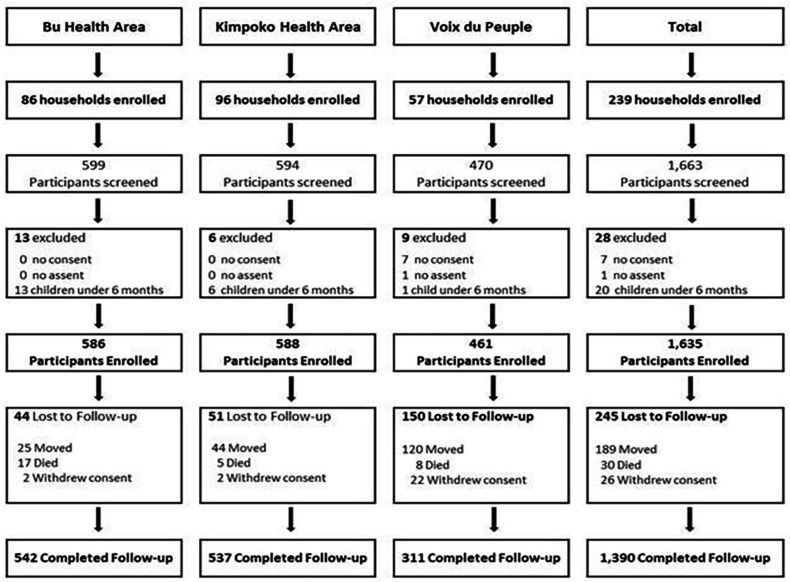
A total of 1635 participants were recruited from 239 households. The median number of participants per household was 6 (IQR, 5-9). Over half (54.7%) of the participants were female, 14.6% were under-5 children, and 33.3% were 5-14 years old. Household net ownership and reported use the previous night were 77.8% and 79.1%, respectively. Overall, malaria prevalence by rapid diagnostic test at baseline was 33.4%. Of the recruited participants, 1390 (85%) completed the 4 years of follow-up.
Planned analyses include calculating malaria prevalence and incidence trends at follow-up as well as risk factors for infection. Continued analyses will link epidemiological and entomological data to understand malaria transmission evolution and the sustained high prevalence of malaria over time in various settings.
刚果民主共和国是世界上疟疾负担最重的国家之一,占全球疟疾病例的 12.3%,疟疾死亡人数的 11.6%。该国一直在扩大各种疟疾控制干预措施,但疟疾负担和风险因素的演变情况尚不清楚。本研究旨在评估金沙萨省不同地区疟疾负担的趋势,并评估导致感染的因素。
2018 年至 2022 年,在金沙萨省三个已知疟疾流行程度不同的卫生区(Voix du Peuple(城市)、Kimpoko(城郊)和 Bu(农村))开展了一项队列研究。招募了 6 个月及以上的参与者,并通过家访进行每半年一次的随访,并鼓励他们在感到不适时前往研究保健中心就诊。收集了参与者的社会人口统计学数据、疾病史和获得疟疾干预措施的情况,同时采集了血液样本。在同一研究期间,还收集了蚊子和幼虫,以研究可能导致疟疾传播的昆虫学特征。
从 239 户家庭中招募了 1635 名参与者。每户家庭的参与者中位数为 6 人(IQR,5-9)。超过一半(54.7%)的参与者为女性,14.6%为 5 岁以下儿童,33.3%为 5-14 岁。家庭拥有蚊帐的比例和报告前一天晚上使用蚊帐的比例分别为 77.8%和 79.1%。总体而言,基线时快速诊断检测的疟疾患病率为 33.4%。在招募的参与者中,有 1390 人(85%)完成了 4 年的随访。
计划的分析包括计算随访期间的疟疾患病率和发病率趋势以及感染的风险因素。进一步的分析将结合流行病学和昆虫学数据,以了解疟疾传播的演变以及不同环境中疟疾患病率的持续高企。