Jahn Steffen, Guhl Daniel, Erhard Ainslee
Department of Business Administration, School of Economics and Business, Martin Luther University Halle-Wittenberg, Halle 06099, Germany.
Department of Business Administration, School of Business and Economics, Humboldt University Berlin, Berlin 10099, Germany.
Proc Natl Acad Sci U S A. 2024 Dec 10;121(50):e2319016121. doi: 10.1073/pnas.2319016121. Epub 2024 Dec 2.
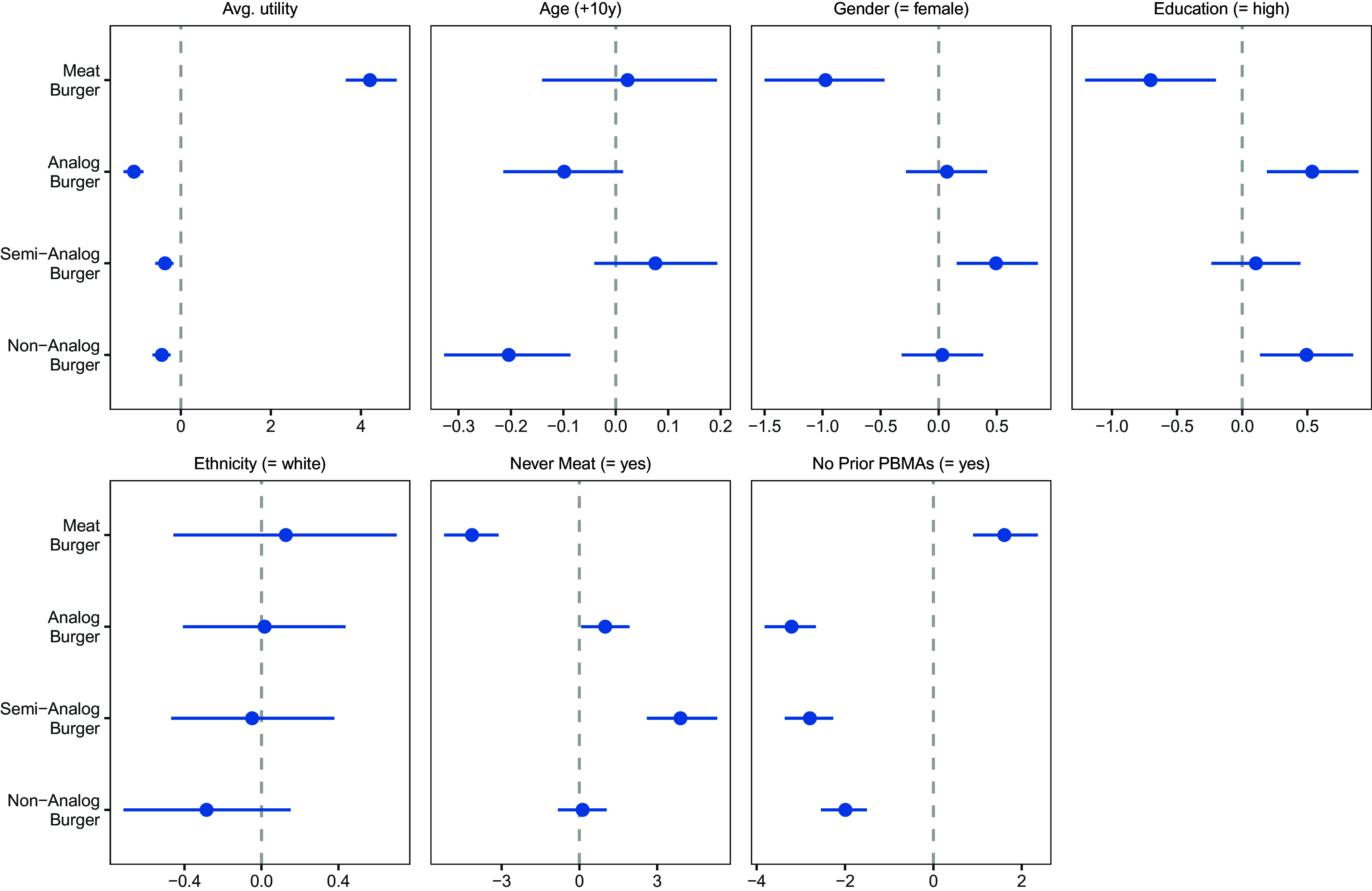
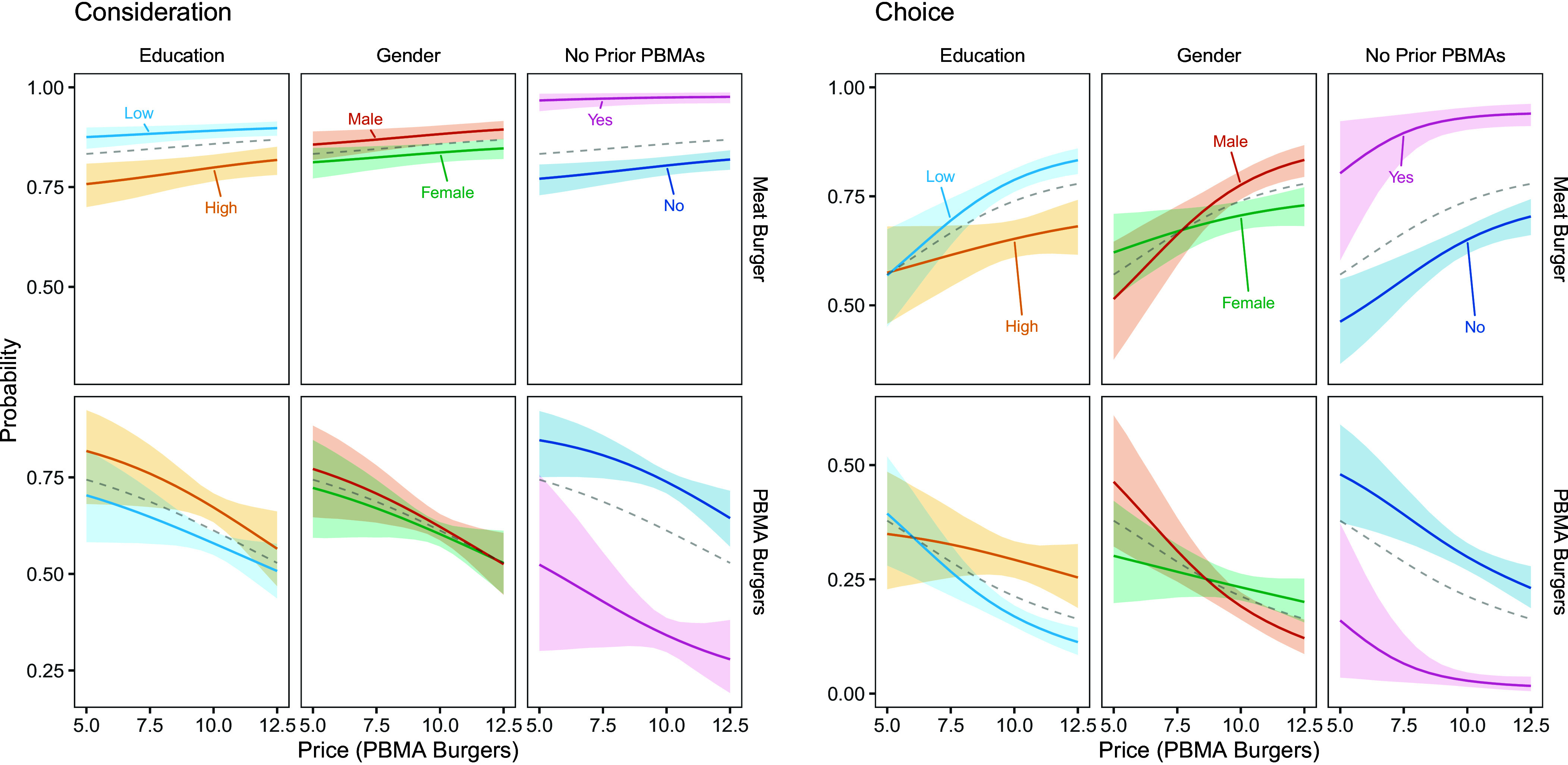
Efforts to promote sustainable resource use through reduced meat consumption face challenges as global meat consumption persists. The resistance may be attributed to the lower sales price of meat compared to most plant-based meat alternatives (PBMAs). Addressing this, our research delves into the pivotal question of which PBMAs resonate most with consumers and how pricing affects demand. In a hypothetical restaurant context, we conducted 2 representative studies among 2,126 individuals in the United States to scrutinize preferences for meat, analog, semi-analog, and non-analog burgers. First, in a survey, we assessed rankings of the four burgers, alongside evaluating participants' genuine consideration of these choices to discern a diverse preference distribution. Subsequently, in an experiment, we examined the influence of prices on participants' consideration and choice of PBMAs, thereby capturing both phases of the decision-making process. Our survey shows that meat has considerably higher utility and consumer preference than all PBMAs on average, but we also find substantial heterogeneity (i.e., some consumers prefer PBMAs over meat). In the experiment, we establish that there is a negative association between the consideration of meat and PBMA burgers, though consideration of any one PBMA is positively associated with considering other PBMAs. A noteworthy increase in consideration and choice is observed when prices of PBMAs are reduced, while changing the price of the meat burger only has minimal effect on demand. Such findings underscore the importance of affordability beyond price parity in catalyzing the shift toward plant-based diets.
随着全球肉类消费持续存在,通过减少肉类消费来促进可持续资源利用的努力面临挑战。这种阻力可能归因于与大多数植物性肉类替代品(PBMA)相比,肉类的销售价格较低。为了解决这个问题,我们的研究深入探讨了一个关键问题,即哪种PBMA最能引起消费者共鸣,以及定价如何影响需求。在一个假设的餐厅情境中,我们在美国的2126人中进行了两项代表性研究,以仔细研究对肉类、类似物、半类似物和非类似物汉堡的偏好。首先,在一项调查中,我们评估了这四种汉堡的排名,同时评估参与者对这些选择的真正考虑,以辨别不同的偏好分布。随后,在一项实验中,我们研究了价格对参与者对PBMA的考虑和选择的影响,从而捕捉决策过程的两个阶段。我们的调查显示,平均而言,肉类的效用和消费者偏好比所有PBMA都高得多,但我们也发现了很大的异质性(即一些消费者更喜欢PBMA而不是肉类)。在实验中,我们确定肉类汉堡和PBMA汉堡的考虑之间存在负相关,尽管对任何一种PBMA的考虑与考虑其他PBMA呈正相关。当PBMA的价格降低时,观察到考虑和选择有显著增加,而改变肉类汉堡的价格对需求的影响最小。这些发现强调了在推动向植物性饮食转变方面,可承受性超越价格平价的重要性。