Ashida Daisuke, Nishio Hisahide, Fujiwara Mizuho, Iwai Nobuhiko
Department of Physical Therapy, Faculty of Rehabilitation, Kobe Gakuin University: 518 Arise, Ikawadani-cho, Nishi-ku, Kobe 651-2180, Japan.
Department of Occupational Therapy, Faculty of Rehabilitation, Kobe Gakuin University, Japan.
J Phys Ther Sci. 2024 Dec;36(12):765-771. doi: 10.1589/jpts.36.765. Epub 2024 Dec 1.
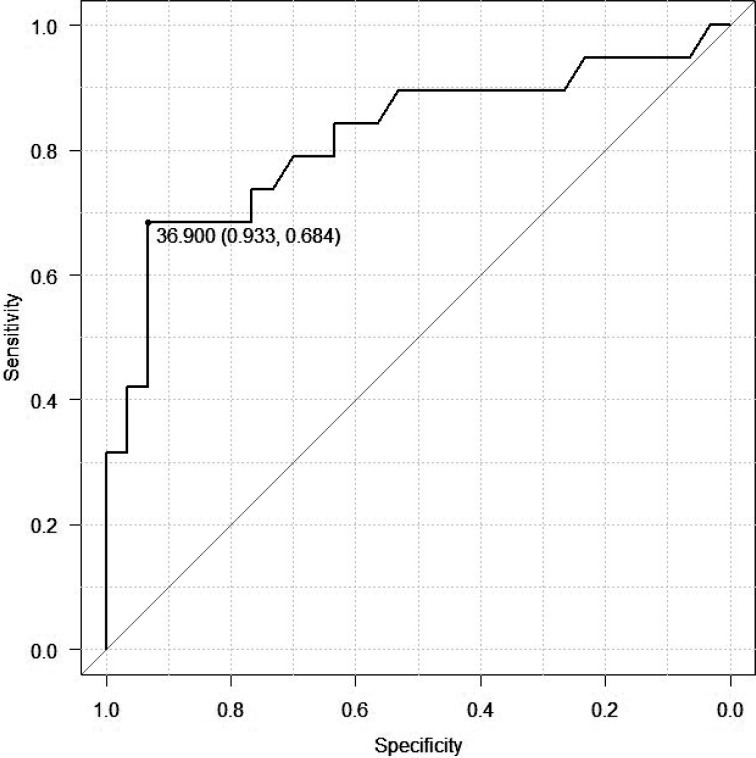
[Purpose] To analyze the correlation between the timed up-and-go time and functional independence measure total score in postoperative elderly patients with vertebral and hip fractures. [Participants and Methods] The total functional independence measure scores and timed up-and-go times of 87 Japanese patients aged ≥65 years with a history of vertebral or hip fracture surgery were analyzed. Patients were classified based on age (<85 or ≥85 years), sex (female or male), fracture type (vertebral or hip fracture), and postoperative period (early or late). [Results] In the comparative analyses between the two datasets within the groups, significant differences were observed in functional independence measure scores and timed up-and-go times between patients in the early and late postoperative periods. In the correlation analyses using functional independence measure scores and timed up-and-go times, significant negative correlations were observed in all groups, except for one group of patients in the late postoperative period. In the contingency table analyses, several patients with low functional independence measure scores had a timed up-and-go time of >35 s. Receiver operating characteristic curve analysis indicated that a timed up-and-go time of >35 s can be a predictive marker of nursing care requirement in the early postoperative period. [Conclusion] In the present study, we clarified the relationship between functional independence measure score and timed up-and-go time in postoperative elderly patients with vertebral and hip fractures and confirmed that timed up-and-go time is a predictive marker of nursing care requirement.
[目的] 分析老年椎体及髋部骨折术后患者的计时起立行走时间与功能独立性测量总分之间的相关性。[参与者与方法] 对87例年龄≥65岁、有椎体或髋部骨折手术史的日本患者的功能独立性测量总分及计时起立行走时间进行分析。患者根据年龄(<85岁或≥85岁)、性别(女性或男性)、骨折类型(椎体或髋部骨折)及术后时期(早期或晚期)进行分类。[结果] 在组内两个数据集的比较分析中,术后早期和晚期患者的功能独立性测量得分及计时起立行走时间存在显著差异。在使用功能独立性测量得分和计时起立行走时间进行的相关性分析中,除一组术后晚期患者外,所有组均观察到显著的负相关。在列联表分析中,几名功能独立性测量得分低的患者计时起立行走时间>35秒。受试者工作特征曲线分析表明,计时起立行走时间>35秒可作为术后早期护理需求的预测指标。[结论] 在本研究中,我们阐明了老年椎体及髋部骨折术后患者功能独立性测量得分与计时起立行走时间之间的关系,并证实计时起立行走时间是护理需求的预测指标。