Feng Tianxiao, Wang Xu, Bu Hanmei, Sun Kai, Qin Xiaokuan, Xie Rong, Zhu Liguo, Wei Xu
Academic Development Office, Wangjing Hospital of China Academy of Chinese Medical Sciences, Beijing, 100102, People's Republic of China.
Beijing Key Laboratory of Orthopedics of Traditional Chinese Medicine, Wangjing Hospital of China Academy of Chinese Medical Sciences, Beijing, 100102, People's Republic of China.
J Pain Res. 2024 Nov 28;17:4055-4070. doi: 10.2147/JPR.S481803. eCollection 2024.
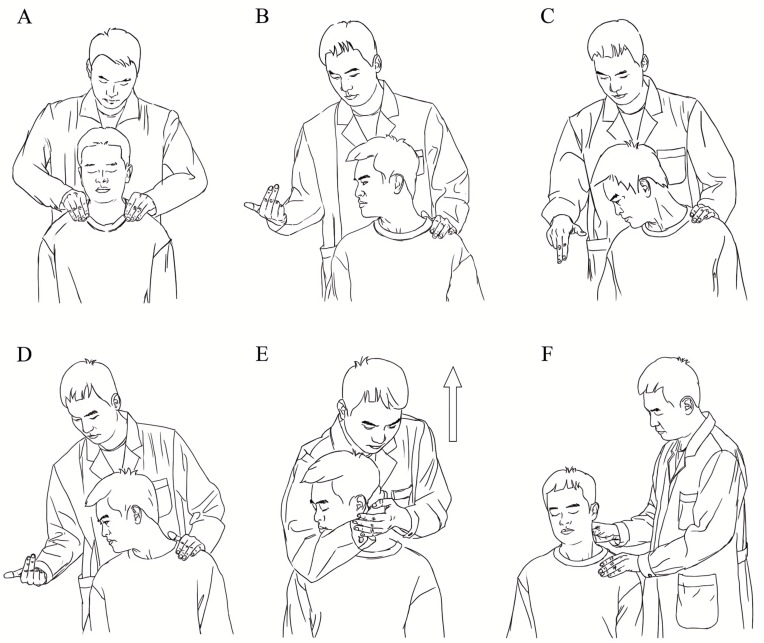
Cervical radiculopathy (CR) is a common musculoskeletal disorder worldwide. Cervical rotation-traction manipulation (CRTM) is one of the representative technique in traditional Chinese orthopedics.
This systematic review and meta-analysis aims to evaluate the effectiveness and safety of CRTM in treating CR.
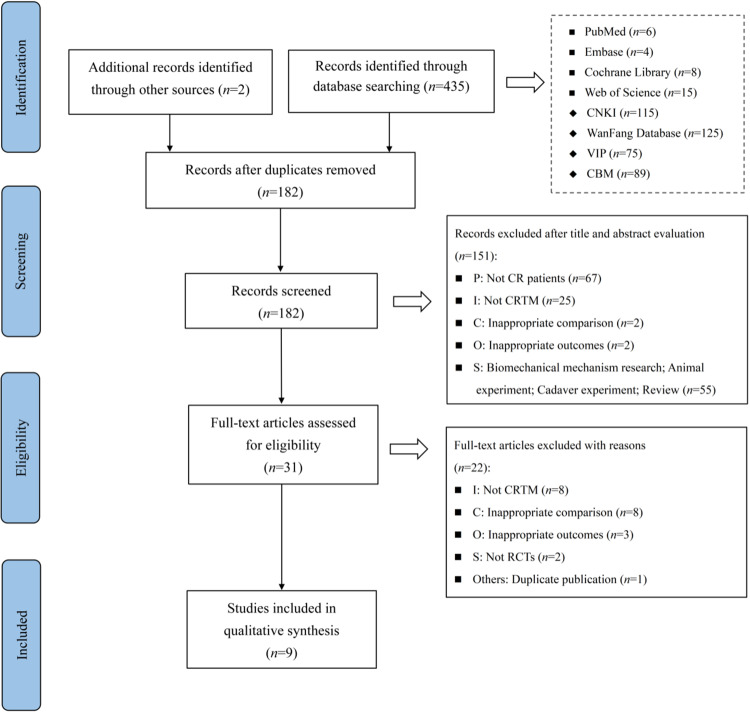
A comprehensive literature search was conducted through eight databases to identify the relevant randomized controlled trials (RCTs) from inception to December 2023. The primary outcome was the Visual Analogue Scale (VAS). The secondary outcomes included Neck Disability Index (NDI), Japanese Orthopaedic Association (JOA), Cervical Range of Motion, cervical curvature, and adverse reactions and events. Two researchers independently screened literature, extracted data, and assessed the risk of bias in included studies. Meta-analysis was performed using RevMan 5.4 and Stata 15.0 software, and the Grading of Recommendations, Assessment, Development, and Evaluations (GRADE) system was used to assess the quality of the evidence.
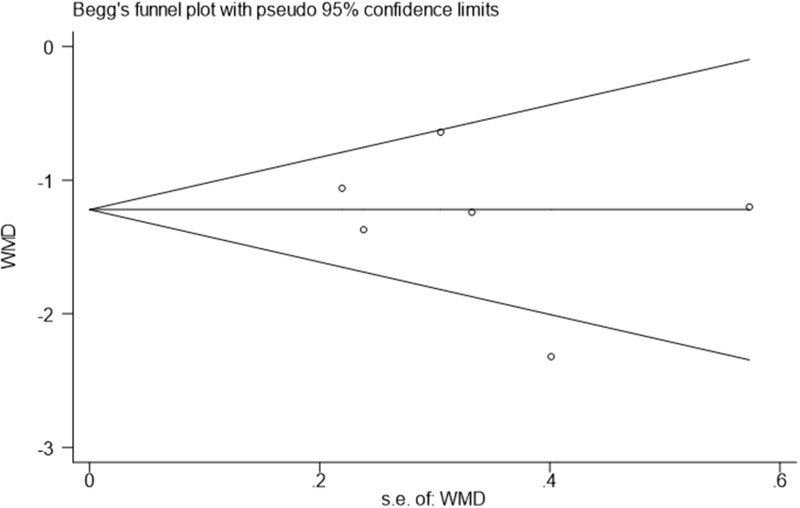
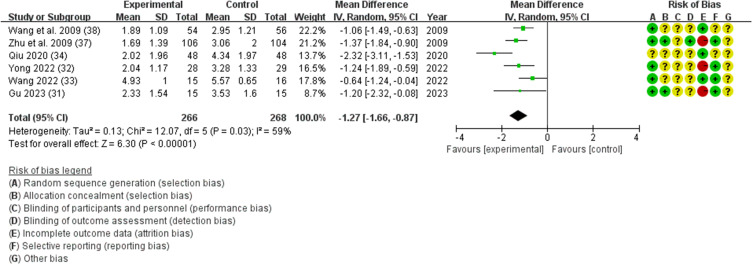
A total of 9 RCTs involving 904 patients were included. The results indicated that CRTM significantly reduced VAS scores compared to control groups with low-quality evidence [=534, WMD=-1.27, 95% CI (-1.66, -0.87), <0.00001, =59%]. Subgroup analysis showed that differences in control group categories, sample sizes, and intervention durations may contribute to the observed heterogeneity. Besides, CRTM significantly improved cervical range of motion of lateral flexion and rotation with very low-quality evidence. However, no statistically significant differences were observed in NDI scores, JOA scores, or cervical curvature between CRTM and control groups. No adverse reactions and events related to CRTM were reported in included studies, demonstrating its high safety.
Cervical rotation-traction manipulation appears to be an effective and safe option for managing cervical radiculopathy, significantly improving pain and cervical mobility. However, further high-quality randomized controlled trials and methodological studies should be conducted to reinforce the evidence base for its clinical practice.
神经根型颈椎病(CR)是全球常见的肌肉骨骼疾病。颈椎旋转牵引手法(CRTM)是中医骨伤科的代表性技术之一。
本系统评价和荟萃分析旨在评估CRTM治疗CR的有效性和安全性。
通过八个数据库进行全面的文献检索,以识别从开始到2023年12月的相关随机对照试验(RCT)。主要结局指标是视觉模拟量表(VAS)。次要结局指标包括颈部残疾指数(NDI)、日本骨科协会(JOA)评分、颈椎活动度、颈椎曲度以及不良反应和事件。两名研究人员独立筛选文献、提取数据并评估纳入研究的偏倚风险。使用RevMan 5.4和Stata 15.0软件进行荟萃分析,并采用推荐分级、评估、制定与评价(GRADE)系统评估证据质量。
共纳入9项RCT,涉及904例患者。结果表明,与对照组相比,CRTM能显著降低VAS评分,但证据质量低[=534,加权均数差(WMD)=-1.27,95%置信区间(CI)(-1.66,-0.87),<0.00001,=59%]。亚组分析表明,对照组类别、样本量和干预持续时间的差异可能导致观察到的异质性。此外,CRTM能显著改善颈椎侧屈和旋转活动度,但证据质量极低。然而,CRTM组与对照组在NDI评分、JOA评分或颈椎曲度方面未观察到统计学显著差异。纳入研究中未报告与CRTM相关的不良反应和事件,表明其安全性高。
颈椎旋转牵引手法似乎是治疗神经根型颈椎病的一种有效且安全的选择,能显著改善疼痛和颈椎活动度。然而,应开展进一步的高质量随机对照试验和方法学研究,以加强其临床应用的证据基础。