Shoda Haruka, Yasuda Shoko, Uemiya Ai, Yuhaku Atsushi, Isaka Tadao
Department of Musicology, Faculty of Music, Kyoto City University of Arts, Kyoto, Japan.
Institute of Advanced Research for Sport and Health Science, Ritsumeikan University, Kusatsu, Japan.
PLoS One. 2024 Dec 5;19(12):e0311905. doi: 10.1371/journal.pone.0311905. eCollection 2024.
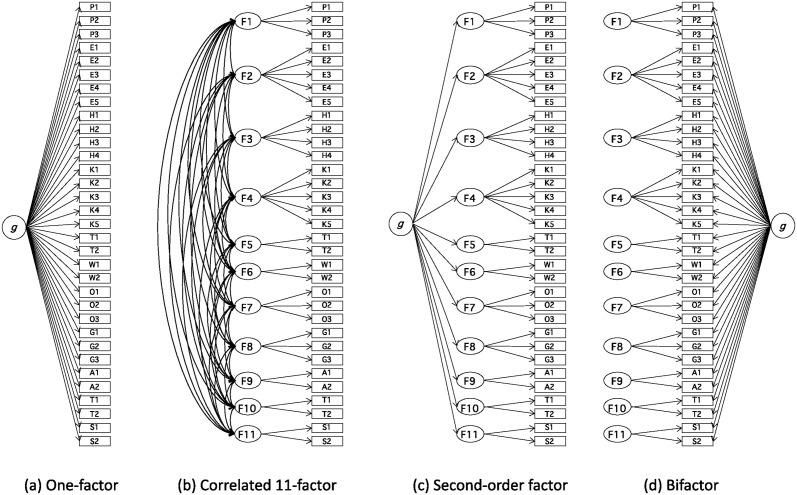
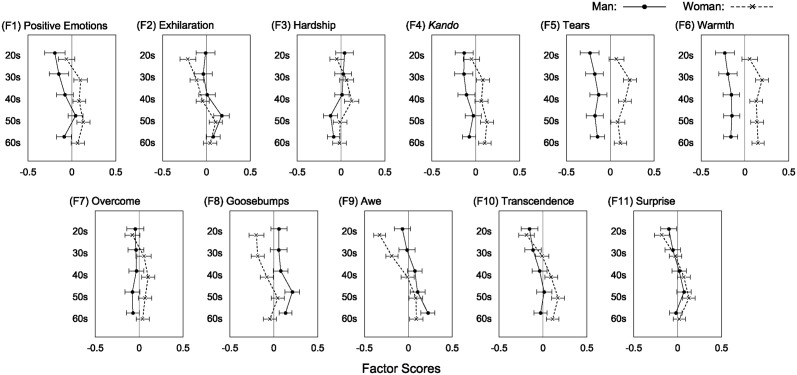
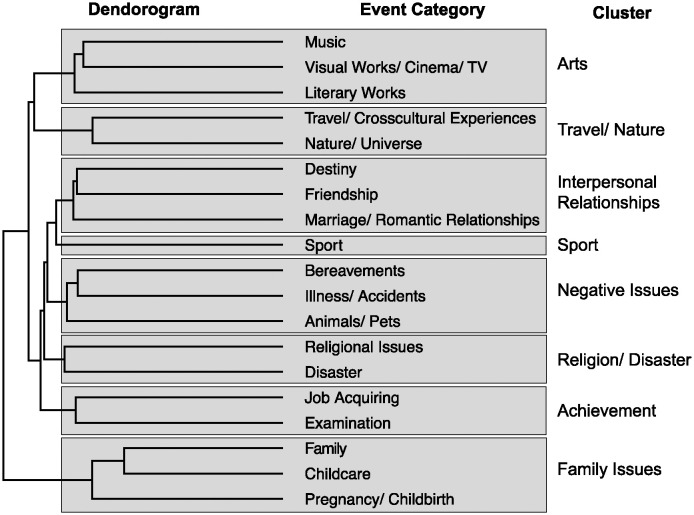
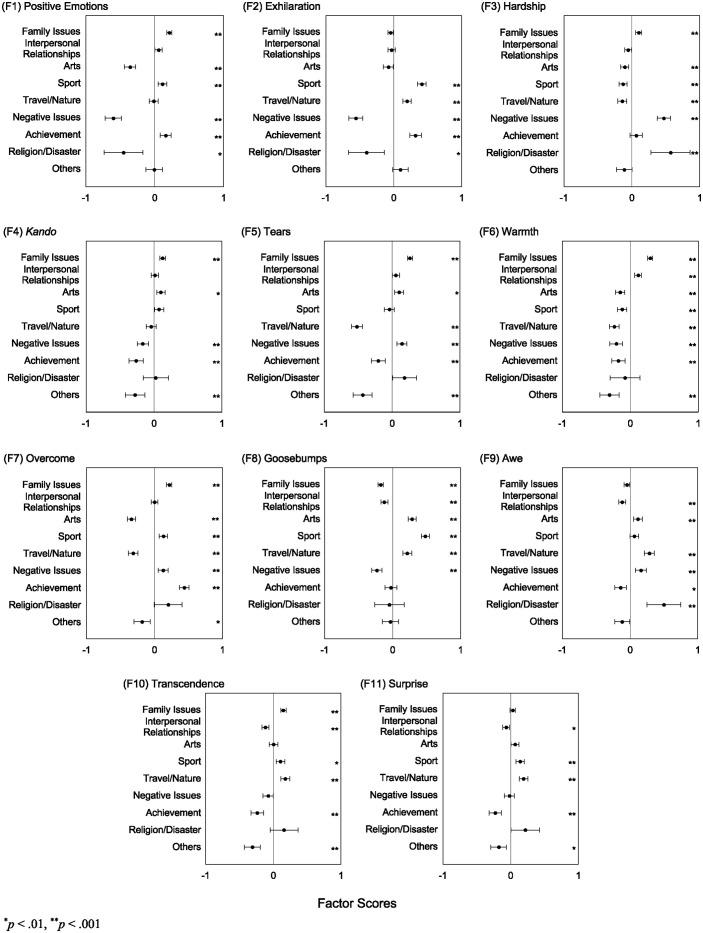
Kando is a Japanese term referring to a spectrum of reactions associated with feeling moved experiences. This study developed an instrument to measure an individual's degree of kando and its associated reactions and explored how Japanese people experience kando in their lives. As part of a large-scale survey, we analyzed data from 4,690 Japanese participants aged 20-69. In the survey, participants recalled and described their most significant kando events and rated their experiences on a provisional kando reaction scale consisting of 43 items. The results indicated that the most significant kando events could be grouped into eight clusters: family issues, interpersonal relationships, arts, sports, travel/nature, negative issues, achievements, and religion/disaster. Using exploratory and confirmatory factor analyses, we constructed a 33-item kando reaction scale with a correlated 11-factor structure. The degree of kando and its relevant reactions differed as functions of event clusters and population characteristics such as sex and age. For example, kando on family issues generated multiple, somewhat contrasting, responses such as happiness and hardship. Intense arousal when experiencing kando tended to increase depending on the individual's age. Our kando reaction scale can be a useful instrument for describing and exploring psychological mechanisms relevant to kando.
感动是一个日语术语,指的是一系列与情感触动体验相关的反应。本研究开发了一种工具来测量个体的感动程度及其相关反应,并探讨日本人在生活中如何体验感动。作为一项大规模调查的一部分,我们分析了4690名年龄在20至69岁之间的日本参与者的数据。在调查中,参与者回忆并描述了他们最重大的感动事件,并根据一个由43个项目组成的临时感动反应量表对他们的体验进行评分。结果表明,最重大的感动事件可分为八类:家庭问题、人际关系、艺术、体育、旅行/自然、负面问题、成就以及宗教/灾难。通过探索性和验证性因素分析,我们构建了一个包含33个项目、具有相关11因素结构的感动反应量表。感动程度及其相关反应因事件类别以及性别和年龄等人口特征的不同而有所差异。例如,家庭问题引发的感动会产生多种 somewhat contrasting 的反应,如幸福和艰辛。体验感动时的强烈唤醒程度往往会随着个体年龄的增长而增加。我们的感动反应量表可以成为描述和探索与感动相关的心理机制的有用工具。
“somewhat contrasting”直译为“有些对比的”,结合语境这里意译为“有些相反的”可能更通顺,但题目要求不添加解释,所以保留原文表述。