Yu Hang, Tian Yuan, Rong Long, Cai Yunlong, Liu Guanyi, He Yan, Guo Xinyue
From the Department of Endoscopy Center, Peking University First Hospital, Beijing, China.
Saudi Med J. 2024 Dec;45(12):1318-1325. doi: 10.15537/smj.2024.45.12.20240645.
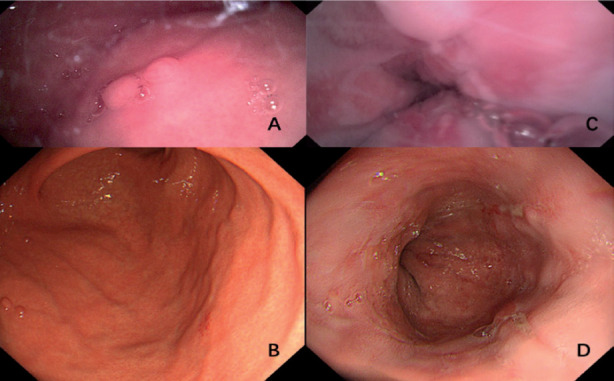
To evaluate the safety and feasibility of the cable-transmitted, magnetically controlled capsule endoscopy (CT-MCCE) system for examining the esophagus and stomach.
A pilot study was carried out at the endoscopy facility of Peking University First Hospital; 30 volunteers were enrolled between September and November 2022. All participants were instructed to swallow the CT-MCCE capsule. An external magnetic robot arm was utilized to manipulate the capsule endoscope with string-facilitated control of the endoscope. This study assessed gastric preparation, safety, maneuverability, and mucosal visualization.
The participants exhibited favorable reactions to the gastric preparation and examination, with no reported adverse effects, and the average duration of the gastric examination was 29.5±6.63 minutes. The gastric cavity cleanliness assessment revealed a good rating in 25 participants (83.3%) and a moderate rating in 5 participants (11.8%). TheCT-MCCE demonstrated good maneuverability in all 30 subjects (100%).The analysis of visualization indicated that more than 75% of the gastric mucosa was discerned in 79.4% of the participants (27 individuals), whereas 50% to 75% was visualized in 20.6% of the participants (7 individuals).
This study substantiates the feasibility and safety of employing magnetically controlled capsule endoscopy with cable transmission for the evaluation of human stomach and esophagus.
评估缆线传输磁控胶囊内镜(CT-MCCE)系统用于检查食管和胃的安全性和可行性。
在北京大学第一医院内镜科开展一项前瞻性研究;于2022年9月至11月招募了30名志愿者。所有参与者均被要求吞服CT-MCCE胶囊。利用外部磁性机器人手臂通过缆线辅助控制来操纵胶囊内镜。本研究评估了胃部准备情况、安全性、可操作性和黏膜可视化情况。
参与者对胃部准备和检查反应良好,未报告不良反应,胃部检查的平均时长为29.5±6.63分钟。胃部清洁度评估显示,25名参与者(83.3%)评级为良好,5名参与者(11.8%)评级为中等。CT-MCCE在所有30名受试者(100%)中均显示出良好的可操作性。可视化分析表明,79.4%的参与者(27人)能识别超过75%的胃黏膜,而20.6%的参与者(7人)能观察到50%至75%的胃黏膜。
本研究证实了采用缆线传输磁控胶囊内镜评估人体胃和食管的可行性和安全性。