Issaiy Mahbod, Zarei Diana, Kolahi Shahriar, Liebeskind David S
Advanced Diagnostic and Interventional Radiology Research Center (ADIR), Tehran University of Medical Sciences, Tehran, Iran.
Comprehensive Stroke Center and Department of Neurology, David Geffen School of Medicine at the University of California, Los Angeles, Los Angeles, CA, USA.
J Neurol. 2024 Dec 12;272(1):37. doi: 10.1007/s00415-024-12810-6.
Acute ischemic stroke (AIS) is a major cause of morbidity and mortality, with hemorrhagic transformation (HT) further worsening outcomes. Traditional scoring systems have limited predictive accuracy for HT in AIS. Recent research has explored machine learning (ML) and deep learning (DL) algorithms for stroke management. This study evaluates and compares the effectiveness of ML and DL algorithms in predicting HT post-AIS, benchmarking them against conventional models.
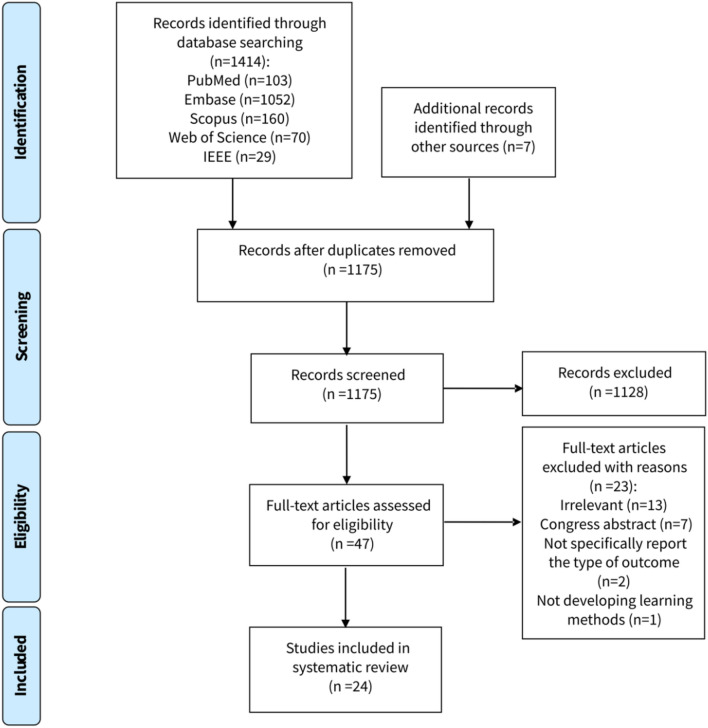
A systematic search was conducted across PubMed, Embase, Web of Science, Scopus, and IEEE, initially yielding 1421 studies. After screening, 24 studies met the inclusion criteria. The Prediction Model Risk of Bias Assessment Tool (PROBAST) was used to assess the quality of these studies, and a qualitative synthesis was performed due to heterogeneity in the study design.
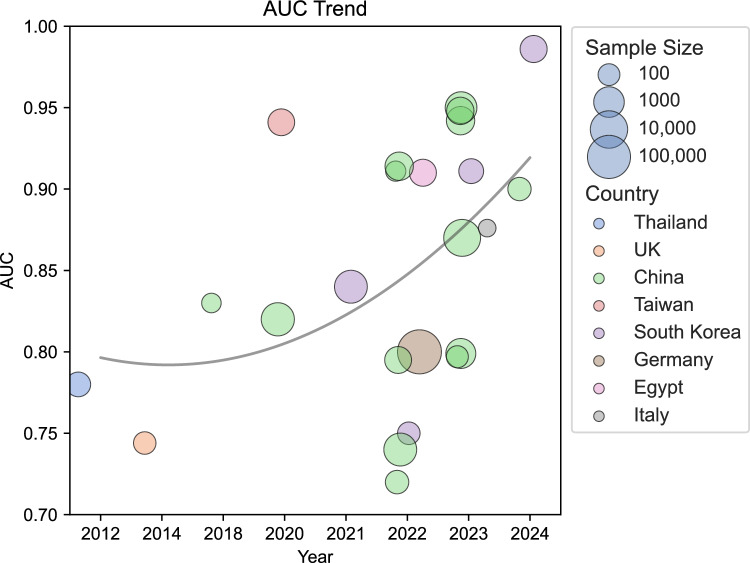
The included studies featured diverse ML and DL algorithms, with Logistic Regression (LR), Support Vector Machine (SVM), and Random Forest (RF) being the most common. Gradient boosting (GB) showed superior performance. Median Area Under the Curve (AUC) values were 0.91 for GB, 0.83 for RF, 0.77 for LR, and 0.76 for SVM. Neural networks had a median AUC of 0.81 and convolutional neural networks (CNNs) had a median AUC of 0.91. ML techniques outperformed conventional models, particularly those integrating clinical and imaging data.
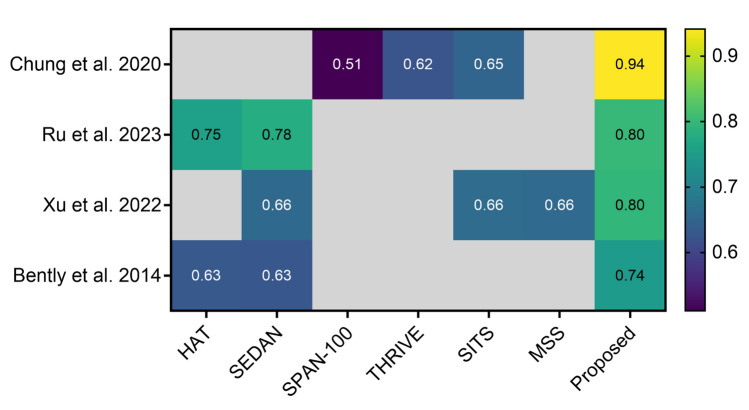
ML and DL models significantly surpass traditional scoring systems in predicting HT. These advanced models enhance clinical decision-making and improve patient outcomes. Future research should address data expansion, imaging protocol standardization, and model transparency to enhance stroke outcomes further.
急性缺血性卒中(AIS)是发病和死亡的主要原因,出血性转化(HT)会进一步恶化预后。传统评分系统对AIS中HT的预测准确性有限。最近的研究探索了用于卒中管理的机器学习(ML)和深度学习(DL)算法。本研究评估并比较ML和DL算法在预测AIS后HT方面的有效性,并将它们与传统模型进行基准比较。
在PubMed、Embase、Web of Science、Scopus和IEEE上进行了系统检索,最初检索到1421项研究。筛选后,24项研究符合纳入标准。使用预测模型偏倚风险评估工具(PROBAST)评估这些研究的质量,由于研究设计的异质性,进行了定性综合分析。
纳入的研究采用了多种ML和DL算法,其中逻辑回归(LR)、支持向量机(SVM)和随机森林(RF)最为常见。梯度提升(GB)表现出卓越的性能。GB的曲线下面积(AUC)中位数为0.91,RF为0.83,LR为0.77,SVM为0.76。神经网络的AUC中位数为0.81,卷积神经网络(CNN)的AUC中位数为0.91。ML技术优于传统模型,尤其是那些整合了临床和影像数据的模型。
ML和DL模型在预测HT方面显著优于传统评分系统。这些先进模型增强了临床决策并改善了患者预后。未来的研究应解决数据扩充、影像协议标准化和模型透明度问题,以进一步改善卒中预后。