Honda Kenya, Tanoue Takeshi, Nagayama Manabu, Roochana Ayumi, Zimmerman Samuel, Ashenberg Orr, Jain Tanvi, Sasajima Satoshi, Takeshita Kozue, Hetherington Nicola, Okahashi Nobuyuki, Ueda Masahiro, Konishi Morichika, Nakayama Yoshiaki, Minoda Aki, Skelly Ashwin, Minokoshi Yasuhiko, Pucci Nicholas, Mende Daniel, Arita Makoto, Yamamoto Hironori, Watanabe Shunji, Miura Kouichi, Suda Wataru, Atarashi Koji, Matsushita Mami, Kajimura Shingo, Plichta Damian, Saito Masayuki, Xavier Ramnik
Keio University School of Medicine.
Infectious Disease and Microbiome Program, Broad Institute of MIT and Harvard.
Res Sq. 2024 Dec 3:rs.3.rs-5454144. doi: 10.21203/rs.3.rs-5454144/v1.
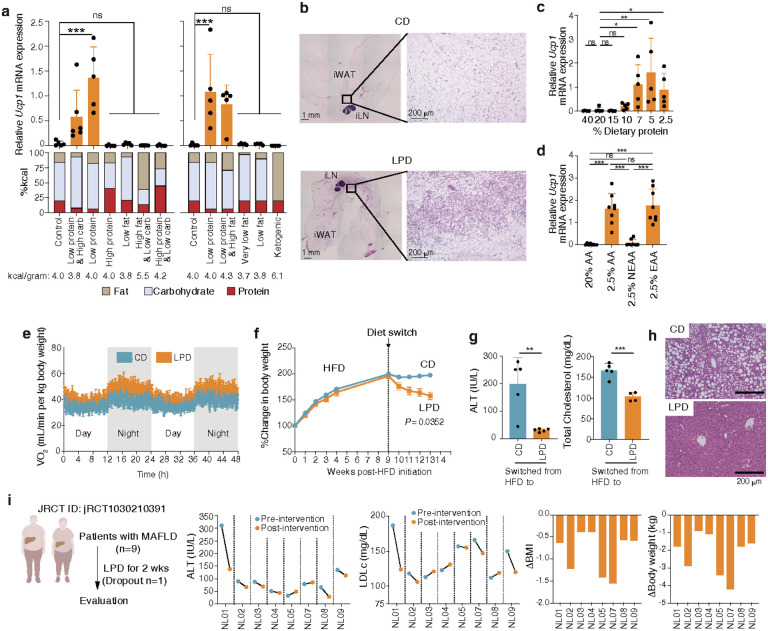
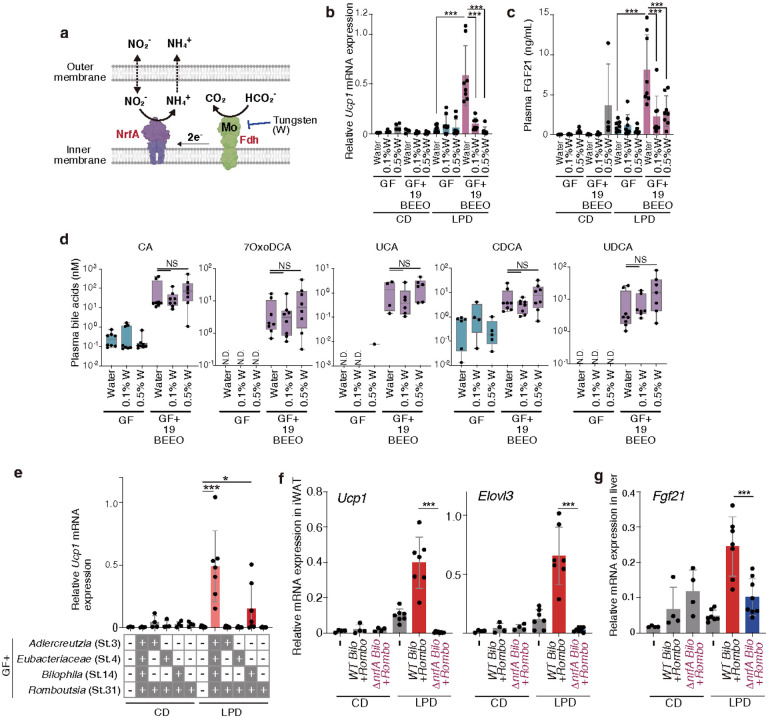
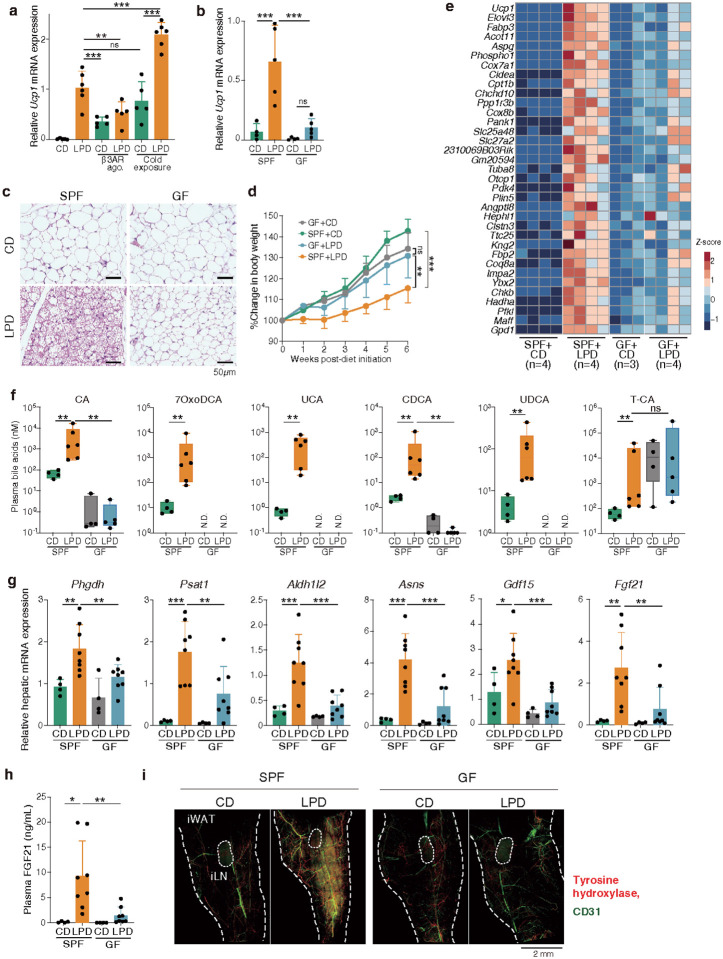
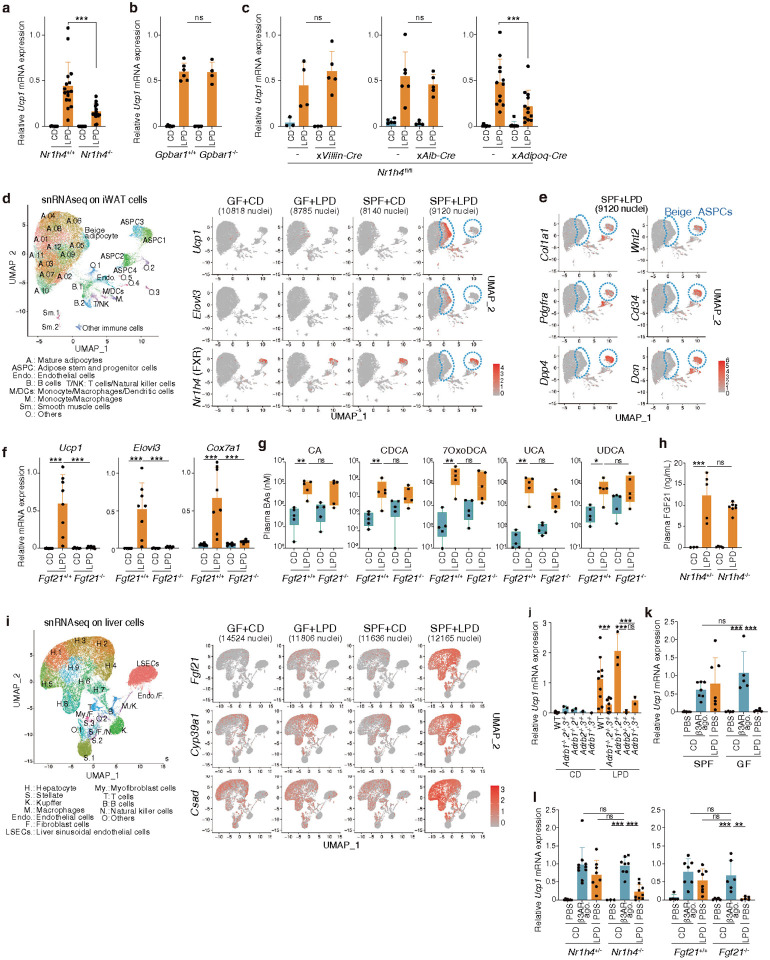
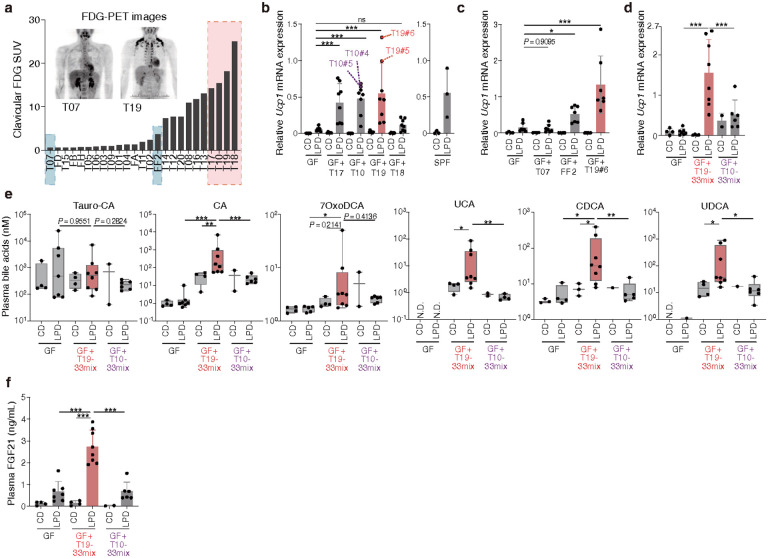
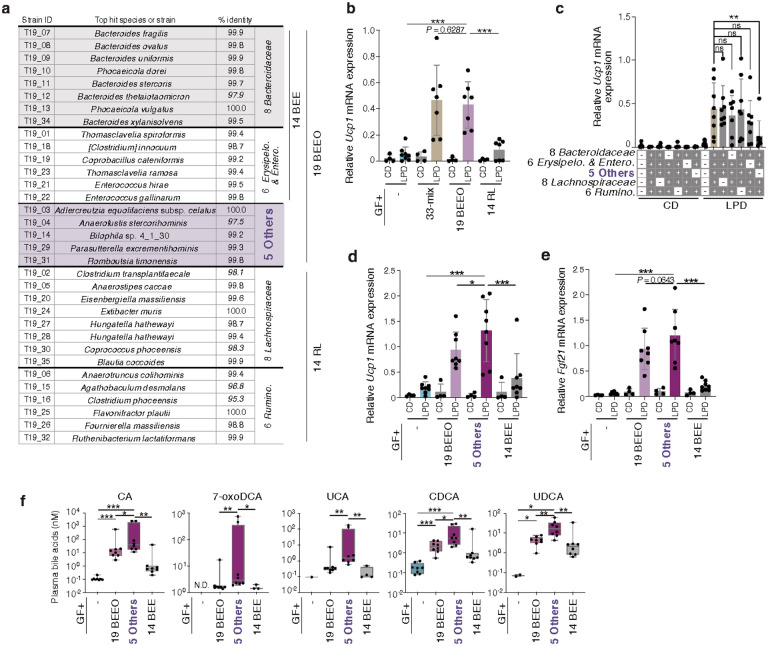
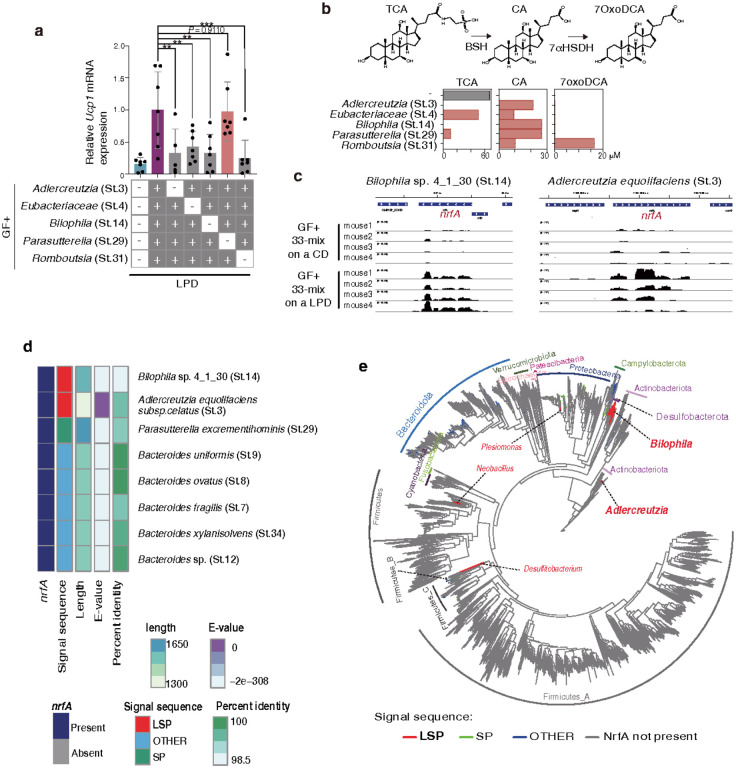
Activation of brown and beige fat biogenesis promotes metabolic health in rodents and humans, but typically requires cold exposure or pharmacological activation of β-adrenergic receptors, which may pose cardiovascular risks. Dietary intervention represents a clinically viable alternative strategy to induce beige cells and thus enhance metabolic health, though the underlying mechanisms remain poorly understood. In this study, we identified specific microbiota members in both mice and humans that promote browning of white adipose tissue (WAT) and ameliorate metabolic disorders in the context of a low-protein diet (LPD). Diets with low protein, regardless of fat and carbohydrate content, induced robust WAT browning to a degree comparable to that achieved by cold exposure or β-adrenergic receptor agonist administration. LPD-mediated browning was markedly diminished in germ-free (GF) mice, highlighting the essential role of the gut microbiota. Microbiota-induced browning occurred independently of the immune system and primarily through mechanisms involving increased circulating deconjugated bile acids, activation of the farnesoid X receptor (FXR) in WAT progenitor cells, and enhanced hepatic production of FGF21. The browning defect in GF mice was rescued by transplanting microbiota from conventional mice or from brown/beige fat-positive healthy human volunteers, as determined by fluorodeoxyglucose positron-emission tomography (FDG-PET). Defined bacterial consortia, comprising strains isolated from mice or FDG-PET-positive human volunteers, were sufficient to elevate plasma bile acids and hepatic FGF21 levels by modulating nitrogen metabolism, ultimately restoring browning in response to a LPD. Our findings highlight the significant impact of diet-microbiota interactions on WAT browning and suggest their therapeutic potential for managing metabolic diseases.
激活棕色和米色脂肪生成可促进啮齿动物和人类的代谢健康,但通常需要冷暴露或β-肾上腺素能受体的药物激活,而这可能带来心血管风险。饮食干预是一种临床上可行的替代策略,可诱导米色细胞生成,从而增强代谢健康,不过其潜在机制仍知之甚少。在本研究中,我们在小鼠和人类中均鉴定出了特定的微生物群成员,它们在低蛋白饮食(LPD)的情况下可促进白色脂肪组织(WAT)褐变并改善代谢紊乱。无论脂肪和碳水化合物含量如何,低蛋白饮食均可诱导强大的WAT褐变,其程度与冷暴露或给予β-肾上腺素能受体激动剂相当。在无菌(GF)小鼠中,LPD介导的褐变明显减弱,突出了肠道微生物群的重要作用。微生物群诱导的褐变独立于免疫系统发生,主要通过涉及循环中去结合胆汁酸增加、WAT祖细胞中法尼醇X受体(FXR)激活以及肝脏中FGF21生成增强的机制实现。通过氟脱氧葡萄糖正电子发射断层扫描(FDG-PET)测定,将常规小鼠或棕色/米色脂肪阳性健康人类志愿者的微生物群移植到GF小鼠中,可挽救其褐变缺陷。由从小鼠或FDG-PET阳性人类志愿者中分离出的菌株组成的特定细菌联合体,足以通过调节氮代谢来提高血浆胆汁酸和肝脏FGF21水平,最终恢复对LPD的褐变反应。我们的研究结果突出了饮食-微生物群相互作用对WAT褐变的重大影响,并表明它们在管理代谢疾病方面的治疗潜力。