Chen Alyssa Y, Matich Eryn K, Laryea Jonathan, Hsu Ping-Ching, Su Lihchyun Joseph
School of Medicine, The University of Texas Southwestern Medical Center, Dallas, TX 75390, USA.
School of Public Health, The University of Texas Houston Health Science Center at Houston, Houston, TX 77030, USA.
Nutrients. 2024 Dec 5;16(23):4200. doi: 10.3390/nu16234200.
BACKGROUND/OBJECTIVES: The incidence of colorectal cancer (CRC) is rising, and Western diets high in red and processed meats may be contributing. It is important to identify dietary nutrients that increase CRC risk and perhaps interventions that may modulate such risk. The relationship between dietary choline intake and CRC is still unclear. We hypothesize that high dietary choline intake is associated with greater CRC risk, and B vitamin supplementation may modify this risk.
In this case-control study, we collected demographic and dietary data using the validated National Cancer Institute CRC Risk Assessment Tool and Dietary Health Questionnaire III and analyzed colonoscopy outcomes. Logistic regression and stratified analyses were performed to calculate adjusted odds ratios and evaluate for effect modification.
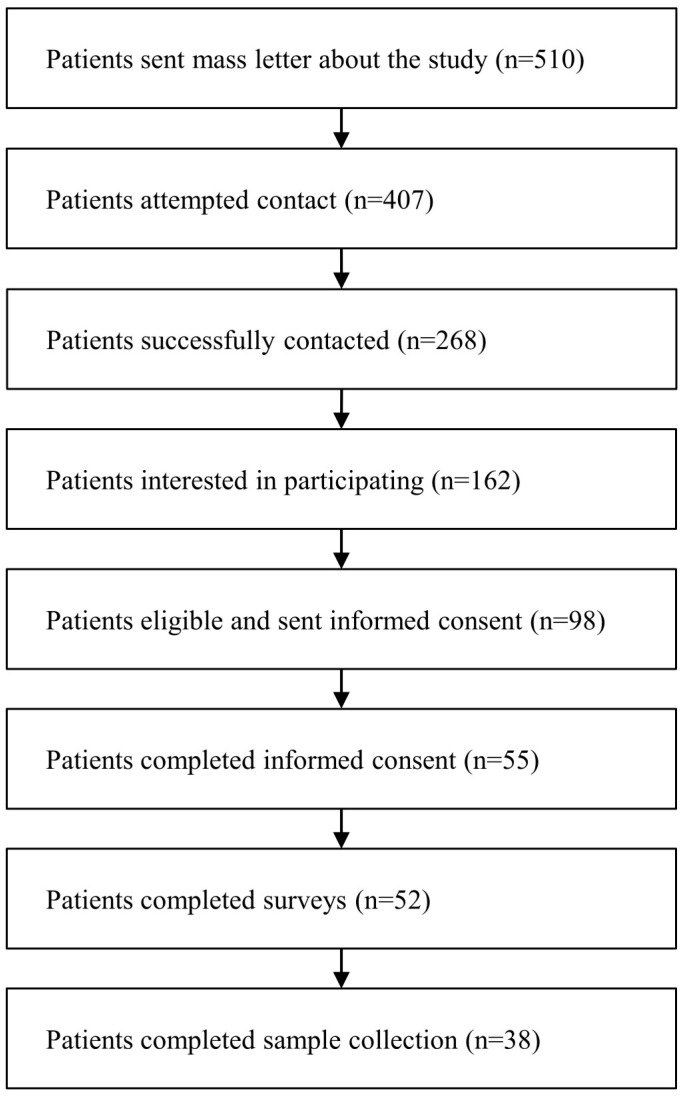
Of 52 total patients, 21 had a normal colonoscopy result, and 31 were found to either have benign polyps or CRC. The average dietary choline intake was 207 mg/day in the normal group and 297 mg/day in the abnormal outcome group. A doubling in dietary choline intake was significantly associated with increased odds of polyps or CRC (OR 25.32, 95% CI 1.95-327.94). When stratified by vitamin B levels, the effect modification was difficult to confidently quantify due to the limited sample size.
Our findings suggest that higher dietary choline intake may be associated with an increased risk of CRC and its precursors, such as polyps. Although the potential modifying role of B vitamins was inconclusive, this study underscores the need for larger-scale research to further explore these associations and to assess the potential of dietary interventions in reducing CRC risk.
背景/目的:结直肠癌(CRC)的发病率正在上升,富含红肉和加工肉类的西方饮食可能是一个影响因素。识别会增加结直肠癌风险的膳食营养素以及可能调节此类风险的干预措施非常重要。膳食胆碱摄入量与结直肠癌之间的关系仍不明确。我们假设高膳食胆碱摄入量与更高的结直肠癌风险相关,补充B族维生素可能会改变这种风险。
在这项病例对照研究中,我们使用经过验证的美国国立癌症研究所结直肠癌风险评估工具和饮食健康问卷III收集了人口统计学和饮食数据,并分析了结肠镜检查结果。进行逻辑回归和分层分析以计算调整后的优势比并评估效应修饰。
在总共52名患者中,21名结肠镜检查结果正常,31名被发现患有良性息肉或结直肠癌。正常组的平均膳食胆碱摄入量为207毫克/天,异常结果组为297毫克/天。膳食胆碱摄入量翻倍与息肉或结直肠癌发生几率增加显著相关(优势比25.32,95%置信区间1.95 - 327.94)。按维生素B水平分层时,由于样本量有限,效应修饰难以确切量化。
我们的研究结果表明,较高的膳食胆碱摄入量可能与结直肠癌及其前驱病变(如息肉)风险增加有关。尽管B族维生素的潜在修饰作用尚无定论,但本研究强调需要进行更大规模的研究,以进一步探索这些关联,并评估饮食干预在降低结直肠癌风险方面的潜力。