Ou Zhenghui, Zhang Yuantong, Wu Qiang, Wang Kangkang, Zhang Guangzhong, Qiao Xi, Yan Ying, Qian Wanqiang, Wan Fanghao, Liu Bo
Shenzhen Branch, Guangdong Laboratory for Lingnan Modern Agriculture, Genome Analysis Laboratory of the Ministry of Agriculture and Rural Affairs, Agricultural Genomics Institute at Shenzhen, Chinese Academy of Agricultural Sciences, Shenzhen 518120, China.
College of Plant Health and Medicine, Qingdao Agricultural University, Qingdao 266109, China.
Int J Mol Sci. 2024 Nov 26;25(23):12678. doi: 10.3390/ijms252312678.
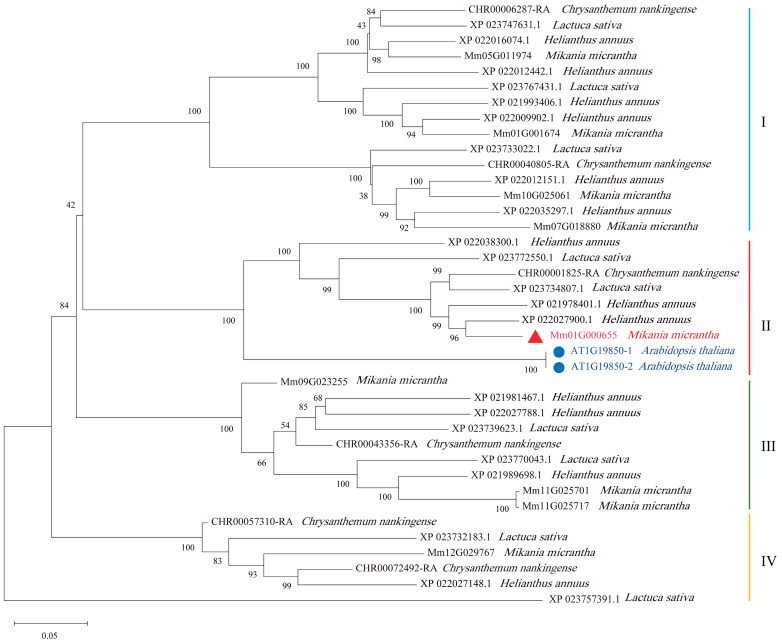
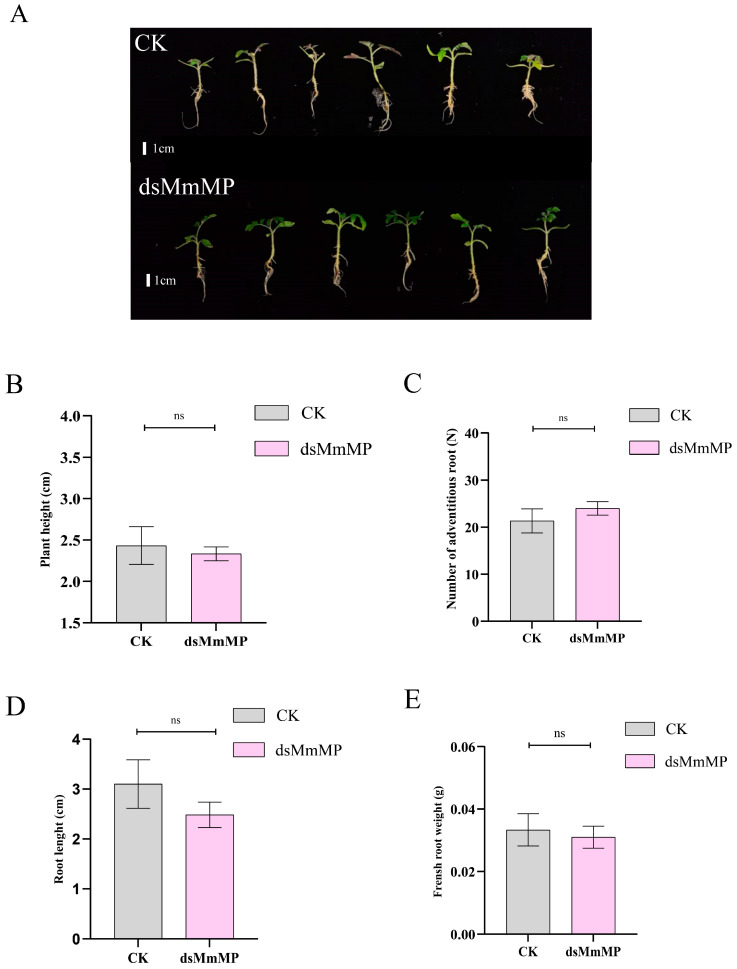
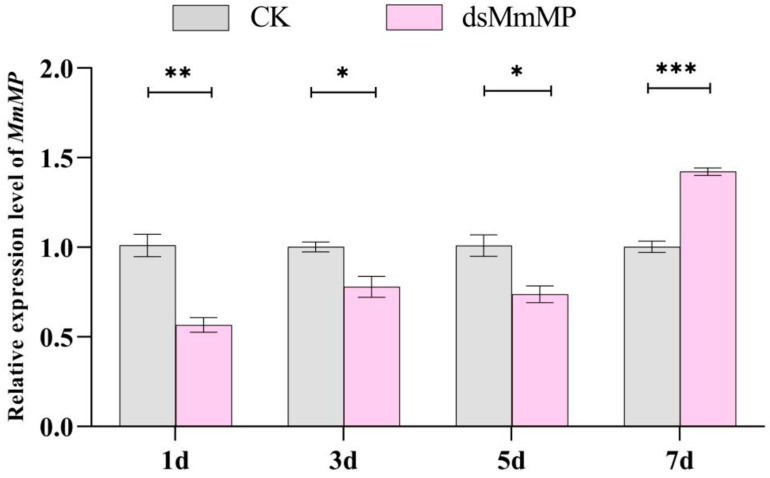
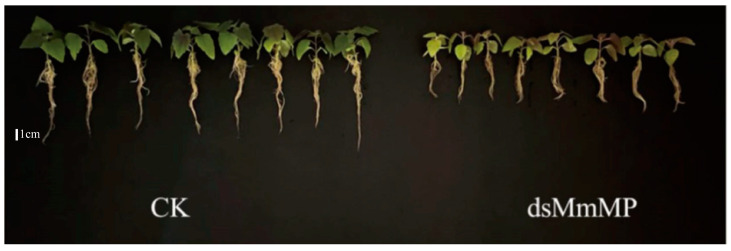
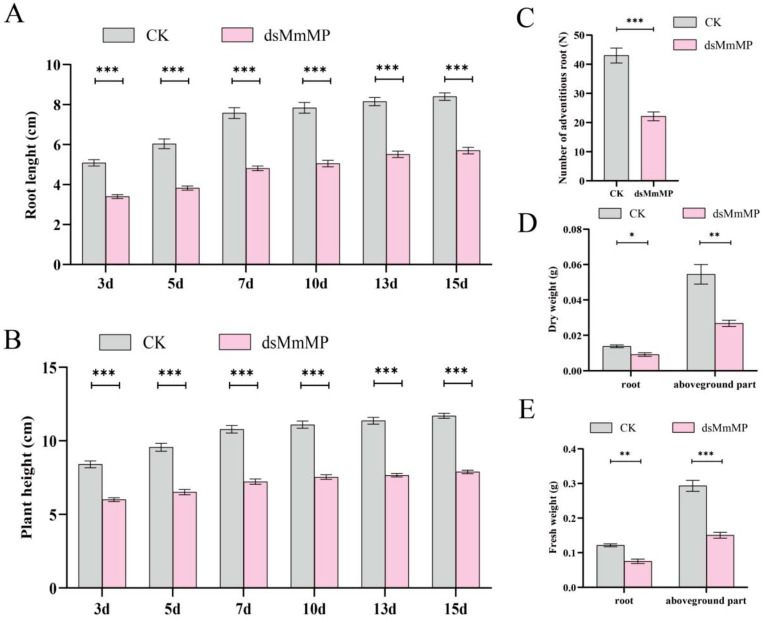
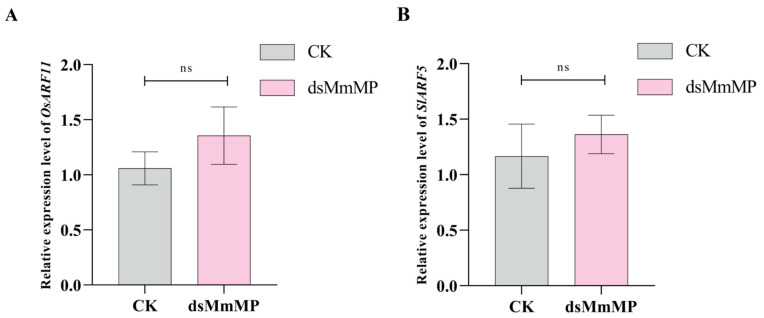
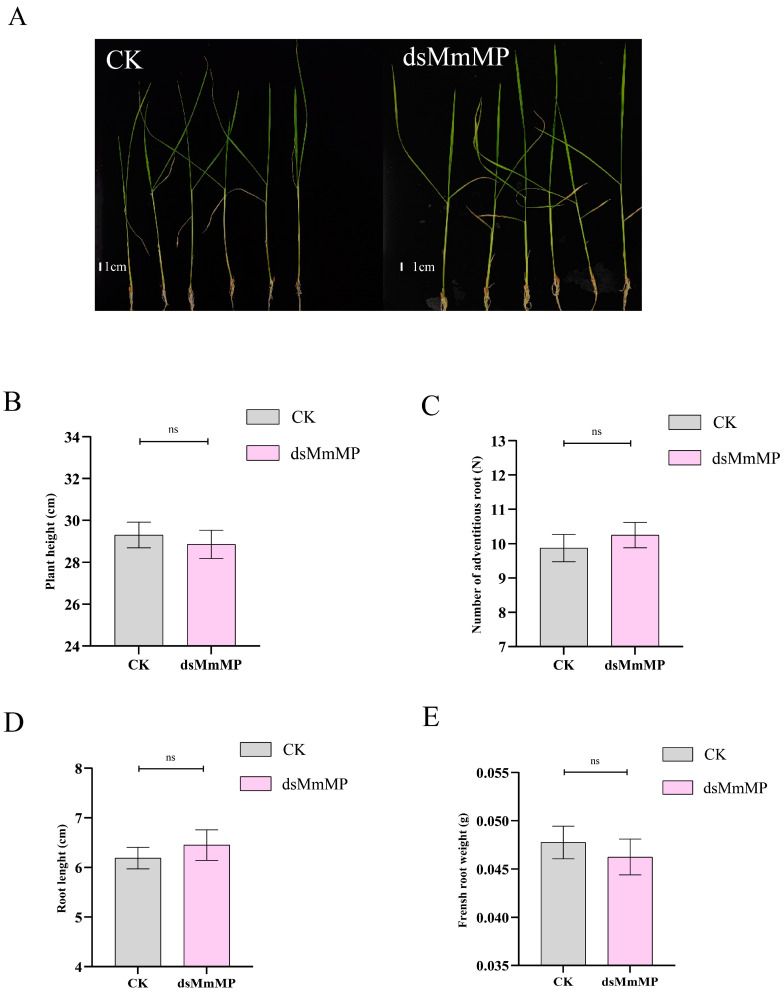
("mile-a-minute" weed) is a global invasive alien weed that can cause severe damage to agroforestry ecosystems and significant agricultural losses worldwide. Although chemical, manual, or mechanical control methods are widely used to control , RNA interference (RNAi)-based biocontrol methods have rarely been reported for this species. The () gene, encoding an auxin response factor, plays an essential role in embryonic root initiation in . In this study, we identified the gene from via orthologous gene analysis. A total of 37 orthologous genes was identified in 4 plants, including 9 candidate genes in , 13 in , 6 in , and 9 in . Phylogenetic analysis revealed that an candidate gene in named ) was clustered into one clade with the gene in (). In addition, both and contain a B3-DNA binding domain that is shared by transcription factors that regulate plant embryogenesis. To study gene function, dsRNA against () was applied to the roots of . Compared with those of the controls, the expression of was reduced by 43.3%, 22.1%, and 26.2% on the first, third, and fifth days after treatment, respectively. The -treated plants presented several morphological defects, mostly in the roots. Compared with water-treated plants, the -treated plants presented reduced developmental parameters, including root length, number of adventitious roots, root fresh and dry weights, plant height, and aboveground biomass. Additionally, safety assessment suggested that this treatment did not silence genes from non-target plants, including rice and tomato; nor did it inhibit root growth in those species. Collectively, these results suggest that plays an important role in root development in and provides a potential target for the development of species-specific RNAi-based herbicides.
(“一分钟一英里”杂草)是一种全球入侵性外来杂草,会对农林业生态系统造成严重破坏,并在全球范围内导致重大农业损失。尽管化学、人工或机械控制方法被广泛用于控制该杂草,但基于RNA干扰(RNAi)的生物防治方法针对该物种的报道却很少。编码生长素反应因子的()基因在的胚根起始中起着至关重要的作用。在本研究中,我们通过直系同源基因分析从鉴定出了基因。在4种植物中总共鉴定出37个直系同源基因,包括中的9个候选基因、中的13个、中的6个以及中的9个。系统发育分析表明,中一个名为()的候选基因与中的基因聚为一个分支。此外,和都含有一个B3-DNA结合结构域,该结构域由调节植物胚胎发生的转录因子共享。为了研究基因功能,将针对()的双链RNA应用于的根部。与对照相比,处理后第一天、第三天和第五天的表达分别降低了43.3%、22.1%和26.2%。处理过的植株出现了一些形态缺陷,主要集中在根部。与水处理的植株相比,处理过的植株发育参数降低,包括根长、不定根数、根鲜重和干重、株高以及地上生物量。此外,安全性评估表明,这种处理不会使包括水稻和番茄在内的非靶标植物的基因沉默;也不会抑制这些物种的根生长。总体而言,这些结果表明在的根发育中起重要作用,并为开发基于RNAi的物种特异性除草剂提供了一个潜在靶点。