Mozumder Md Ariful Islam, Theodore Armand Tagne Poupi, Sumon Rashadul Islam, Imtiyaj Uddin Shah Muhammad, Kim Hee-Cheol
Institute of Digital Anti-Aging Healthcare, Inje University, Gimhae 50834, Republic of Korea.
Department of Computer Engineering, Inje University, Gimhae 50834, Republic of Korea.
Sensors (Basel). 2024 Nov 21;24(23):7436. doi: 10.3390/s24237436.
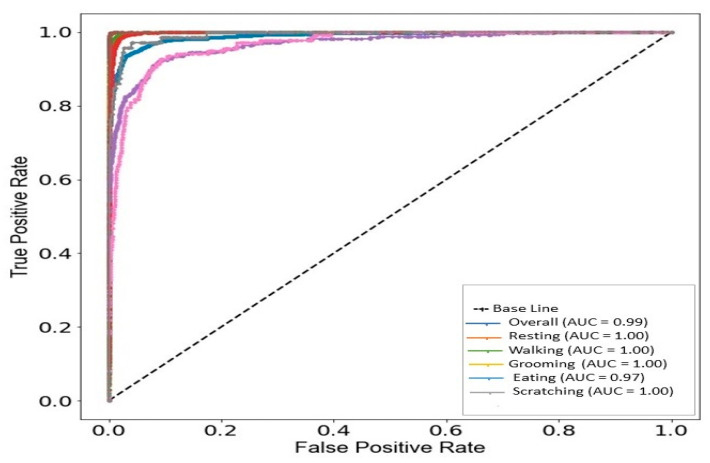
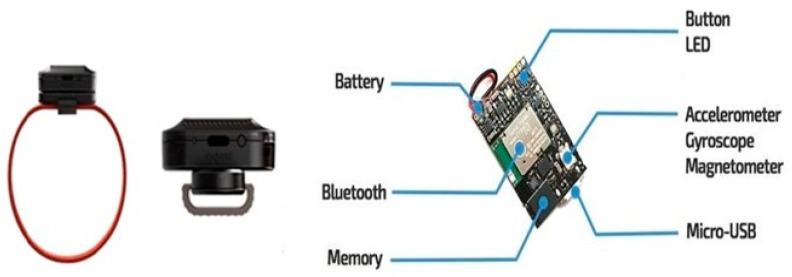
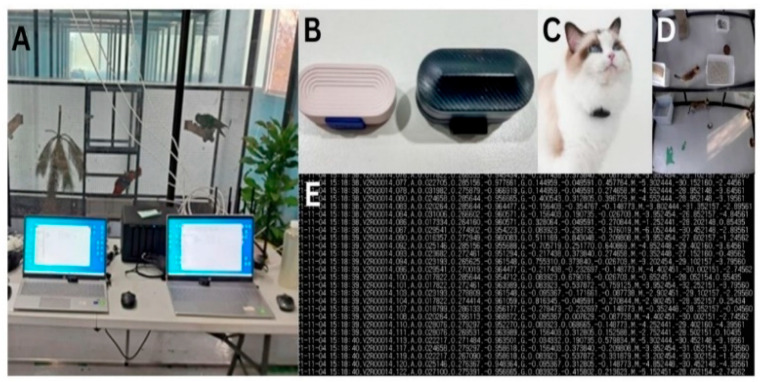
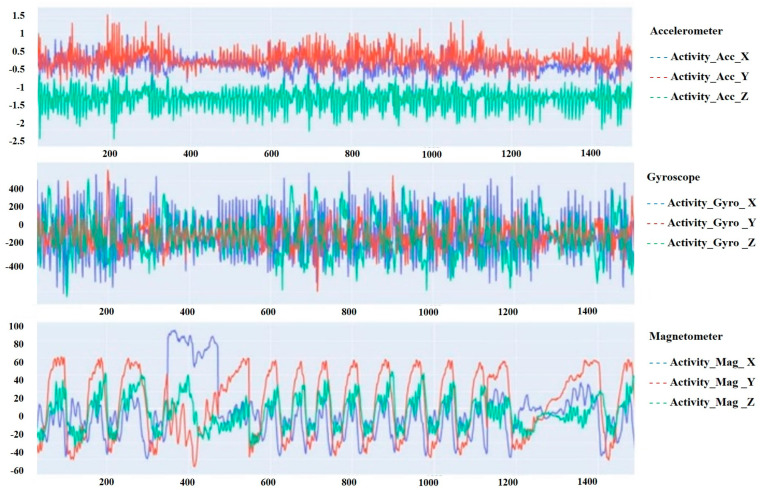
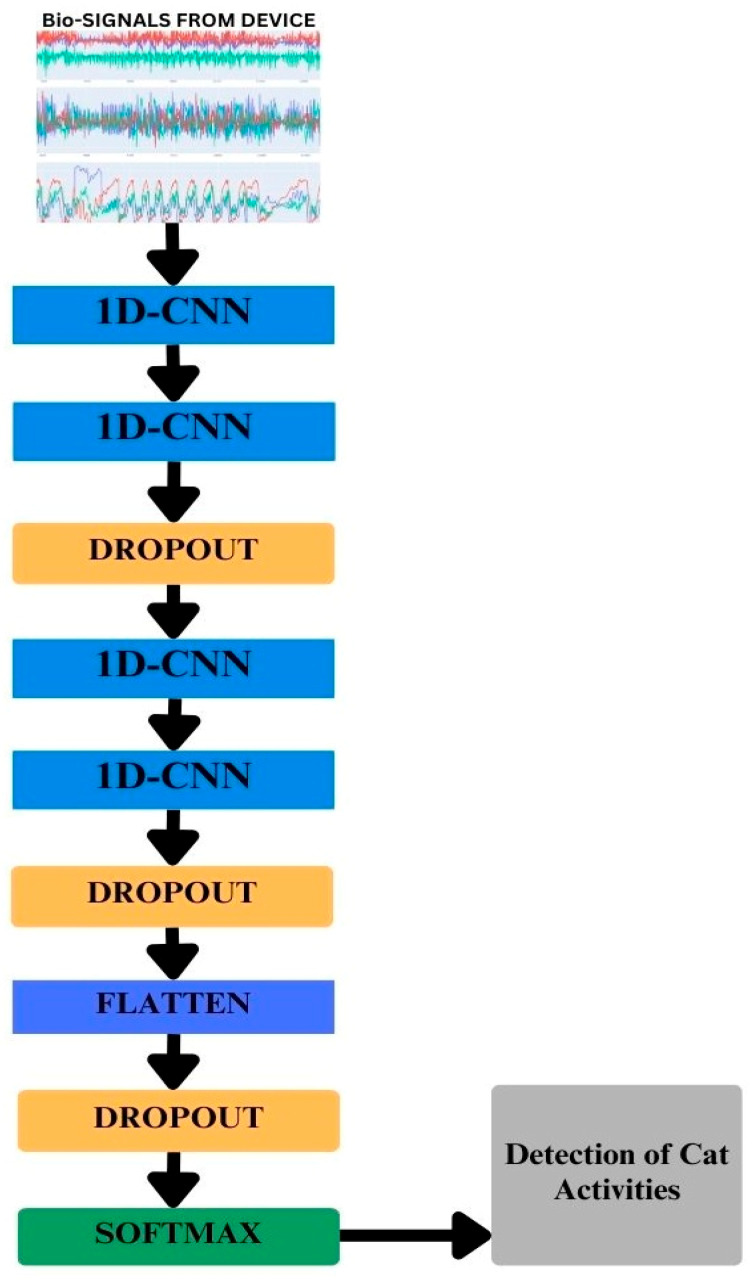
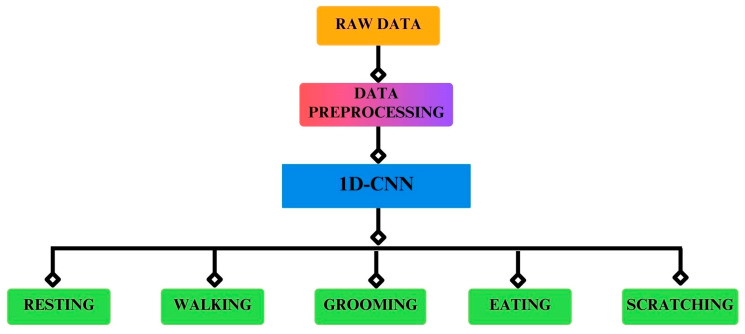
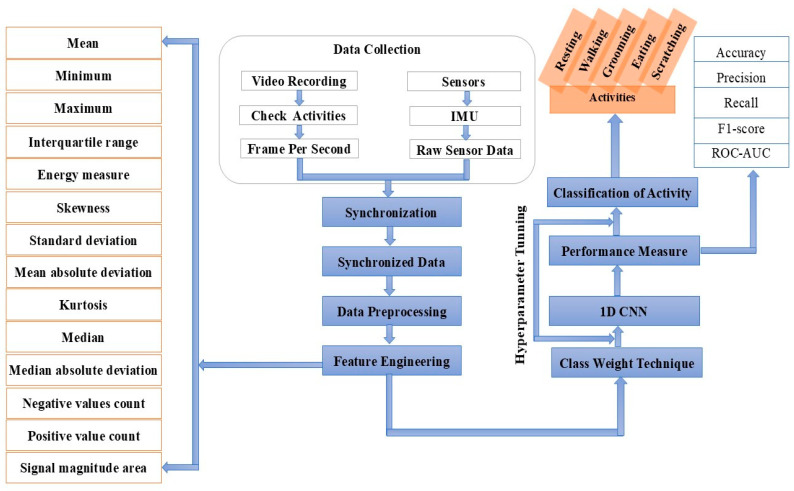
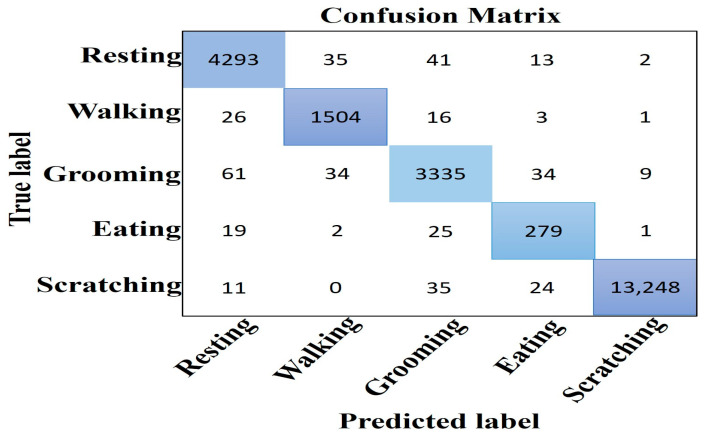
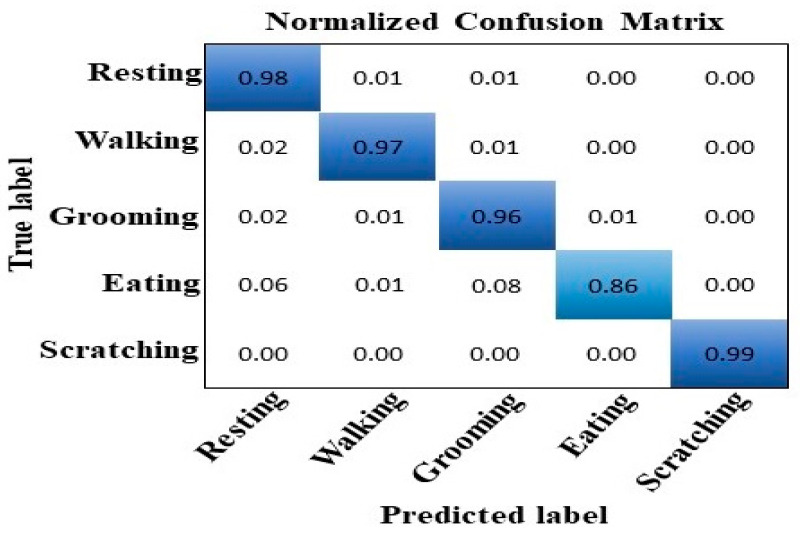
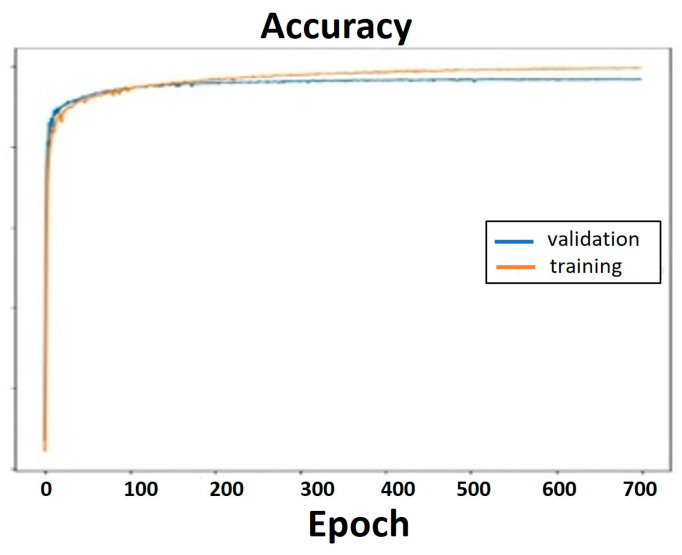
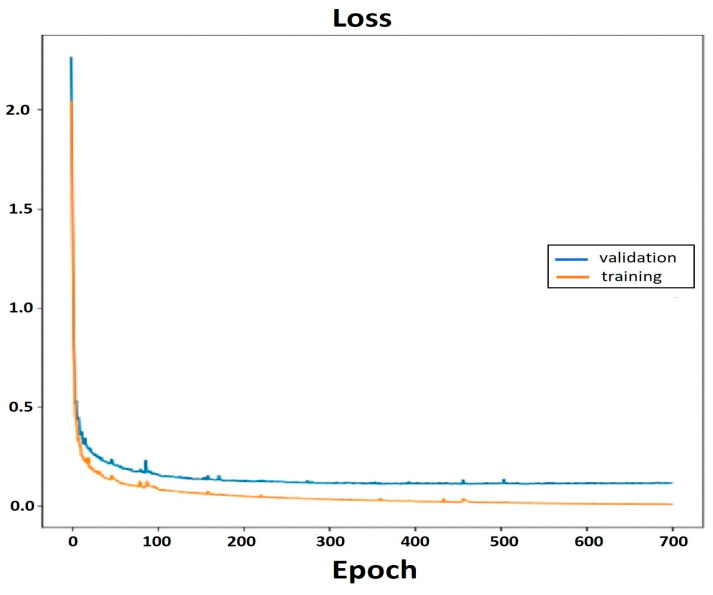
The health, safety, and well-being of household pets such as cats has become a challenging task in previous years. To estimate a cat's behavior, objective observations of both the frequency and variability of specific behavior traits are required, which might be difficult to come by in a cat's ordinary life. There is very little research on cat activity and cat disease analysis based on real-time data. Although previous studies have made progress, several key questions still need addressing: What types of data are best suited for accurately detecting activity patterns? Where should sensors be strategically placed to ensure precise data collection, and how can the system be effectively automated for seamless operation? This study addresses these questions by pointing out whether the cat should be equipped with a sensor, and how the activity detection system can be automated. Magnetic, motion, vision, audio, and location sensors are among the sensors used in the machine learning experiment. In this study, we collect data using three types of differentiable and realistic wearable sensors, namely, an accelerometer, a gyroscope, and a magnetometer. Therefore, this study aims to employ cat activity detection techniques to combine data from acceleration, motion, and magnetic sensors, such as accelerometers, gyroscopes, and magnetometers, respectively, to recognize routine cat activity. Data collecting, data processing, data fusion, and artificial intelligence approaches are all part of the system established in this study. We focus on One-Dimensional Convolutional Neural Networks (1D-CNNs) in our research, to recognize cat activity modeling for detection and classification. Such 1D-CNNs have recently emerged as a cutting-edge approach for signal processing-based systems such as sensor-based pet and human health monitoring systems, anomaly identification in manufacturing, and in other areas. Our study culminates in the development of an automated system for robust pet (cat) activity analysis using artificial intelligence techniques, featuring a 1D-CNN-based approach. In this experimental research, the 1D-CNN approach is evaluated using training and validation sets. The approach achieved a satisfactory accuracy of 98.9% while detecting the activity useful for cat well-being.
在过去几年中,保障猫咪等家庭宠物的健康、安全和幸福已成为一项具有挑战性的任务。要评估猫咪的行为,需要对特定行为特征的频率和变异性进行客观观察,而这在猫咪的日常生活中可能很难做到。基于实时数据的猫咪活动和疾病分析研究非常少。尽管先前的研究取得了进展,但仍有几个关键问题需要解决:哪些类型的数据最适合准确检测活动模式?传感器应战略性地放置在何处以确保精确的数据收集,以及如何使系统有效自动化以实现无缝运行?本研究通过指出是否应为猫咪配备传感器以及活动检测系统如何实现自动化来解决这些问题。机器学习实验中使用的传感器包括磁性、运动、视觉、音频和位置传感器。在本研究中,我们使用三种可区分且逼真的可穿戴传感器收集数据,即加速度计、陀螺仪和磁力计。因此,本研究旨在采用猫咪活动检测技术,分别结合来自加速度、运动和磁性传感器(如加速度计、陀螺仪和磁力计)的数据,以识别猫咪的日常活动。数据收集、数据处理、数据融合和人工智能方法都是本研究建立的系统的一部分。我们在研究中专注于一维卷积神经网络(1D-CNN),以识别用于检测和分类的猫咪活动模型。这种1D-CNN最近已成为基于信号处理的系统(如基于传感器的宠物和人类健康监测系统、制造业中的异常识别等领域)的前沿方法。我们的研究最终开发出了一个使用人工智能技术进行强大的宠物(猫)活动分析的自动化系统,其采用基于1D-CNN的方法。在这项实验研究中,使用训练集和验证集对1D-CNN方法进行了评估。该方法在检测对猫咪健康有益的活动时,达到了98.9%的令人满意的准确率。